
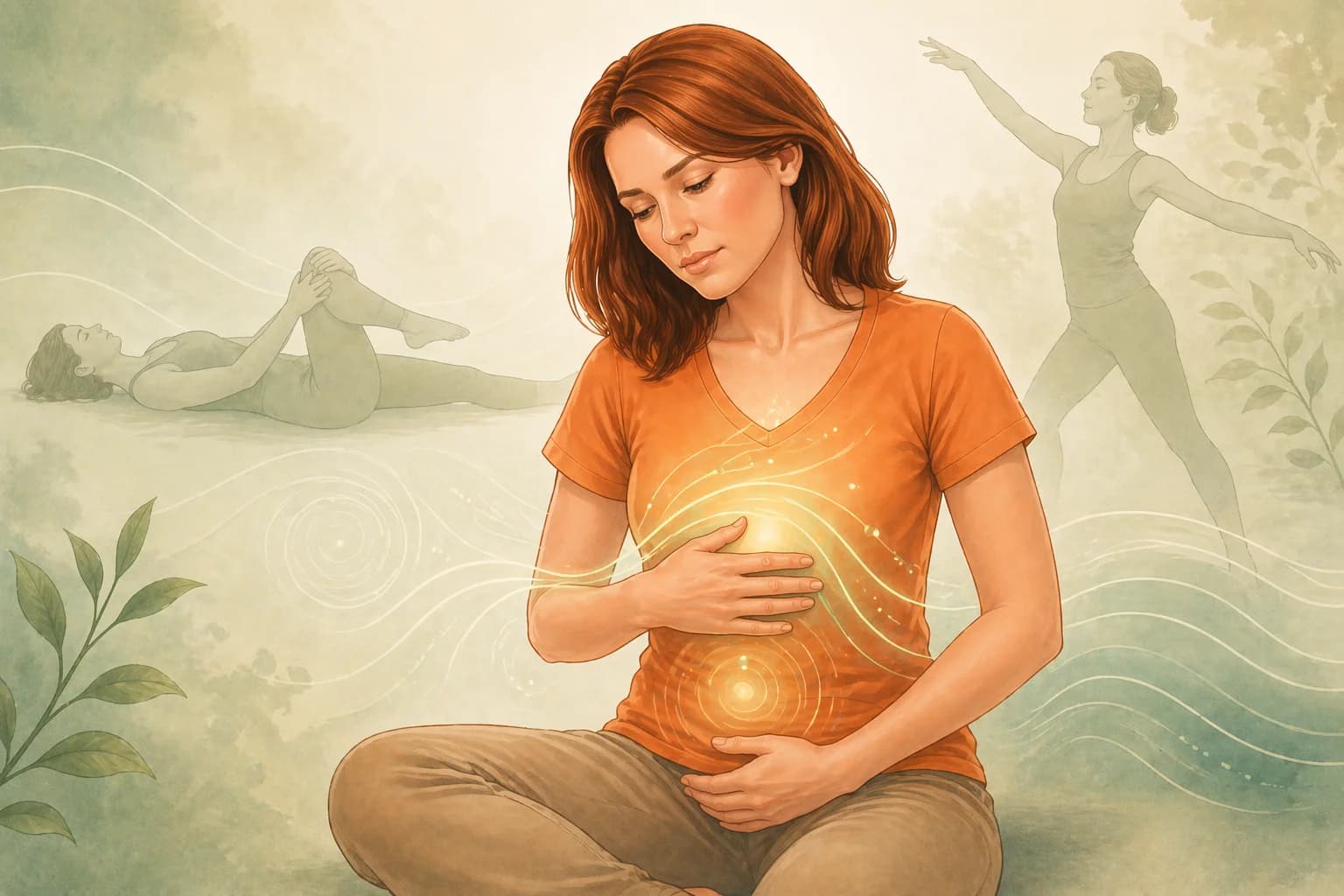
Can Feldenkrais Reduce Stress at the Hormonal Level?
New research suggests gentle somatic movement may influence the body's stress response, shifting hormonal markers and improving wellbeing beyond relaxation.
Most people think of stress reduction in terms of calming the mind: meditation, deep breathing, journaling. But what if the way you move your body could shift your stress response at a hormonal level? Two recent studies suggest that the Feldenkrais Method®, a somatic movement practice built on gentle awareness, may do exactly that.
What the research found
A 2025 pilot study, "Effects of a Feldenkrais method-based protocol on body fluid balance and stress-related measures in healthy adult women," published in the Journal of Bodywork and Movement Therapies, looked at what happens when sedentary adult women practice Feldenkrais Method® lessons for eight consecutive days. Twelve women completed daily 90-minute Awareness Through Movement sessions while nine served as a control group. The researchers measured something most movement studies overlook: body fluid balance and neuroendocrine markers tied to the body's stress response.
The Feldenkrais group showed a significantly higher HPA axis index after the intervention. The HPA (hypothalamic-pituitary-adrenal) axis is the system that governs the body's hormonal stress response. The researchers interpret this not as increased stress, but as improved adaptive capacity: the stress regulation system functioning more efficiently.
On the psychological side, the group reported meaningful improvements in self-acceptance and self-compassion. These are not minor shifts. Self-compassion is one of the strongest predictors of resilience under chronic stress, and self-acceptance is closely linked to lower anxiety and greater emotional stability.
Perhaps the most unexpected finding involved the body's fluid balance. Women in the Feldenkrais group showed a significant reduction in extracellular water, the fluid that sits outside your cells, in the spaces between tissues. When the body is under chronic stress or holding persistent muscular tension, this fluid can accumulate, contributing to a sense of puffiness, heaviness, or low-grade inflammation. The reduction the researchers observed suggests that as the women's movement patterns and tension levels shifted, so did the way their bodies were holding fluid. It is a small but striking example of how changes in movement awareness may ripple into basic physiological processes.
When awareness increases, so does self-observation
Perhaps the most interesting finding was unexpected. Participants in the Feldenkrais group also scored higher on self-judgment and over-identification after the protocol. This sounds like a negative outcome, but the researchers frame it as a natural consequence of increased body awareness.
The Feldenkrais Method® works by drawing attention to habitual patterns: how you hold your jaw, brace your shoulders, or restrict your breathing. As awareness grows, people notice tension and habits they had been unconscious of for years. Someone who has been clenching their jaw for a decade might, for the first time, realize how much effort that takes. The initial response can feel like heightened self-criticism: "How did I not notice this before?" But this noticing is the foundation for change. You cannot shift a pattern you cannot feel. In the Feldenkrais tradition, awareness is not a problem to solve. It is the beginning of a new possibility.
The authors note the study's limitations: the sample was small (21 women total), the protocol was brief (eight daily 90-minute sessions), and some baseline differences between groups were not fully controlled. This is a pilot study, not a definitive answer. But it opens a genuinely new line of inquiry: the possibility that gentle, awareness-based movement can influence the body's stress chemistry.
Why movement might matter more than we think
Most approaches to stress reduction start with the mind: calm your thoughts, slow your breathing, write in a journal. The Feldenkrais Method takes a different path. It does not aim to strengthen or lengthen muscles. Instead, it invites you to notice how you move, where you hold tension, and what happens when you reduce effort.
The logic is straightforward. When you stand, walk, or sit, your muscles are constantly managing gravity, balance, and posture. Much of this work happens outside conscious awareness. Over time, patterns of tension become invisible. You stop noticing the clenched jaw, the raised shoulders, the held breath, not because they are gone, but because the nervous system has accepted them as normal.
Feldenkrais lessons, often done lying on the floor, remove the demands of gravity and balance. In that simpler context, the nervous system can detect smaller signals. You begin to sense what you could not sense before. And the early physiological evidence suggests that this process of noticing and reorganizing may reach deeper than anyone expected, all the way to the body's hormonal stress response.
This is a different way of thinking about stress reduction. Not "calm your mind and your body will follow," but "change how your body organizes itself, and your stress response may shift."
Wellbeing beyond the body: breath, voice, and connection
A second study, "Everyone Breathes: a mixed methods evaluation of a combined Feldenkrais and vocal improvisation group", published in Frontiers in Psychiatry in 2026, explored a different angle. Researchers at a mental health Recovery College in the UK offered a 3-day workshop combining Feldenkrais Awareness Through Movement with vocal improvisation to adults living with mental health challenges.
The results, measured using the Short Warwick Edinburgh Mental Wellbeing Scale, showed an average improvement of 3.14 points, with four of seven participants meeting the threshold for meaningful positive change. The proportion of participants in the "low wellbeing" category dropped from 57% to just 14%.
Participants reported feeling less worried, less stressed, and less lonely. They reported increases in happiness, relaxation, and pride. Every participant rated the course as "extremely helpful."
What stands out is how quickly these changes happened. This was not a 12-week program. It was three days of gentle movement and shared creative expression. The researchers described the combination as supporting "authentic vocal expression and group belonging," the kind of experience that reminds people they are not alone in their struggle.
Where the first study found changes in the body's fluid balance and stress hormones, this one found changes in how people feel about themselves and their place in the world. Different measures, different populations, but a consistent thread: something about slow, awareness-based movement seems to shift how the whole system, body and mind, relates to stress.
What this means for everyday stress
Neither of these studies claims that Feldenkrais is a cure for stress or a replacement for clinical treatment. Both are small-scale and exploratory. But together, they point in a consistent direction: that slow, awareness-based somatic movement may influence not just how we feel, but how our bodies regulate stress at a measurable, physiological level.
What makes these findings especially relevant is that the interventions were brief and gentle. Eight days. Three days. No intense exercise, no special equipment, no prior experience required. The women in the body fluid study were sedentary. The participants in the wellbeing study were living with mental health challenges. Neither group was selected for fitness or prior movement experience.
For anyone dealing with chronic tension, shallow breathing patterns, or the accumulated weight of daily stress, this is worth paying attention to. Not because the science is settled, but because it suggests that the gentlest forms of movement may be doing more than we realized.
Feldy's online program is built on this principle: guided Awareness Through Movement lessons that help you notice and release habitual tension. You do not need to be flexible, fit, or even able to stand. You just need a quiet space and a willingness to pay attention.
FAQ about Feldenkrais and stress reduction
Can the Feldenkrais Method actually reduce cortisol or stress hormones?
A 2025 pilot study found that an 8-day Feldenkrais protocol was associated with a significant change in the HPA axis index, a marker of the body's stress hormone regulation. The researchers interpreted this as improved adaptive capacity, meaning the stress system was working more efficiently. The results are preliminary and need larger studies to confirm.
How is Feldenkrais different from other stress-reduction methods?
Unlike meditation or breathing exercises that target the mind, Feldenkrais works through slow, exploratory movement. The idea is that by changing how you move, you also change the patterns of tension the nervous system holds, which may influence stress at a deeper physiological level.
Is Feldenkrais effective for women dealing with stress?
The study focused on sedentary adult women and found significant changes in body fluid regulation, stress hormone markers, and self-compassion. Participants also showed increased body awareness and self-acceptance. While more research is needed, the method's gentle approach makes it a promising option for women dealing with chronic stress.
How long do you need to practice Feldenkrais to feel less stressed?
In the studies referenced, participants experienced measurable changes after just 8 days of practice and even after a 3-day workshop. Many people report feeling calmer and more at ease after a single lesson, though lasting changes tend to develop with regular practice.
What is Awareness Through Movement and how does it relate to wellbeing?
Awareness Through Movement is the group lesson format of the Feldenkrais Method. You follow verbal instructions to make gentle movements, paying attention to how they feel. Research suggests this process of mindful, exploratory movement may support both mental wellbeing and physiological stress regulation.
Start your free 7-day trial
Start free trialMore Articles
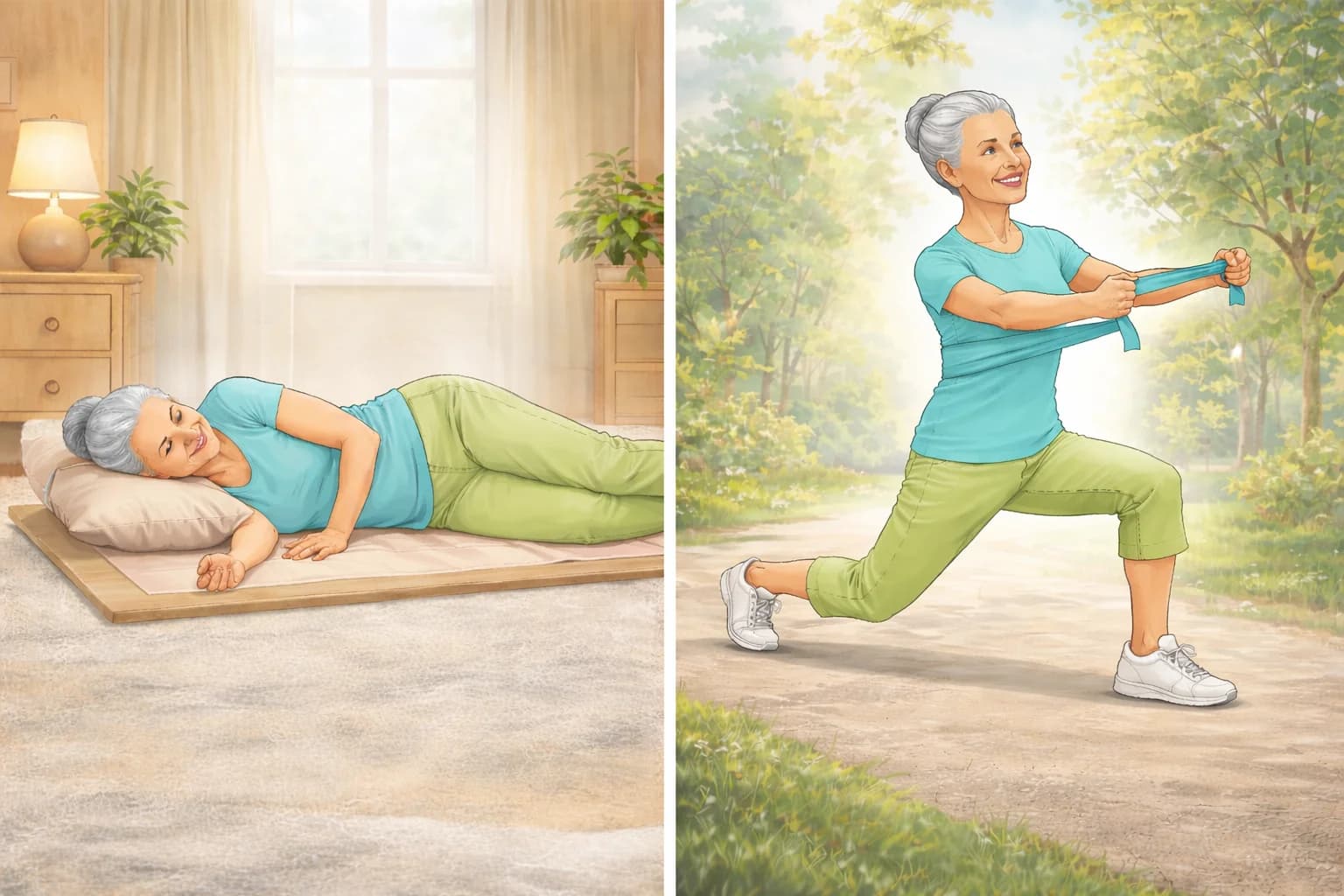
Adding Feldenkrais to Exercise Improves Back Pain Outcomes
A 2025 trial found adding Feldenkrais to stabilization exercise significantly reduced pain and fear of movement in older women with chronic low back pain.
Apr 12, 2026
Why You're Breathing Inefficiently (Without Knowing It)
Most people have no idea they are shallow breathers. Here is a simple self-check, why it matters for stress and posture, and what you can do about it.
Mar 26, 2026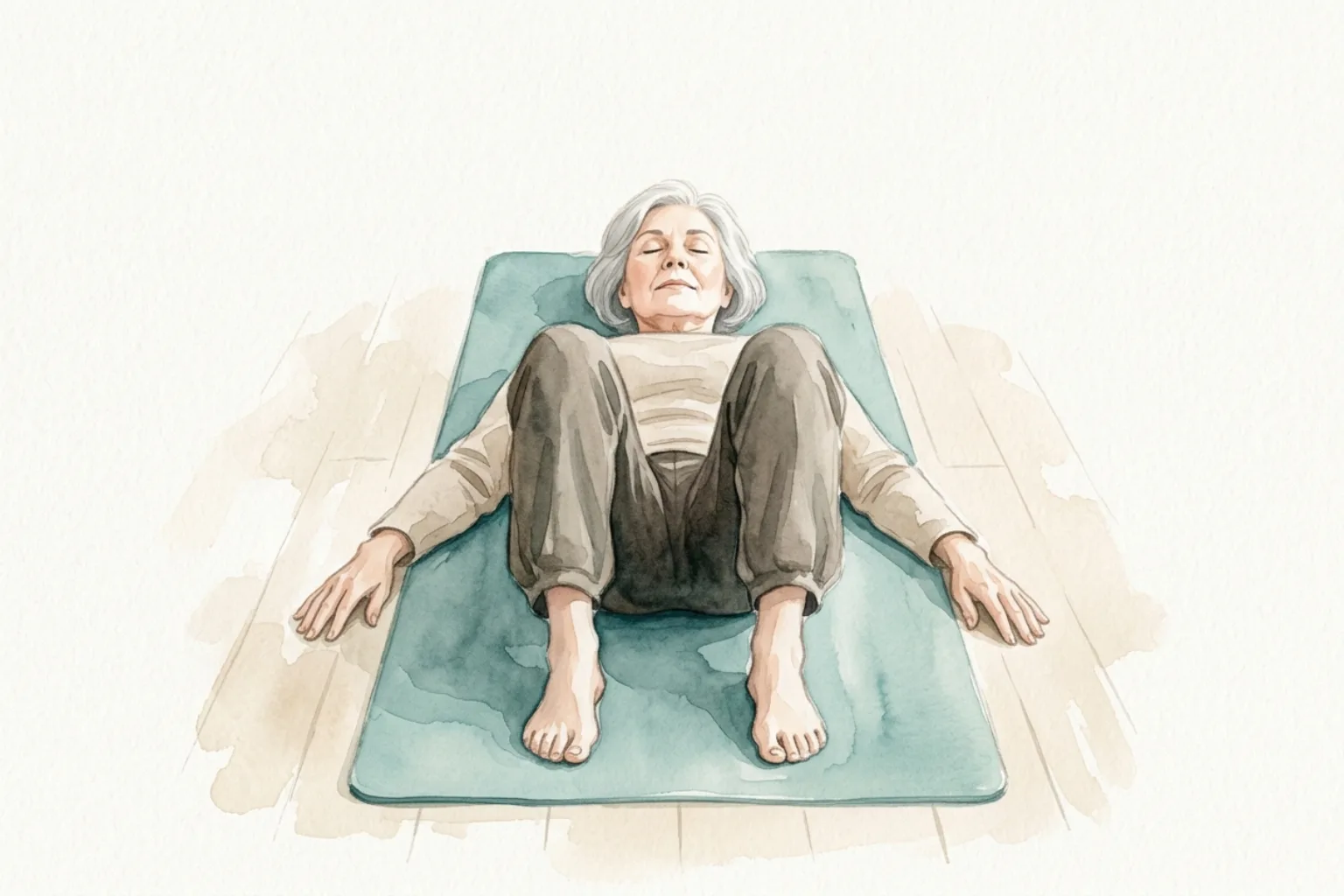
Same Exercises, Plus Awareness: What Two Trials Added to Core Stabilization
Two small trials kept a stabilization program exactly as it was and added a Feldenkrais part. What changed, what did not, and what we still do not know.
Oct 19, 2026Ready to Start Moving Better?
Try your first lesson for free. No credit card required.