
Move Slowly, Feel Better
Slow, small movement is not a watered-down version of exercise. It is one of the ways the nervous system learns most effectively, and why less leads to more.
 Chava SoraniGuild Certified Feldenkrais Practitioner (GCFP)
Most of us were taught to associate movement with effort. If you want to feel stronger, push harder. If you want to be more flexible, stretch further. If you want to change your body, work it more. The Feldenkrais Method® takes a different path. In this approach, slow, small, and gentle movement are not watered-down versions of exercise. They are what make change possible.
That sounds counterintuitive at first. How could doing less lead to feeling better? The answer comes from how the nervous system learns, and from a 19th-century insight about perception that turns out to apply directly to the way we move.
The Weber-Fechner law: why small differences need a quiet background
In the 1830s and 1840s, two German scientists, Ernst Weber and Gustav Fechner, studied how humans perceive physical sensations. They discovered something simple but profound: we do not perceive change in absolute terms. We perceive it relative to whatever we are already experiencing.
If you are holding a 1-kilogram weight and someone adds 100 grams, you notice immediately. If you are holding a 50-kilogram weight, that same 100 grams is invisible to you. The change is identical. Your ability to feel it is not.
This is the Weber-Fechner law, and it applies to many dimensions of perception, including weight, pressure, and brightness. By extension, similar principles help explain how we sense effort, balance, and movement.
For our purposes, the implication is striking. As effort increases, it often becomes harder to detect subtle differences. When you contract a muscle with force, the signals from that contraction are loud. Small adjustments inside that loud signal disappear. You cannot detect the subtle differences that would tell your nervous system how to organize the movement more efficiently.
Now flip it. When you reduce effort, the background noise drops. Suddenly, small differences become visible. You can feel which muscles are working when they do not need to. You can sense the shift between left and right, before and after, longer and shorter. The smaller the effort, the larger the available information.
This is the principle behind every slow movement, gentle movement, and small movement in a Feldenkrais lesson. We are not avoiding work because work is bad. We are creating the conditions for the nervous system to learn.
Slow movement is how the nervous system speaks
When you move quickly and forcefully, the brain and body fall back on patterns they already know. There is no time to consider a different option. The reflexes take over, the habits run their familiar route, and the lesson, if there is one, slips by.
Slow movement opens a window. At a slower speed, the nervous system has more opportunity to process and differentiate what is happening. You can notice habitual patterns you never knew you carried. You can experiment with a small variation, then return to the original, then try again. Each repetition becomes a question, not a drill.
Moshe Feldenkrais described this as teaching the nervous system to know itself. The body already knows how to move. What is missing, often, is awareness of what it is doing. Awareness is the lever for change. And awareness needs slowness, because perception, as Weber and Fechner showed us, depends on a quiet enough background to register the signal.
Small movement contains the whole pattern
People sometimes worry that small movements will not produce real change. The opposite is true. A small movement, done with attention, contains the entire pattern of organization that produces a larger movement. If you are turning your head, the same muscle groups, the same coordination, the same nervous-system instructions are at play whether the movement is large or barely visible.
The difference is that in the small version, you can feel what is happening. You can notice that your left shoulder lifts when your head turns. You can notice that your jaw clenches. You can notice that your breath stops. Each of these is a piece of the pattern. Once you feel them, the system can begin to revise them, often without conscious effort.
This is why a Feldenkrais lesson can produce surprising changes in posture, walking, breathing, and pain levels in 30 to 45 minutes, with movements so small a passerby would barely notice. Much of the change is happening in the nervous system, rather than through muscular effort alone.
In praise of slowness
In 2004, journalist Carl Honoré published a book called In Praise of Slowness, exploring how a culture obsessed with speed had begun to rediscover the value of slowing down, in food, work, parenting, and movement. He noticed that across very different domains, people were finding that slower meant better quality, deeper learning, and more lasting results.
Slow movement fits this same pattern. In a culture that equates intensity with effectiveness, choosing to move slowly can feel almost transgressive. But the science of perception, the experience of skilled movement teachers, and the experience of Feldenkrais practitioners and students over the past 70 years all point to the same truth: when you slow down, you often create better conditions to learn, feel more, and support meaningful change.
What this looks like in practice
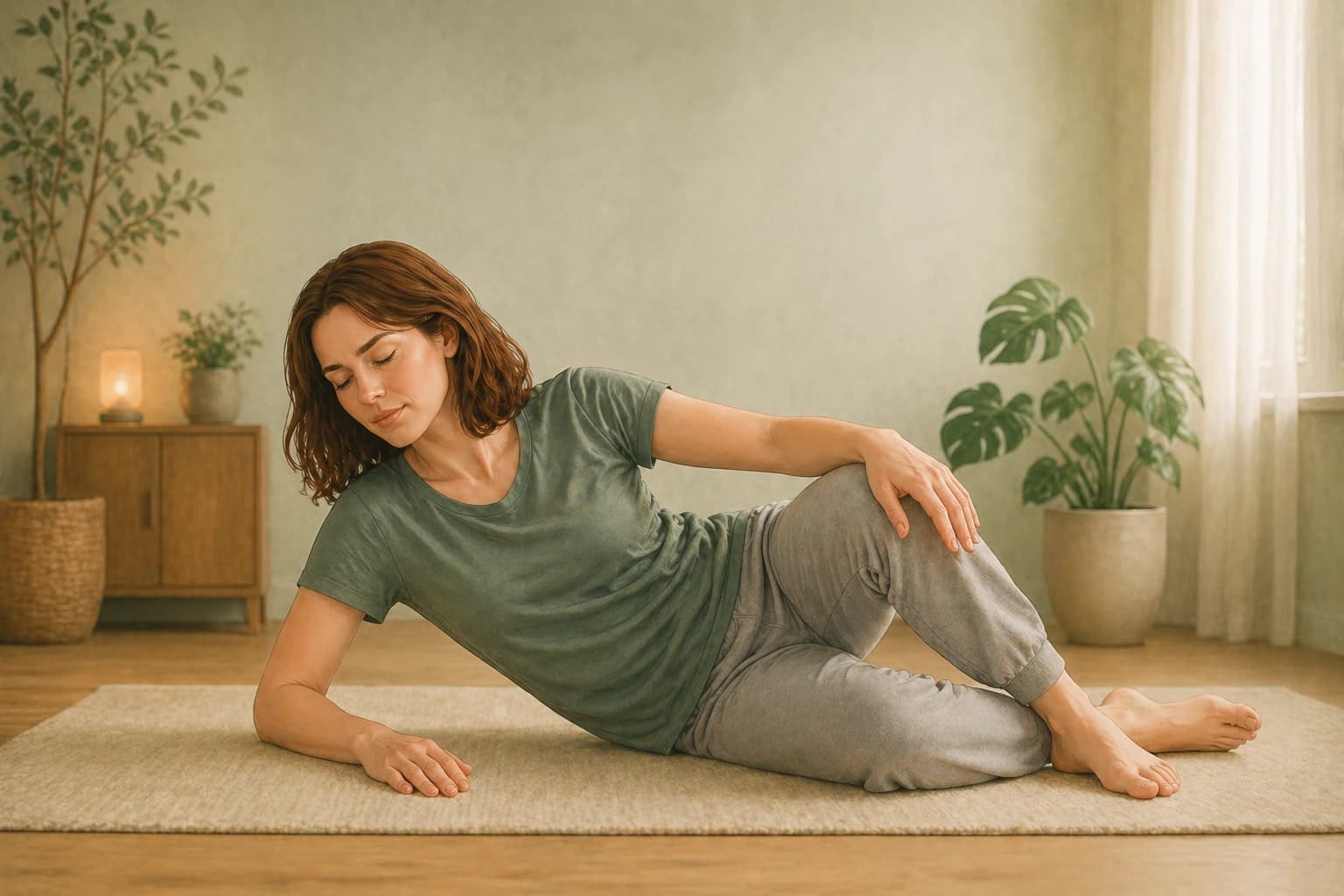
A typical Feldenkrais lesson often involves lying on the floor and performing simple, slow movements while paying close attention to how they are organized in the body. For example, gently turning the head and noticing what parts of you participate in the movement.
The movement is usually repeated a small number of times with minimal effort. There are pauses to rest, and sometimes periods of imagining the movement without actually doing it. Variations are then introduced, such as slightly changing direction, timing, or adding a subtle detail like eye movement, followed again by rest and observation.
The pace is intentionally slow and the effort is kept low so that differences in sensation and coordination become easier to notice. While the work can feel unusually gentle, people often report that afterward their movement feels freer or more coordinated, for example turning further or with less effort, without any stretching or force.
Rather than producing change through effort, this kind of practice supports the nervous system in refining how movement is organized. Any improvements are typically most stable when the practice is revisited over time and paired with ongoing attention to how movement feels.
Why this matters for back pain, stress, and aging well
The slow approach is especially relevant when intense exercise is not an option, or when it has not worked. People with chronic back pain often discover that pushing through pain in the gym makes things worse. People dealing with stress and chronic muscle tension find that more effort just adds more tension. Older adults who want to stay active need a way to refine movement without risking injury.
In all these cases, slow, small, gentle movement gives the nervous system a chance to find new options. It is not about doing less because you are limited. It is about doing less because that is the path through which deeper change becomes possible.
Feldy's online program is designed around this principle. Each guided audio lesson invites you to slow down, reduce effort, and pay attention to what you feel. There is no goal to reach, no posture to perfect, no count to hit. Just a quiet space, your own attention, and the kind of small, slow movement that lets the nervous system speak.
The invitation is simple: notice not how much you do, but how you do it. Not how hard you work, but how much you feel.
From that listening, the body learns to change.
Experience It Yourself
Try a free 11-minute Feldenkrais lesson, done lying down. Slow, gentle movement to feel the difference for yourself. No equipment needed.
Try a Free LessonFAQ about slow movement and the Feldenkrais Method
Why does Feldenkrais use such small, slow movements?
Small, slow movements lower the noise of effort so the nervous system can detect subtle differences. The Weber-Fechner law of perception helps explain why: the smaller the baseline effort, the more sensitive you become to change. Gentle movement is not easier; it is more informative.
Will I get stronger or more flexible without pushing harder?
The Feldenkrais Method primarily aims to improve ease, coordination, and stability in movement, along with a clearer sense of how your body functions. Many people also experience gains in flexibility and reductions in pain as a result. Building strength is not the primary goal of the practice, so it's often combined with other forms of exercise such as walking, swimming, or gym training. These approaches tend to complement each other rather than overlap.
Is slow movement just a watered-down workout?
No. Slow movement targets a different system. A workout is mostly about overload and adaptation in muscles. Slow Feldenkrais lessons target the brain's motor maps and the nervous system's organization of movement. The two complement each other rather than competing.
How long does it take to feel a difference?
Many people feel a change inside a single 30-minute lesson, especially the lying-down kind. They get up and notice their breathing is fuller, their walk is easier, or one side of the body feels lighter than the other. Lasting changes build with regular practice, the same way a language is learned.
Is gentle movement enough if I want real results?
It depends on what you call results. If you want measurable shifts in chronic pain, posture, balance, or ease of daily movement, gentle awareness-based practice can sometimes deliver more than effortful exercise, because it addresses underlying movement patterns. If you also want cardiovascular fitness, combine it with walking, swimming, or any activity you enjoy. If you're unsure which direction makes sense for you, the Movement Match quiz can help you decide based on your goals and current situation.
Start your free 7-day trial
Start free trialMore Articles

Can Feldenkrais Reduce Stress at the Hormonal Level?
New research suggests gentle somatic movement may influence the body's stress response, shifting hormonal markers and improving wellbeing beyond relaxation.
Apr 24, 2026
Why Feldenkrais Lessons Are Done Lying on the Floor
Lying down is not just comfortable. It reduces effort, sharpens awareness, and turns the floor into an active partner in movement learning.
Apr 20, 2026
Hypermobile and Always Bracing? Feeling Steady With Less Effort
Why hypermobile joints can feel tight, why stretching the tightness often doesn't help, and a gentle way to notice your bracing between physio sessions.
Oct 26, 2026Ready to Start Moving Better?
Try your first lesson for free. No credit card required.