


Why Stress Tightens Your Voice (And How to Fix It)
Throat tension and a tight voice under stress are not random. They follow a chain from jaw to neck to throat that the Feldenkrais Method can help unwind.
You are about to speak in a meeting. Or answer a difficult question. Or have a conversation you have been dreading. And just as you open your mouth, your voice comes out tighter than you expected. Higher. Thinner. Not quite yours.
Throat tension under stress is one of the most common and least talked about physical symptoms that people experience. Studies suggest that up to 30% of adults regularly experience voice or throat tension related to psychological stress, and for many women, it becomes a familiar companion in any situation that feels pressured or high-stakes.
It is not in your head. And it is not a voice problem. It is a tense throat muscles problem that starts well above the throat.
The Chain: How Stress Reaches Your Voice
The tight voice you feel under pressure follows a predictable path through the body. Understanding that path is the first step to interrupting it.
It starts with the stress response itself. When your nervous system perceives pressure, whether that is a difficult conversation, a room full of people, or simply a long and demanding day, it organizes the entire body into a state of readiness. Shoulders rise. Breathing shortens and moves up into the chest. The neck stiffens. The jaw closes.
All of this happens before you are even aware of it.
The throat sits at the bottom of this chain. The muscles around the larynx are closely connected to the muscles of the jaw above and the neck on either side. When the jaw tightens, it pulls on the structures above the throat. When the neck stiffens, it compresses the space that the voice needs to move freely. When breathing becomes shallow and chest-centered, the air support that gives the voice its depth and resonance disappears.
The result: a voice that sounds smaller, tighter, and higher than it does when you are relaxed.
Why Trying to Relax Your Throat Does Not Work
The instinct when you notice throat tension is to try to relax it directly. You might consciously drop your shoulders, take a deliberate breath, or tell yourself to calm down. Sometimes this helps briefly. But the tension usually returns within moments, because you are addressing the surface while the underlying pattern stays unchanged.
This is the same dynamic at play in jaw tension and TMJ: the tightness is not a problem with the joint or the muscle itself. It is what the nervous system has organized the whole body to do under pressure. Telling one part of the body to relax while the rest remains braced is like asking one person in a tug-of-war team to let go.
The tension reasserts itself because the pattern is still running.
The Jaw-Neck-Throat Connection
The jaw and throat are more closely linked than most people realize. The floor of the mouth, the root of the tongue, the hyoid bone, and the larynx form a continuous chain of soft structures that move together. When the jaw is chronically tight, as it often is in people who clench during the day or grind at night, those structures below it are in a state of constant low-grade compression.
Neck and shoulder tension adds another layer. The sternocleidomastoid and scalene muscles that run along the sides of the neck directly influence the position and freedom of the larynx. When these muscles shorten and stiffen, as they do in people who hold their head forward or brace against stress, the throat has less room to move, and the voice reflects that.
This is why singers and public speakers often struggle with voice problems that have nothing to do with their vocal cords. The cords themselves may be perfectly healthy. The problem is everything surrounding them.
What the Feldenkrais Method® Addresses
The Feldenkrais Method® does not treat the voice directly. What it does is address the whole-body organization that is squeezing it.
A Feldenkrais® lesson for throat and voice tension might begin with something that seems entirely unrelated: how you roll your head, how your eyes move, how your spine lengthens when you breathe. But these movements are chosen deliberately. The neck, jaw, eyes, and tongue are neurologically intertwined in ways that mean releasing one tends to release the others.
When the neck softens and finds more length, the larynx drops into a more natural position. When the jaw releases its chronic grip, the floor of the mouth relaxes. When breathing drops back into the belly and the ribs start to move again, the voice finds the air support it had lost. None of this requires you to think about your throat at all.
This is the approach that performers, teachers, and public speakers have used for decades. It is not about technique. It is about removing the interference so the voice can do what it naturally knows how to do.
The Breathing Link
One piece of the stress-voice chain that deserves its own mention is breathing. Under stress, breathing tends to shift upward: less belly, less rib movement, more chest and shoulder. This kind of breathing is physically associated with the stress response, and it also directly reduces the breath support the voice needs.
A voice that lacks breath support compensates by tensing. The muscles around the larynx work harder to produce sound, which creates fatigue, strain, and the thin or tight quality that stress-voice is known for.
Restoring fuller, lower breathing does not just calm the nervous system. It literally changes the mechanical conditions the voice is working in. The tension in the throat often releases not because you did anything to the throat, but because the breath came back.
Feldy's program works through exactly this sequence: spinal mobility, rib movement, breathing, neck release, and jaw softening, built gradually, lesson by lesson, so the nervous system has time to genuinely reorganize rather than just temporarily release.
Want to Feel the Difference?
Try a full Feldenkrais lesson for free. No equipment, no experience needed. Just a comfortable place to lie down.
Try a Free LessonWhen the Pattern Becomes Habitual
For many women, the stress-voice chain does not only show up in high-pressure moments. Over time, the pattern becomes the default. The jaw stays slightly closed even at rest. The neck carries a background stiffness through the day. The voice has a persistent quality of effort, of working slightly harder than it should.
This is not a character trait or a personality quirk. It is a learned nervous system pattern, and it can be unlearned. The Feldenkrais Method® is built on precisely this understanding: that the nervous system is plastic, that what it has learned to hold it can learn to release, and that small, gentle, exploratory movement is the most reliable way to teach it something new.
The voice that is easy, open, and fully yours is not something you have to perform. It is what happens when everything that was squeezing it gets out of the way.
FAQ about Throat Tension, Tight Voice, and Stress
Why does my throat feel tight when I am anxious or stressed?
Throat tension under stress is a normal nervous system response. When the body perceives threat or pressure, it braces. The muscles around the larynx, jaw, and neck tighten as part of that whole-body holding pattern. It is not a throat problem in isolation. It is part of a coordinated stress response that happens to be very noticeable in the voice.
Can the Feldenkrais Method® help with a tight throat and voice tension?
Yes. Feldenkrais works by releasing the whole-body tension pattern that underlies throat tightness, rather than targeting the throat directly. Lessons that address jaw, neck, shoulder, and breathing organization often produce a noticeable softening in the throat and a more open, relaxed voice.
Is voice tension related to jaw tension and TMJ?
Very often, yes. The muscles that close the jaw sit directly above the throat, and chronic jaw clenching pulls on the structures of the neck and larynx. Many people with TMJ also experience voice fatigue, throat tightness, or difficulty projecting their voice.
Why does my voice sound different when I am nervous?
When you are nervous, the muscles around your larynx tighten, which changes the shape of the vocal tract and raises the pitch and tension of the voice. Shallow, high-chest breathing reduces the air support the voice needs, making it sound thin or strained. This is the stress-voice chain in action.
What can I do right now to release throat tension?
The most immediate relief usually comes from releasing the jaw and softening the neck rather than trying to relax the throat directly. Let your jaw drop slightly, allow your tongue to rest on the floor of your mouth, and take a slow breath that moves your belly rather than your chest. These are small steps. For lasting change, addressing the underlying nervous system pattern with something like Feldenkrais is more effective.
Is tight throat tension a medical concern?
Occasional throat tension related to stress is very common and not usually a medical concern. If you experience persistent difficulty swallowing, pain, a lump sensation that does not change, or voice changes that last more than a few weeks, see a doctor to rule out structural causes.
Start your free 7-day trial
Start free trialMore Articles

Why You're Breathing Inefficiently (Without Knowing It)
Most people have no idea they are shallow breathers. Here is a simple self-check, why it matters for stress and posture, and what you can do about it.
Mar 26, 2026
Why Jaw Tension Won't Release (And How Feldenkrais Helps)
Most TMJ treatments target the joint. Feldenkrais targets the nervous system patterns that keep your jaw clenched. Here is why that difference matters.
Mar 19, 2026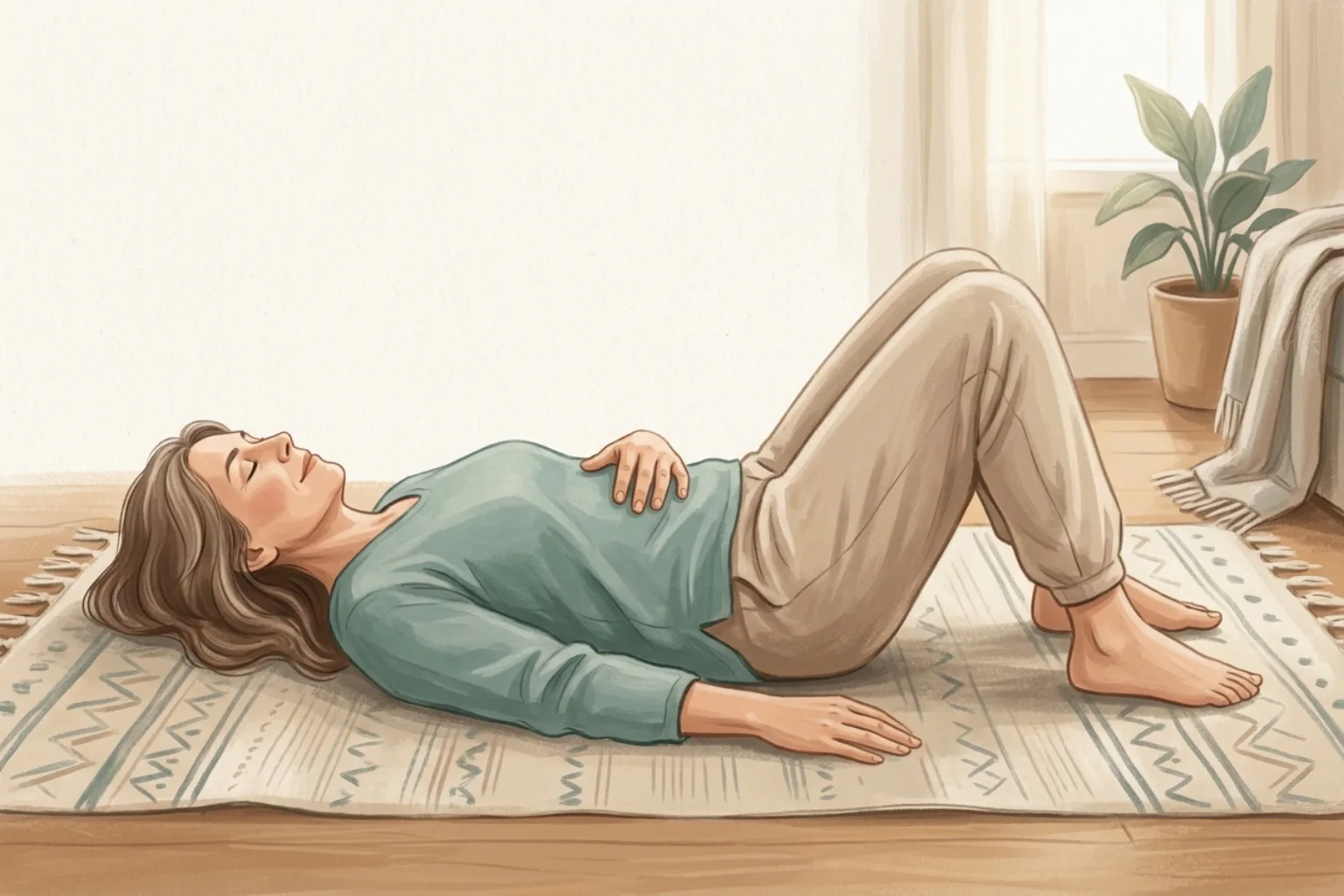
Awareness: You Cannot Change What You Do Not Notice
You cannot change what you cannot yet feel. In a Feldenkrais lesson, awareness is not a step toward change. It is where change begins.
Sep 4, 2026Ready to Start Moving Better?
Try your first lesson for free. No credit card required.