

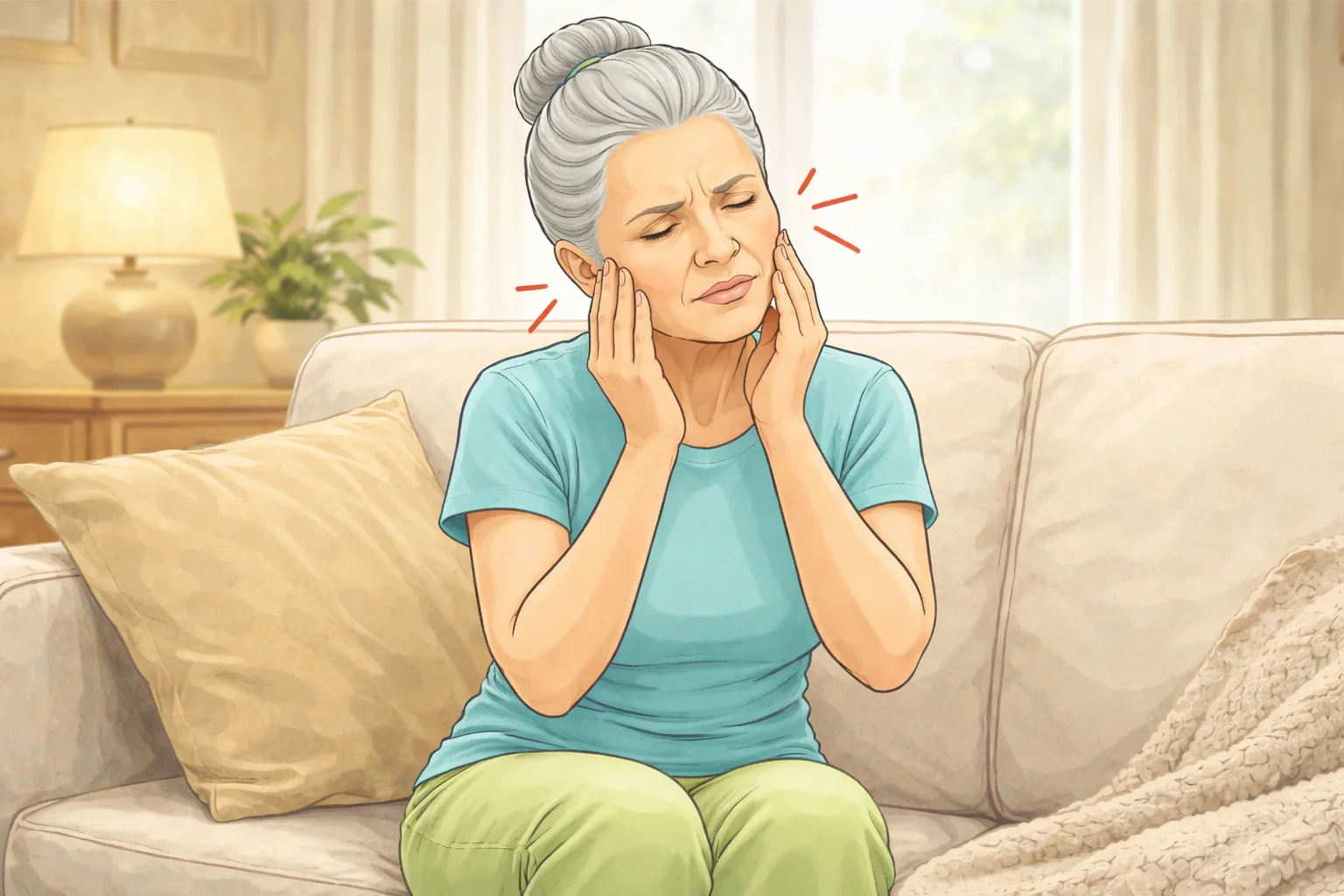
Why Jaw Tension Won't Release (And How Feldenkrais Helps)
Most TMJ treatments target the joint. Feldenkrais targets the nervous system patterns that keep your jaw clenched. Here is why that difference matters.
You probably know the feeling. You wake up and your jaw aches. Or you catch yourself mid-afternoon with your teeth clenched, your neck rigid, your shoulders up near your ears. You tell yourself to relax. You take a breath. And within minutes, it is all back.
Jaw tension and TMJ disorders affect an estimated 10 million Americans, with women significantly more affected than men. Yet despite the prevalence, many people spend years cycling through treatments, mouth guards, dental adjustments, stretches, massage, without ever fully resolving the problem. The jaw releases briefly, then tightens again.
The Feldenkrais Method® offers a different explanation for why that happens, and a different way through.
Your Jaw Is Not the Problem
The temporomandibular joint (TMJ) is one of the most complex joints in the body. It moves in three dimensions, it is involved in speaking, chewing, swallowing, and breathing, and it sits at the intersection of several of the body's most tension-prone areas: the neck, the base of the skull, the tongue, and the muscles of the face.
When people seek treatment for jaw tension and TMJ, the focus is usually on the joint itself. Reduce inflammation. Align the bite. Protect the teeth. These are reasonable approaches, but they address the symptom rather than asking why the jaw is under so much tension in the first place.
The Feldenkrais Method® asks that question.
In the Feldenkrais view, chronic jaw tension is rarely a jaw problem. It is a whole-body pattern. The jaw is clenching because the nervous system has organized the entire body around a state of holding, bracing, or protecting. The jaw is simply the most visible place where that tension surfaces.
Treating the jaw alone is like turning down the volume on a smoke alarm without looking for the fire.
The Whole-Body Tension Pattern
Think about what happens when you are under sustained stress. Your shoulders rise. Your neck shortens. Your breathing becomes shallow. Your eyes narrow. And your jaw tightens. These are not separate reactions. They are one coordinated response from your nervous system.
The problem is that this response can become habitual. Long after the original stressor is gone, the pattern stays. The nervous system keeps the body in a low-grade version of that braced, guarded state. Chronic stress held in the body is not just a feeling. It is a physical organization that the nervous system has learned.
This is why telling yourself to relax your jaw does not work. Voluntary relaxation is a different mechanism from the deep, learned tension that the nervous system is holding. You can consciously drop your jaw for a moment, but the pattern reasserts itself because nothing in the underlying organization has changed.
The Feldenkrais Method® works at the level of that organization.
What Feldenkrais Does Differently
A Feldenkrais® lesson for jaw tension does not typically start with the jaw. It might start with how you move your eyes. Or how your spine rolls. Or how your breathing moves through your ribs and belly. This surprises people at first.
But the jaw does not exist in isolation. It is neurologically linked to the neck, the eyes, the tongue, and the base of the skull in ways that are surprisingly direct. The muscles that close your jaw are connected to the muscles that hold your head. The position of your tongue affects your swallow, your breathing, and your neck posture. The way your eyes move influences the tension in your jaw.
When a Feldenkrais lesson slowly explores these connections, guiding you through tiny, almost imperceptible movements while you lie comfortably on your back, something unexpected begins to happen. The jaw softens. Not because you told it to. But because the wider pattern that was holding it tight has begun to shift.
This is the core insight of the Feldenkrais Method®: the nervous system can learn new patterns. What it has learned to hold, it can learn to release. Not through force, but through new information delivered gently, in a context of ease.
The Jaw and Shallow Breathing
One underappreciated connection is between jaw tension and breathing. When breathing is shallow and centered in the chest, the muscles of the neck and jaw often compensate, subtly bracing to help stabilize the head. This bracing is unconscious. But it contributes directly to the tension that builds through the day and culminates in night grinding.
Shallow breathing and chest tightness and jaw tension tend to reinforce each other. When breathing deepens and the diaphragm moves more freely, the neck softens. When the neck softens, the jaw follows.
Feldenkrais lessons often work with breathing not as a breathing exercise, but as a natural consequence of improved spinal and rib movement. The breath changes because the body is reorganizing, not because you are trying to breathe differently.
What a Lesson Actually Feels Like
You lie on your back on a comfortable surface, a bed, a mat, whatever works for you. A voice guides you through slow, small movements. You might be asked to gently open and close your mouth while noticing what happens in your neck. Or to move your eyes to the left while your jaw rests. Or to place one hand lightly on your cheek and feel what shifts as you turn your head.
Nothing hurts. The movements are small enough to feel almost too simple. That simplicity is intentional. The nervous system learns best when movement is easy and exploratory, not effortful or corrective.
After 30 or 40 minutes, when you stand up, many people notice their jaw has dropped slightly, their neck feels longer, their face feels softer. They did not work on their jaw directly. But the whole pattern changed.
Feldy's program includes lessons that work through exactly this kind of full-body awareness, building progressively from foundational movement to finer coordination between the face, neck, shoulders, and spine. The daily rituals in the program also help you arrive in your day with less accumulated tension rather than spending it trying to release tension that has already built.
Try a Lesson Before You Commit to Anything
Try a full Feldenkrais lesson for free. No equipment, no experience needed. Just a comfortable place to lie down.
Try a Free LessonWhen the Jaw Is Also Affecting Your Ears
One thing that often surprises people with TMJ is how many other symptoms are connected to it. Ringing in the ears, headaches behind the eyes, a sense of pressure or fullness in the ear canal, these can all be related to the same pattern of tension in the jaw and neck.
The connection between tinnitus and neck tension is well documented, and the jaw is part of that same web. When Feldenkrais lessons reduce the overall tension in this region, people sometimes notice improvements in symptoms they had not even associated with their jaw.
A Note on Combining Approaches
Feldenkrais is not a replacement for dental or medical care when that care is needed. If you have structural damage to the TMJ, significant tooth wear, or symptoms that concern you, seeing a dentist or specialist is appropriate.
What Feldenkrais offers is something most dental or medical approaches do not address: the nervous system pattern that is driving the tension. Used alongside a mouth guard, physical therapy, or other treatments, it can address the layer that those treatments cannot reach, and make their effects more lasting.
FAQ about Jaw Tension and TMJ with the Feldenkrais Method
Can the Feldenkrais Method® help with teeth grinding (bruxism)?
Yes. Bruxism is often a nervous system habit, a pattern of tension the body has learned to hold, especially during sleep. Feldenkrais works by teaching the nervous system to release unnecessary effort throughout the whole body, including the jaw. Many people notice less grinding and more ease in the jaw area after a few weeks of regular practice.
How is Feldenkrais different from a mouth guard or dental splint for TMJ?
A mouth guard protects your teeth from the effects of clenching but does not change the underlying pattern that causes it. Feldenkrais works at the level of the nervous system, addressing why the jaw is clenching in the first place. The two approaches are not mutually exclusive, and many people use both.
Is jaw tension and TMJ common in women over 60?
TMJ disorders affect an estimated 10 million Americans, and research consistently shows they are more prevalent in women. Hormonal changes, accumulated stress patterns, and postural shifts that develop over decades all contribute. Many women in their 60s and beyond find that jaw tension has been quietly building for years.
How many Feldenkrais sessions before I notice improvement in jaw tension?
Many people notice a change in jaw tension after just one or two lessons, often described as a softening or a new sense of space in the face and neck. Lasting change in the underlying nervous system pattern typically develops over 4 weeks or more of regular practice.
Can I do Feldenkrais for jaw tension at home?
Yes. Feldenkrais lessons are done lying down in a comfortable space, which makes them ideal for home practice. Audio-guided programs like Feldy's are specifically designed for this. No special equipment, no mirror required.
My jaw clicks and locks sometimes. Can Feldenkrais help with that?
Jaw clicking and locking are often related to how the surrounding muscles are pulling on the joint asymmetrically. Feldenkrais lessons help restore more balanced, coordinated movement in the jaw, neck, and shoulders, which can reduce the mechanical stress that causes clicking. If you have significant structural joint damage, consult a healthcare professional alongside any movement practice.
Start your free 7-day trial
Start free trialMore Articles
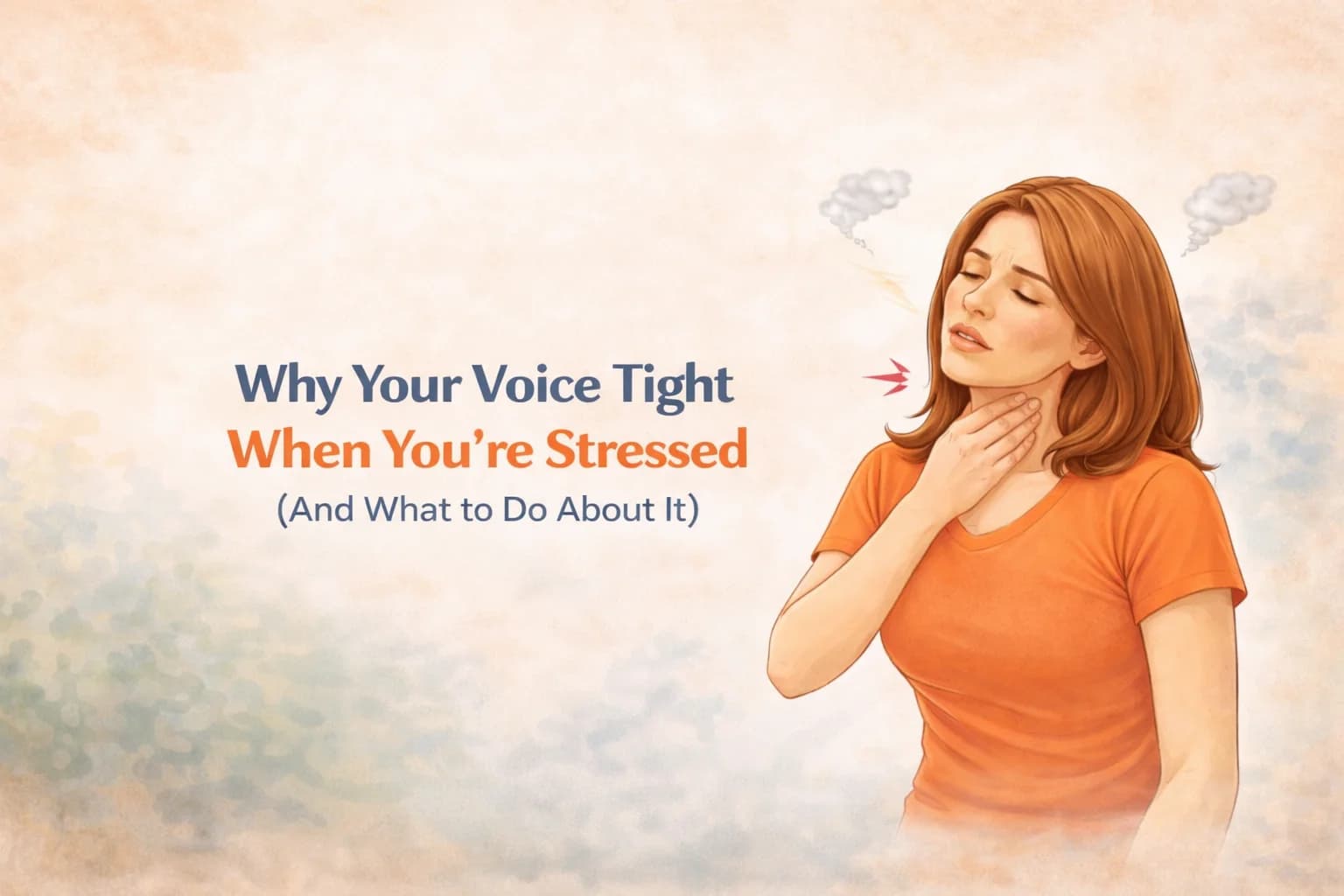
Why Stress Tightens Your Voice (And How to Fix It)
Throat tension and a tight voice under stress are not random. They follow a chain from jaw to neck to throat that the Feldenkrais Method can help unwind.
Mar 22, 2026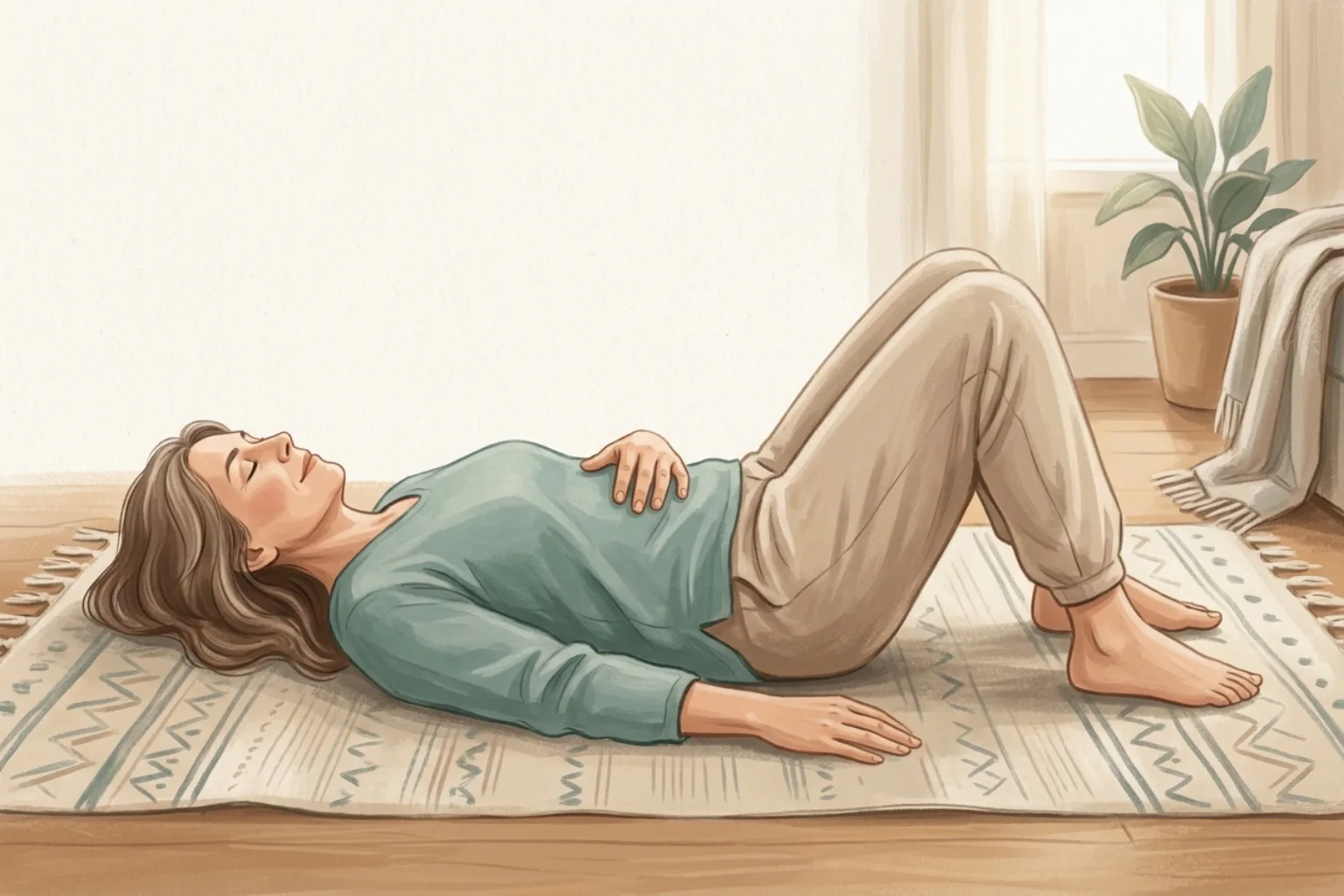
Awareness: You Cannot Change What You Do Not Notice
You cannot change what you cannot yet feel. In a Feldenkrais lesson, awareness is not a step toward change. It is where change begins.
Sep 4, 2026
Listening: The Body Was Talking All Along
In a Feldenkrais lesson, change begins with noticing. Listening to your body is not looking for what is wrong, but a gentle curiosity that opens easier movement.
Aug 30, 2026Ready to Start Moving Better?
Try your first lesson for free. No credit card required.