
Hip Pain Sleeping on Side: Why It Happens and What Helps
Hip pain sleeping on side usually means hours of weight on the bony point of the hip. Here is how to arrange the night kindly and let the joint settle.
In short
Hip pain sleeping on side usually comes from hours of body weight pressing on the bony point at the side of the hip while the top leg drags the pelvis across. A pillow between the knees, a softer surface, and gentle movement before bed often ease it.

Prefer to ease in gently?
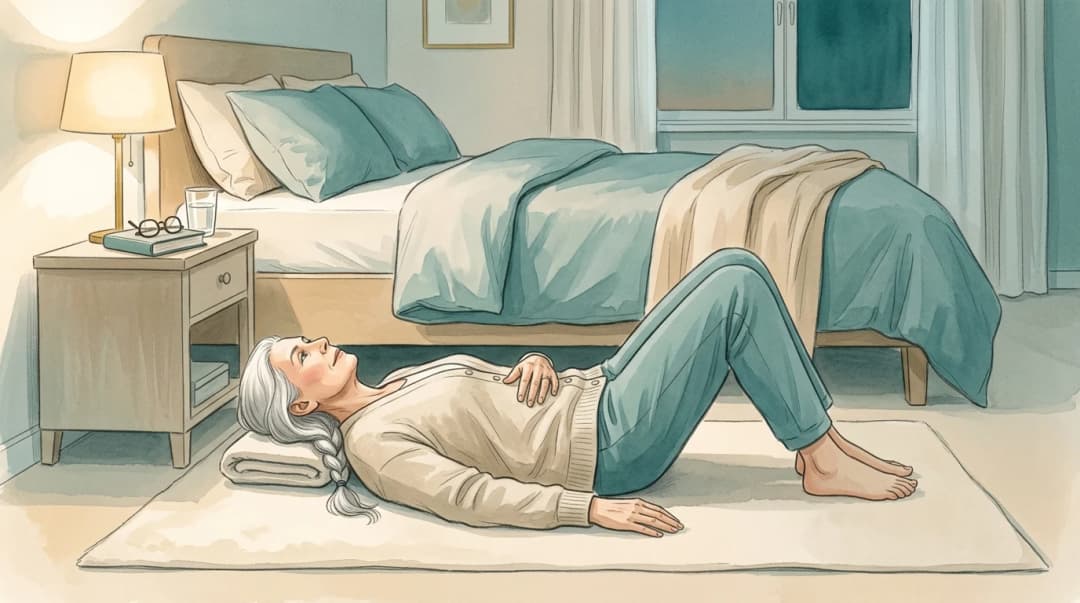
See a few gentle exercises for stress and sleep to try.
Before you begin. General information, not medical advice. See a doctor or physiotherapist for hip pain that is severe, persistent, wakes you every night and will not settle, or comes with fever or a leg that gives way. Any hip pain that follows a fall deserves prompt attention, since a fall onto the hip can fracture it, especially when bones have thinned. Keep anything you try small, slow, and comfortable.
There is a particular unfairness to a hip that saves its complaints for the night. All day it carries you without much comment, then you lie down on your side and within an hour a deep ache gathers at the outside of the hip and follows you toward morning. Hip pain sleeping on side has plain mechanics behind it. The side of the hip is not flat. A bony knuckle sits there, called the greater trochanter, and when you lie on your side much of your weight collects on that single point. At the same time the top leg tends to fall forward across your body, tipping the pelvis and pulling the tissues at the side of the hip taut exactly where the mattress presses into them.
Aches of this kind are remarkably widespread. Musculoskeletal conditions, the wide family these nighttime hip complaints sit inside, affect around 1.71 billion people worldwide (WHO, 2022). What follows is a movement teacher's view of the night: what is likely going on at the side of the hip, how to arrange yourself more kindly, and where the Feldenkrais Method® can quietly help.
Why hip pain from sleeping on your side happens
Several tendons from the gluteal muscles anchor onto the greater trochanter, and a small fluid cushion called a bursa lies over them so everything can glide. When hours of weight press that whole package into the bed, and the top leg drags the pelvis across so those tissues are stretched at the same moment they are squeezed, the area can grow irritated and stay tender for days.
Two contributors turn up most often. One is greater trochanteric pain syndrome, an irritation of those gluteal tendons and the bursa, which classically hurts most when you lie on it. The other is hip osteoarthritis, where the joint itself has become sensitive. Both are common in women past midlife, and only a clinician can say whether either applies to you; I name them so you can bring better questions to that conversation, not as a diagnosis. Our Feldypedia entry on hip stiffness and limited mobility gives the broader picture of how hips change over the years.
Setting up to sleep on your side with less hip pain
The aim is to spread the load and end the nightly drag on the tissues. A firm pillow between the knees, long enough to reach the ankles, lets the top leg travel level with the hip instead of hauling the pelvis into a twist. A softer mattress or a simple topper widens the area that carries your weight, so less of it funnels through the bony point. If there is a hollow at your waist, a small folded towel there keeps the middle of the body from sagging toward the bed. That same knee pillow also stops a forward tipped pelvis from rolling with the leg, and our guide to how to fix anterior pelvic tilt while sleeping goes further into the arrangement for a side sleeper.
Then give the tender side regular holidays. Spend part of the night on the other side with the same pillow arrangement, or on your back with a pillow beneath the knees. None of this is a rule. Comfort is the only measure that matters at two in the morning.
Gentle movement before bed for a hip that aches at night
A hip that has hurt at night for a while rarely arrives at the bed relaxed. Through the day the muscles around it learn to brace, and that low hum of effort comes to bed with you, so the joint meets your weight already tense. A few minutes of small, slow movement before sleep, done with attention rather than effort, gives the nervous system a chance to notice the bracing is no longer needed and set it down. A hip that reaches the mattress calmer tends to complain less when the weight arrives. Bracing of this kind is rarely confined to one place, and if you also wake with a tight jaw, our post on Feldenkrais® work for the jaw looks at the same whole body pattern from the face.
This is the territory of Feldenkrais: unhurried movements, well inside comfort, that invite the hip to sense support instead of forcing range. It is not stretching, and it is not a cure; it is a way of lowering the background tension the pain feeds on. You can read how tension and rest tangle together in our entry on sleep disruption and physical tension, and meet this way of working in the Feldy program for stress and sleep. For nearby help, see our guides to hip bursitis pain relief and lower back and hip stiffness. For a full evening version of the same idea, our somatic exercises for sleep lesson keeps the whole body in that slow key.
When to have the hip looked at
Clinical care sits alongside everything on this page. See a doctor or physiotherapist if the pain is severe, if it has gone on for weeks without change, if it wakes you every night and will not settle, or if it comes with fever or a leg that gives way. And any hip pain that follows a fall deserves prompt attention, because a fall onto the hip can fracture it, especially when bones have thinned with age. Kind arrangements at night and gentle movement are for comfort; they do not replace that appointment when one is needed.
A calmer body, easier nights
Understanding it is calming, moving with it more so. The Feldy program is meditation in movement, slow Feldenkrais® lessons that help a busy body settle so sleep can arrive on its own. Gentle, guided, and self-paced.
Start my free 7-day trialNo credit card needed.
Common Questions about hip pain from sleeping on your side (FAQ)
Why does my hip hurt when I sleep on my side?
Lying on your side gathers hours of body weight onto the greater trochanter, the bony point at the side of the hip, while the top leg falls across your body and pulls the tissues there taut. The gluteal tendons and the small cushioning sac that pass over that point can grow irritated under that combination. A clinician can tell you whether something like greater trochanteric pain syndrome or hip osteoarthritis is involved.
How should I set up my sleeping position for a sore hip?
Place a firm pillow between your knees, long enough to support the ankle too, so the top leg travels level instead of hauling the pelvis into a twist. A softer mattress or a topper widens the area that carries your weight, and a small folded towel under the waist keeps the middle of the body from sagging. Comfort is the measure, so keep adjusting until the hip feels supported rather than pressed.
Should I stop sleeping on the side that hurts?
Giving the tender side regular holidays often helps while it settles. Spend part of the night on the other side with the same pillow arrangement, or on your back with a pillow beneath the knees. You are not choosing forever, only lightening the load on an irritated spot until it calms.
How long does it take for hip pain from side sleeping to ease?
Nights often become more comfortable within days of changing the setup, because you are removing the pressure that stirs the pain. The irritation underneath tends to settle more gradually, over weeks rather than days, and the timeline depends on its cause. A few minutes of gentle movement most evenings tends to serve better than an occasional long session.
How is this different from stretching my hip?
Stretching aims to lengthen tissue by taking it toward the end of its range. The approach here moves in the opposite direction, using small, slow movements well inside comfort so the nervous system can lower its guard around the hip. For an irritated hip that quieter route often feels more welcome, since pressing a tender tendon into a strong stretch can stir it up.
When should I see a doctor about hip pain at night?
See a doctor or physiotherapist if the pain is severe, has gone on for weeks without change, wakes you every night and will not settle, or comes with fever or a leg that gives way. Any hip pain that follows a fall deserves prompt attention, because a fall onto the hip can fracture it, especially when bones have thinned. Clinical care sits alongside everything described here.
A calmer body, easier nights
See the programRelated resources
Hip Bursitis Pain Relief: Gentle Movement That Helps
Hip bursitis pain relief starts with rest during a flare, then gentle, pain-free movement that restores easy hip motion and eases the stiffness that follows.
Aching Lower Back and Hips: How Back and Hip Stiffness Travel Together
Why lower back and hip stiffness arrive together, how the pelvis links them, and gentle ways to help the hips share the work so the back can ease.
After 60, some of what movement does for your memory may happen while you sleep
Ready to start moving better?
Gentle, guided lessons for your body. Try your first one free, no credit card required.