
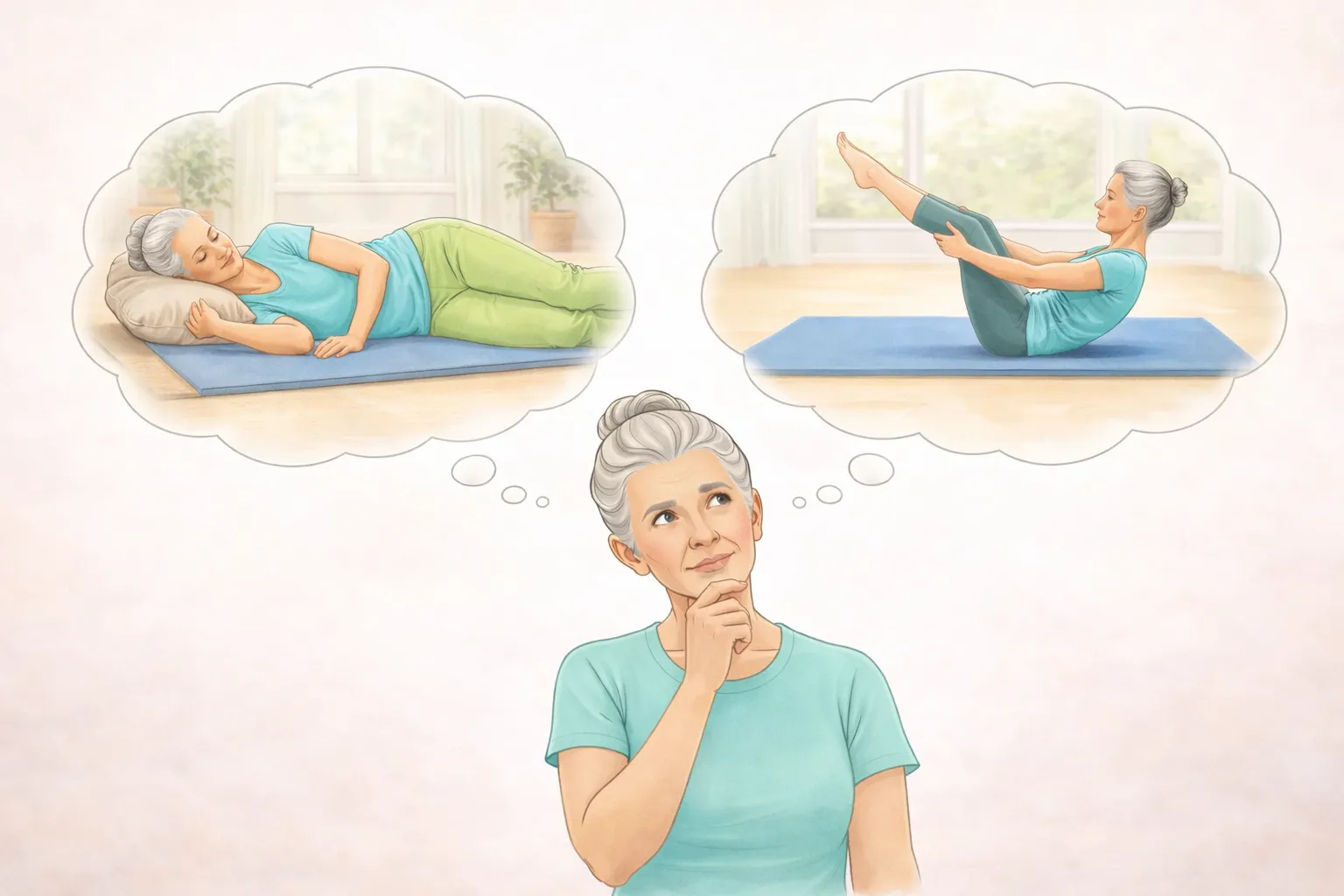
Feldenkrais vs Pilates: How to Choose
A side-by-side comparison of two popular movement methods, how they differ in philosophy and practice, what research says, and how to choose between them.
 Chava SoraniGuild Certified Feldenkrais Practitioner (GCFP)
People often compare Feldenkrais® and Pilates because both promise to help you move better, reduce pain, and feel more comfortable in your body. But the way they get there could not be more different.
One method asks you to slow down, explore, and let your nervous system figure out a better way. The other asks you to engage, strengthen, and build control through precise physical conditioning. These are not variations on a theme. They represent fundamentally different philosophies about what it means to improve movement.
Not sure which approach fits your body and goals? Take our 2-minute Movement Match quiz to find out.
The Quick Answer
If you are comparing Feldenkrais and Pilates, here are the core differences:
- Philosophy: Feldenkrais works through awareness and neurological learning. Pilates works through physical conditioning and muscular control.
- How you learn: Feldenkrais uses gentle, exploratory movements you follow at your own pace (often lying down). Pilates uses structured exercises with specific form and alignment targets.
- Effort level: Feldenkrais is deliberately low-effort. You do less so you can sense more. Pilates involves progressive physical challenge, building strength and endurance over time.
- What changes: Feldenkrais changes your movement patterns at the nervous system level. Pilates changes your muscular strength, stability, and control.
- Home practice: Feldenkrais works well with audio guidance alone. Mat Pilates can be done at home with video, though form feedback is valuable. Equipment-based Pilates requires a studio.
Both are worthwhile. They serve different needs and can even complement each other well. If you would like a second, more compact take, our resources page on Feldenkrais vs Pilates lays out the same comparison.
The Deep Comparison
| Feldenkrais Method® | Pilates | |
|---|---|---|
| Philosophy | Awareness and neurological learning | Strength, control, and alignment |
| Effort level | Gentle, minimal effort | Progressive physical challenge |
| Position | Mostly lying down | Mat, seated, standing, or apparatus |
| Instruction style | Open-ended exploration | Specific form and alignment cues |
| Home practice | Excellent (audio-guided) | Good for mat work, studio needed for equipment |
| Format | Group, audio, or 1-on-1 | Group class, private session, or video |
| Core focus | Whole-body integration | Deep core stabilizers ("powerhouse") |
| Goal | Move more efficiently with less effort | Move with more strength and control |
| Best for pain | Chronic pain, nerve pain, post-injury | Back pain, post-rehab, joint support |
| Performance | Athletes, musicians, anyone with habitual tension | Dancers, athletes, rehabilitation |
| Key research | RCTs for pain, balance & body awareness | Meta-analyses for back pain & disability |
How Each Method Actually Works
The Feldenkrais Approach: Learning Through Exploration
A Feldenkrais lesson typically begins with you lying on your back. A practitioner's voice guides you through a series of gentle, curious movements. You might tilt your pelvis, explore how your ribs connect to your breathing, or notice what happens in your shoulders when you turn your head.
The movements are small and slow on purpose. Not because fragility demands it, but because the nervous system learns more when the stimulus is subtle. This follows a principle known as Weber-Fechner's Law: reduce the effort, and your ability to sense differences increases. You literally notice more when you do less.
Nobody tells you what "correct" looks like. You explore variations and your nervous system picks up what works better on its own. This is implicit learning, the same process that allows a child to learn to walk without understanding biomechanics.
The result is that changes tend to feel natural. You do not leave a Feldenkrais lesson thinking "I must remember to hold myself this way." You leave and notice that something has shifted, that reaching, turning, or walking feels different without you trying to make it so. To get a sense of what these explorations feel like, our set of 10 gentle Feldenkrais exercises gives you a taste you can try at home.
The Pilates Approach: Building Through Conditioning
A Pilates session has a different feel entirely. Whether on a mat or a Reformer, you are given specific exercises with clear alignment cues. Engage your deep abdominals. Keep your pelvis neutral. Exhale as you curl up. The instructor watches your form and corrects as needed.
Joseph Pilates called the deep core muscles the "powerhouse," and the method is built around the idea that a strong, stable center supports everything else the body does. Exercises progress in difficulty. You build strength, endurance, and control over time.
Pilates is explicit about what good form looks like, and instruction guides you toward it. This is a strength of the method: you know what you are working on, you can feel yourself getting stronger, and the progression is tangible. For people who like clear structure and measurable progress, this is deeply satisfying.
The emphasis is on physical conditioning. While Pilates involves paying attention to your body, its primary aim is to make you stronger and more stable, not to change how your nervous system organizes movement at a fundamental level.
What the Research Says
Both methods have a meaningful body of peer-reviewed evidence, though they focus on different outcomes.
Pilates: The evidence base for Pilates is strong, particularly for back pain. A 2024 systematic review and meta-analysis of 36 studies found that Pilates produced measurable reductions in both pain and disability for chronic low back pain. A large network meta-analysis published in JOSPT (2022), comparing multiple exercise types across over 9,700 participants, ranked Pilates among the most effective approaches for both pain reduction and functional improvement. There is also good evidence for Pilates in post-rehabilitation settings and for musculoskeletal conditions in older adults.
Feldenkrais Method®: A 2022 systematic review and meta-analysis of randomized controlled trials found that the Feldenkrais Method® produced significant improvements in balance, body image, and pain. A 2020 RCT comparing Feldenkrais to core stability exercises for chronic low back pain found comparable pain reduction with additional improvements in body awareness. A 2017 study found that Feldenkrais participants developed significantly greater interoceptive awareness, the ability to sense what is happening inside the body, suggesting the method changes not just how you move but how you perceive your own body. (For a deeper look at the evidence, including a 2025 clinical trial, see our full review of Feldenkrais research for back pain.)
The research reflects what each method does best. Pilates builds measurable physical capacity. Feldenkrais changes how the nervous system organizes and perceives movement.
Who Should Choose Which
Feldenkrais may be the better fit if you:
- Want a gentle practice you can do at home with audio guidance
- Are dealing with chronic pain and find that strengthening exercises increase discomfort
- Prefer to learn through exploration rather than following specific form cues
- Have pain that makes exercise in sitting or standing positions difficult (Feldenkrais lessons are done lying down)
- Want to change habitual movement patterns, not just build strength
- Are working with sciatica, neck tension, or chronic back pain that has not responded well to exercise-based approaches
Pilates may be the better fit if you:
- Want to build core strength and physical conditioning
- Like structured exercises with clear progression and measurable results
- Are recovering from an injury and need to rebuild muscular support
- Enjoy the energy and accountability of group classes or studio sessions
- Want a practice that is physically challenging and fitness-oriented
- Are dealing with hip stiffness, post-surgical recovery, or general deconditioning
You might want both if you:
- Want to combine awareness work (Feldenkrais) with physical conditioning (Pilates)
- Find that Feldenkrais helps you move better, and Pilates helps you move stronger
- Have chronic pain that benefits from both nervous system re-education and targeted strengthening
The Honest Truth About Choosing
These methods are not really competitors. They address different aspects of how the body works.
Pilates asks: "How can I make my body stronger and more controlled?" Feldenkrais asks: "How can I help my nervous system find a more efficient way to move?" Both are legitimate questions. Which one matters more to you right now depends on where you are in your life and what your body needs.
For many people, the answer changes over time. Someone recovering from an injury might start with Feldenkrais to restore comfortable movement, then add Pilates to rebuild strength. Someone who has been doing Pilates for years might discover Feldenkrais and find it addresses tension patterns that strengthening alone could not resolve.
The most important factor is not which method is theoretically superior. It is which one you will actually do consistently. A gentle Feldenkrais practice you do every morning will produce more benefit than Pilates classes you keep meaning to attend. And a Pilates routine you genuinely enjoy will serve you better than Feldenkrais lessons you never quite get around to.
Both methods reward your attention. Both produce real, lasting change. The path you choose matters less than the commitment you bring to it.
FAQ about Feldenkrais vs Pilates
What is the main difference between the Feldenkrais Method and Pilates?
The Feldenkrais Method uses gentle, exploratory movement sequences to help your nervous system discover more efficient patterns. Pilates uses structured exercises to build core strength, stability, and alignment. Feldenkrais focuses on how you move. Pilates focuses on making you stronger. Both improve how your body functions, but through very different processes.
Which is better for chronic back pain, Feldenkrais or Pilates?
Both have research support for chronic back pain. A 2024 meta-analysis of 36 studies found Pilates effective for reducing pain and disability. Feldenkrais has randomized controlled trials showing improvements in pain, function, and body awareness. Pilates strengthens the muscles that support the spine. Feldenkrais helps the nervous system find movement patterns that reduce strain. The better choice depends on whether your pain responds more to strengthening or to changing how you move.
Can I do Feldenkrais and Pilates together?
Yes, many people find they complement each other well. Feldenkrais can help you develop body awareness and release habitual tension, which can then make your Pilates practice more effective. Some practitioners find that the awareness gained from Feldenkrais improves their form and reduces strain during Pilates exercises.
Which method is better for older adults?
Both can be adapted for older adults, but Feldenkrais may be more accessible for many. Lessons are typically done lying down, which removes balance concerns and is gentle on joints. Pilates mat work can be modified for older adults, though some exercises involve significant core loading or spinal flexion that may need careful adaptation. For someone new to movement practice after 60, Feldenkrais tends to be an easier starting point.
Can I learn either method at home?
Feldenkrais is designed for home practice. Awareness Through Movement® lessons are audio-guided and work well independently. Mat Pilates can also be done at home with video instruction, though having a teacher check your form is valuable, especially when starting out. Equipment-based Pilates requires studio access. For a fully independent home practice, Feldenkrais has a practical advantage.
Is Pilates or Feldenkrais better for posture?
Both can improve posture, but they approach it differently. Pilates strengthens the muscles that hold you upright, particularly the deep core and spinal stabilizers. Feldenkrais helps your nervous system find a more balanced organization so that good posture requires less effort. Pilates builds the strength to hold yourself well. Feldenkrais helps you find an alignment that feels natural and effortless.
Which is more affordable?
Feldenkrais is generally more affordable for ongoing practice. Audio-guided lessons, like those offered by Feldy, provide a complete practice at a fraction of the cost of classes. Mat Pilates group classes are moderately priced, while private equipment-based Pilates sessions are typically the most expensive option.
Start your free 7-day trial
Start free trialMore Articles
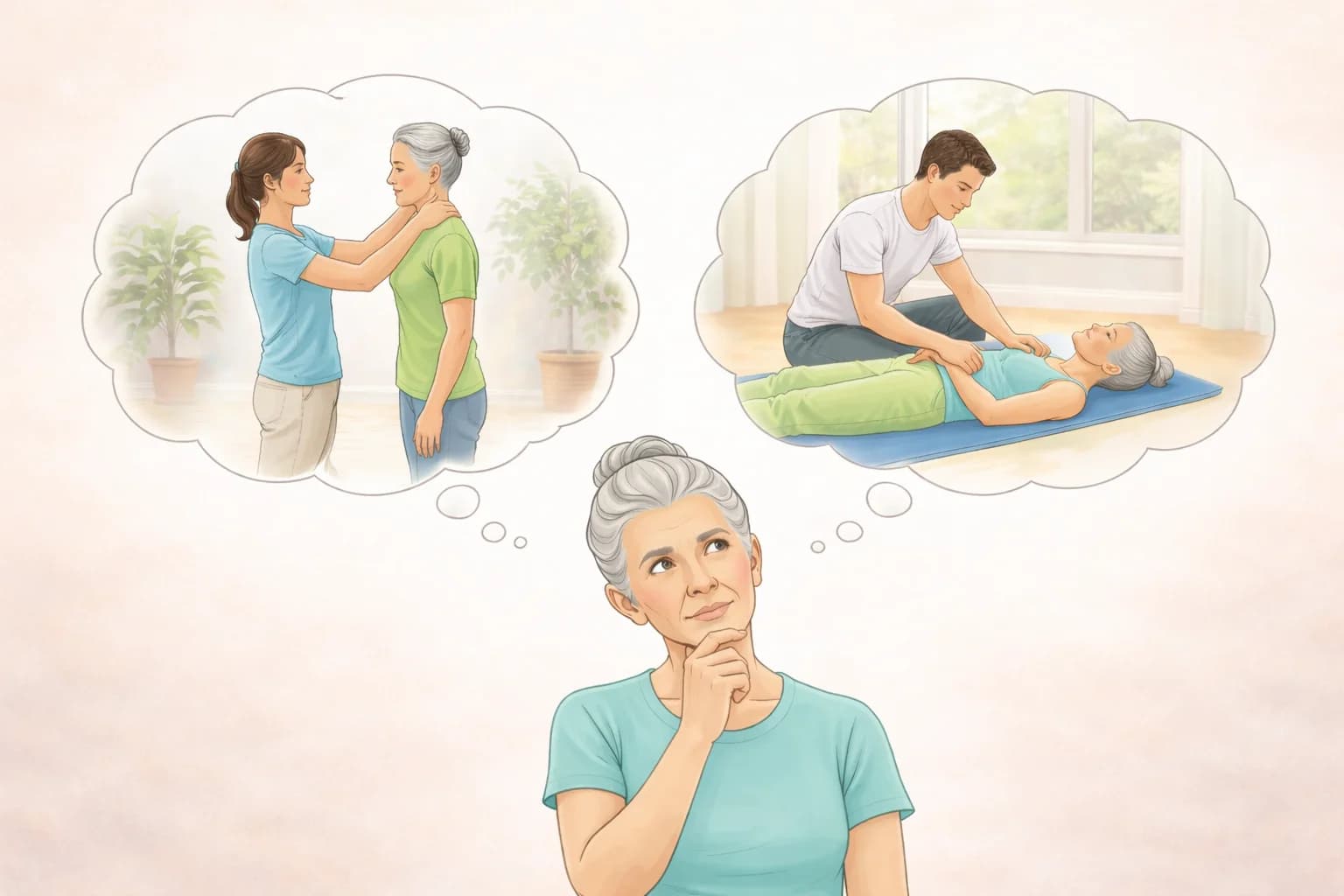
Alexander Technique or Feldenkrais? What Each Feels Like From the Inside
What a lesson of each method feels like from the inside, what the research says, and how to choose the one that suits the way you learn.
Apr 6, 2026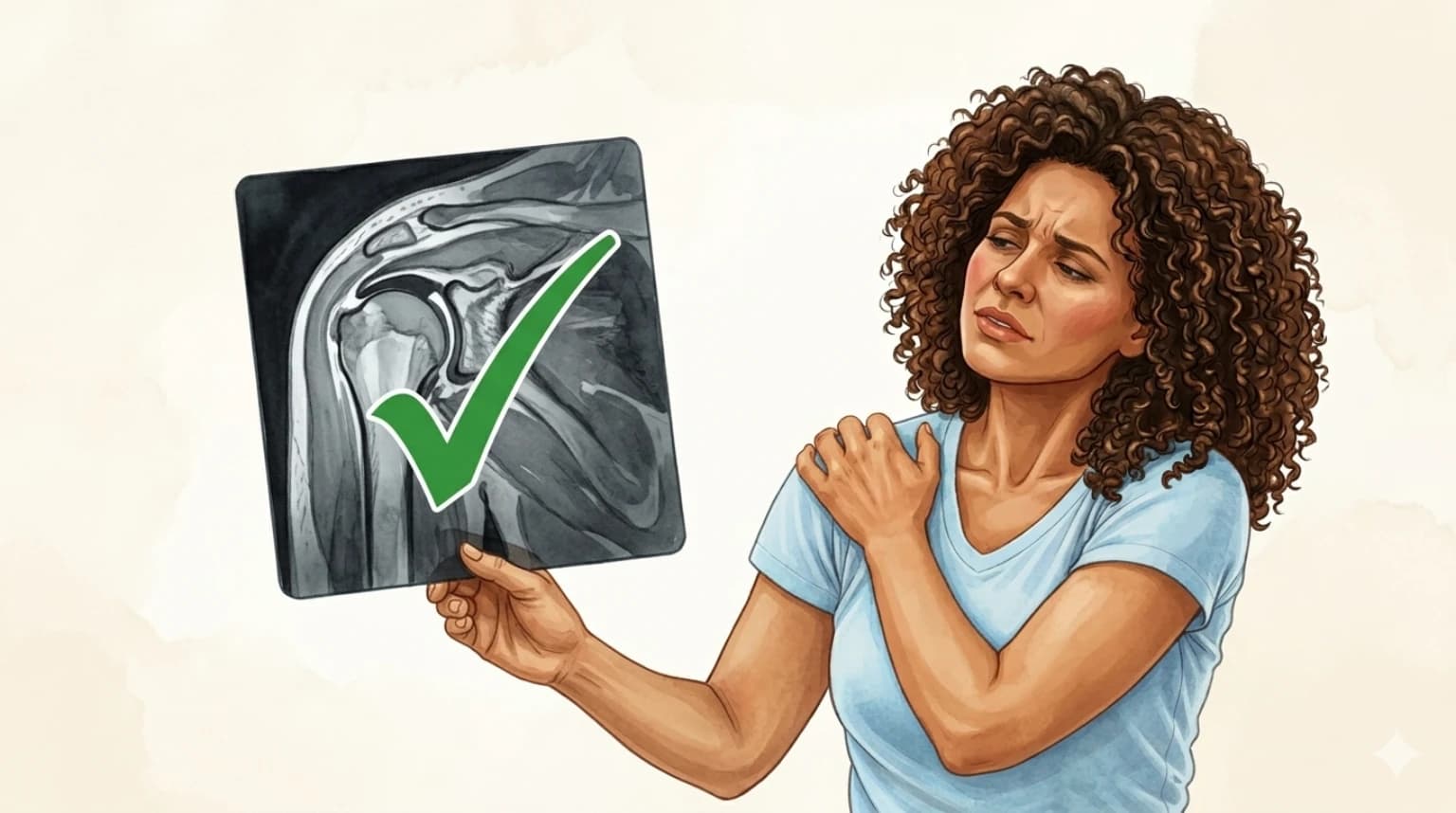
Everything Looks Fine on the MRI. So Why Do You Still Hurt?
When imaging comes back normal but the pain is real, the answer might lie in how your body has learned to protect itself, not in what is broken.
Apr 8, 2026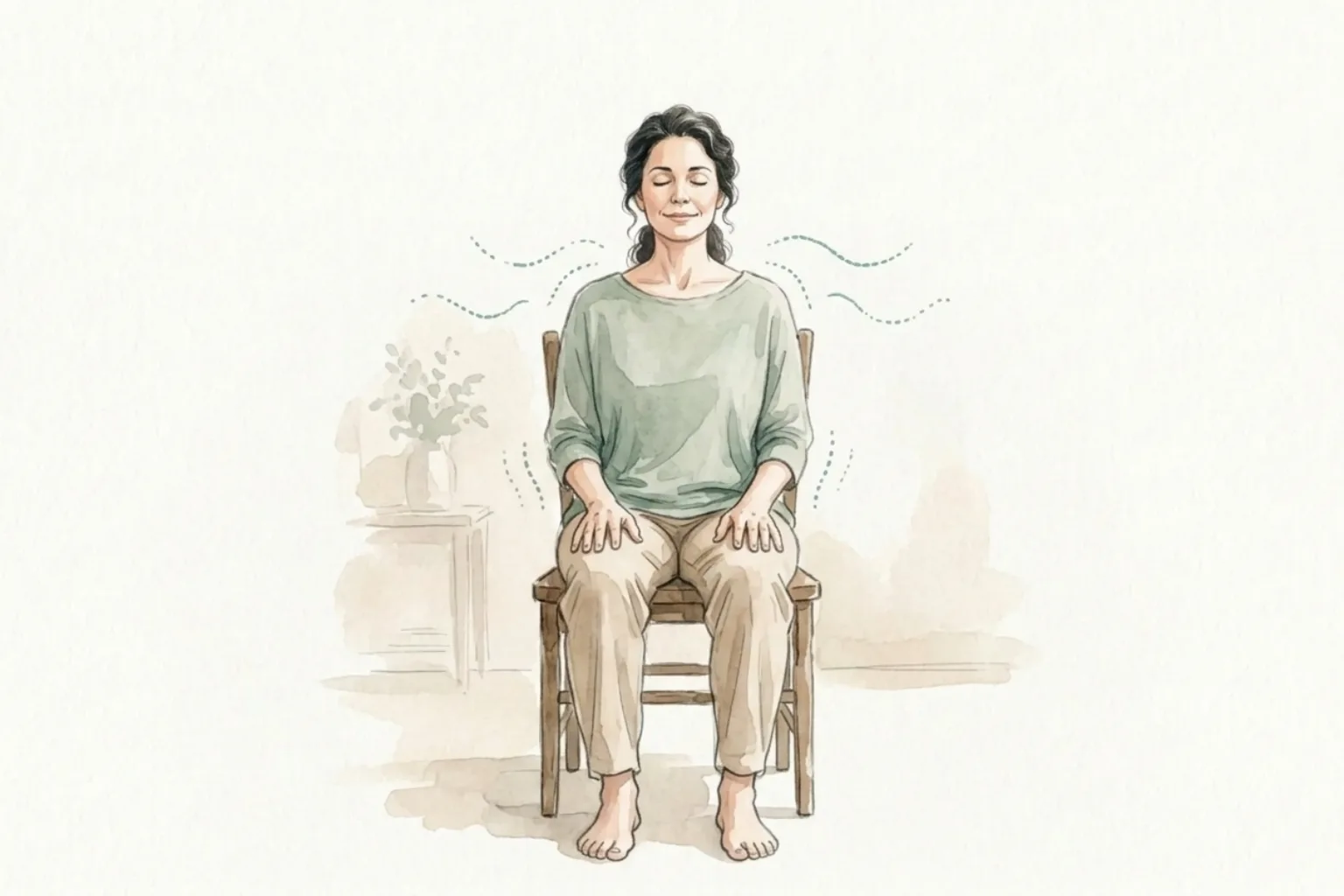
Hypermobile and Always Bracing? Feeling Steady With Less Effort
Why hypermobile joints can feel tight, why stretching the tightness often doesn't help, and a gentle way to notice your bracing between physio sessions.
Oct 26, 2026Ready to Start Moving Better?
Try your first lesson for free. No credit card required.