
Sciatic Pain Management with the Feldenkrais Method
Why sciatica keeps coming back, how your body's protective patterns may be part of the problem, and what gentle movement awareness can do about it.
Sciatica is one of those conditions that changes the way you move through your entire day. The sharp, burning pain down one leg. The inability to sit comfortably. The way you start guarding every movement, bracing before you bend, holding your breath before you stand up. It is consuming, and it is frightening.
When sciatica flares up, the natural instinct is to rest, take anti-inflammatories, and wait. You might try stretches for the hamstrings and piriformis, or look into injections or, eventually, surgery. These approaches all have their place, and many people do recover. About 90% of sciatica cases resolve within 6 to 12 weeks without surgery. But what keeps it coming back is often the movement pattern your body built around the pain, and this is where the Feldenkrais Method® offers something different.
The pain may go away, but the way your body reorganized around it usually does not. Those protective patterns, the guarded pelvis, the rigid lower back, the shifted walk, are often what brings the sciatica back months or years later.
The Pattern Around the Pain
When the sciatic nerve is irritated, whether from a disc herniation, spinal stenosis, or piriformis tightness, your body does something intelligent: it reorganizes to protect the area. The pelvis tilts. The spine shifts. One hip carries more weight than the other. You start walking differently, sitting differently, even breathing differently.
This protective response is necessary in the short term. But the nervous system is a fast learner and a slow forgetter. Even after the original irritation calms down, the guarding patterns persist. The pelvis stays rigid. The hip stays tight. The lower back continues to absorb forces that should be distributed across a wider area.
Many people who have recovered from an episode of sciatica describe a lingering sense that something is still off. They can walk, they can sit, the acute pain is gone, but they do not trust their back. They move carefully, tentatively, as if waiting for it to happen again. And often it does, because the movement pattern that overloaded the spine in the first place has not changed.
Why Stretching and Strengthening Are Not Always Enough
The standard rehabilitation approach to sciatica focuses on two things: stretching what is tight and strengthening what is weak. Hamstring stretches, piriformis stretches, core strengthening, nerve glides. These are all well-supported interventions and they help many people.
But they share a limitation: they address individual muscles and structures in isolation. Sciatica is not an isolated problem. It is the result of how the entire lower body is organized, how the pelvis, hips, spine, and legs coordinate (or fail to coordinate) during every movement you make.
You can stretch the piriformis every day, but if the reason it tightens is that your pelvis does not move freely during walking, the tightness will return. You can strengthen your core, but if your body's strategy is to brace the lower back rather than letting the hips and thoracic spine share the movement, the strengthening may reinforce the very pattern that is causing the problem.
This is not an argument against physiotherapy. It is an argument for also addressing the bigger picture.
How the Feldenkrais Method® Approaches Sciatica
The Feldenkrais Method works with the whole-body organization that affects the sciatic nerve, including the movement patterns, tension, and compensation that load the lower spine.
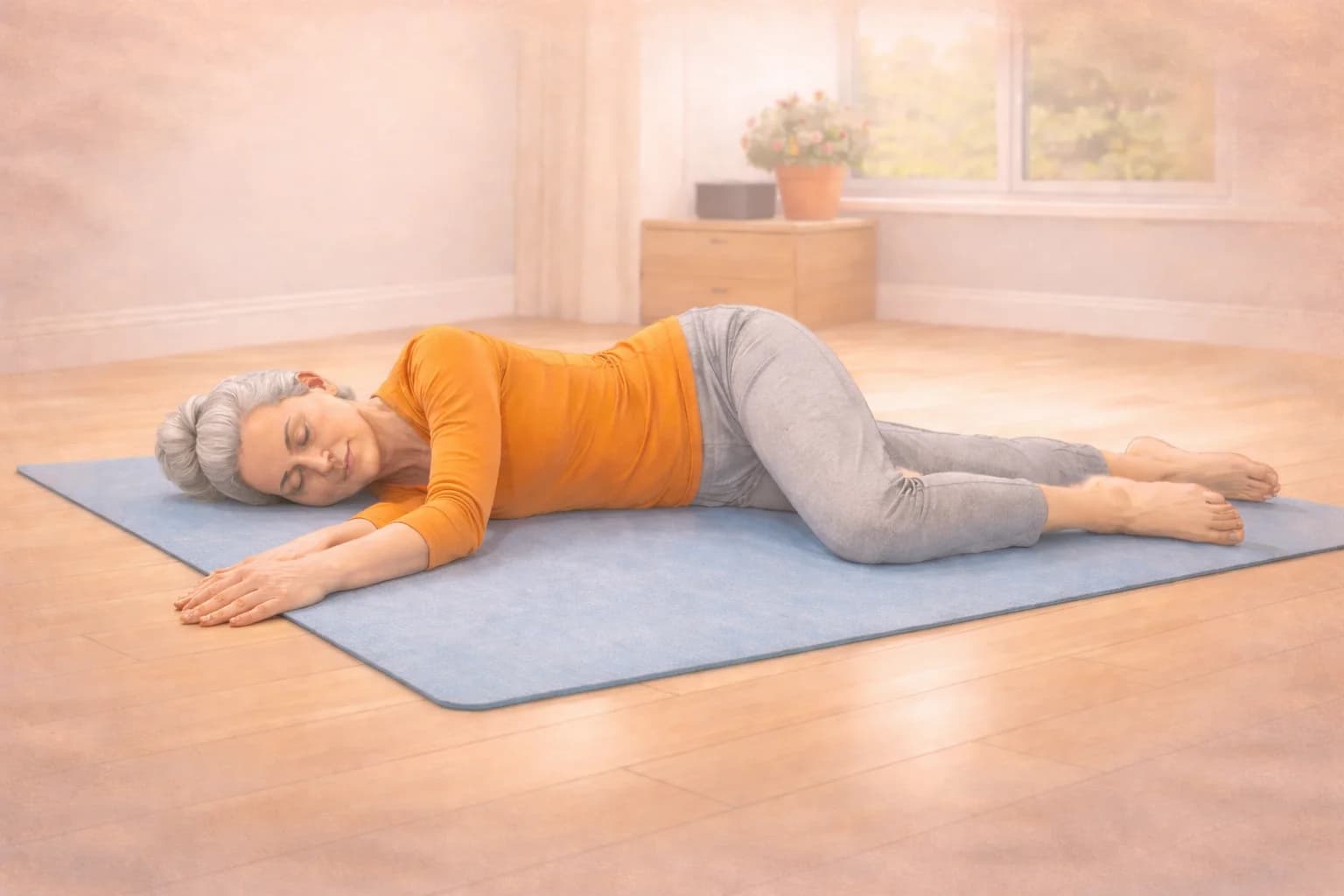
A lesson might begin with you lying on your back, knees bent, and simply noticing how your pelvis rests on the floor. Which side is heavier? Which side is lifted? Then, very slowly, you begin to tilt the pelvis, tiny movements, barely visible. Not toward a goal, but with curiosity. What happens in the lower back? What happens in the hip joints? Where does the movement travel easily, and where does it stop?
These are not exercises. They are explorations. And the distinction matters. An exercise asks you to do something specific to build strength or flexibility. An exploration asks you to notice something specific so your nervous system can update its map.
When the nervous system receives clear, gentle, non-threatening information about how the pelvis can move, it begins to release the bracing it has been holding. Not because you told it to relax, but because it discovered, through direct experience, that movement is safe.
This is why Feldenkrais lessons are so slow and so small. Speed and force trigger the protective response. Slowness and gentleness bypass it. The nervous system listens when it feels safe.
What Changes
People working with sciatica through the Feldenkrais Method commonly describe a recognizable sequence of changes.
First, they find positions of comfort more easily. The lesson teaches them to sense, with more precision, what their body is doing and what it needs. They stop fighting with pillows and positions and start feeling their way to relief.
Second, the overall tension level drops. Sciatica creates a full-body holding pattern: the jaw clenches, the shoulders rise, the breathing tightens. As the lessons calm the nervous system, this background tension eases. The pain may not change immediately, but everything around it softens.
Third, the pelvis and hips begin to move again. This is often the turning point. When the pelvis can tilt, rotate, and shift weight freely, the lower back stops doing all the work. The load on the irritated area decreases. For many people, this is when the pain begins to genuinely improve.
Fourth, and most importantly for prevention, new movement habits develop. The way you bend to pick something up. The way you shift your weight when walking. The way you sit. These small, daily patterns determine how much cumulative load your lower spine absorbs, and Feldenkrais lessons change them from the ground up.
The Fear-Avoidance Problem
One of the most important things to understand about sciatica is the fear-avoidance cycle. The pain is so intense and so unpredictable that you start avoiding movement. But avoiding movement leads to more stiffness, more deconditioning, and a nervous system that becomes more, not less, sensitive to pain signals.
Research consistently shows that staying active, within comfortable limits, produces better outcomes than rest. But this is easier said than done when every movement feels like a risk.
The Feldenkrais Method is particularly valuable here because the movements are so small and so gentle that they do not trigger the fear response. You are lying on the floor. The movements are barely visible. Nothing hurts. And yet the nervous system is learning, updating, reorganizing. You are moving your way out of the fear-avoidance cycle without ever confronting the fear head-on.
This matters enormously for recovery. A 2017 study found that Feldenkrais participants with chronic low back pain showed greater improvements in interoceptive awareness, the ability to sense what is happening inside the body, compared to a standard back school program. Better body awareness means better movement choices, which means less re-injury.
Try a Gentle Lesson at Home
A free Feldenkrais lesson, done lying down. No equipment needed. Work entirely within your comfortable range.
Try a Free LessonWhat Feldenkrais Does Not Do
It is important to be clear about this. The Feldenkrais Method is not a replacement for medical evaluation. It does not address disc herniations, spinal stenosis, or other structural causes directly.
What it does is address the layer that other treatments often miss: the way your body has organized itself around the problem. It works alongside physiotherapy, medication, and medical management, not instead of them.
If you have sciatica, see a healthcare provider. Get a proper assessment. Understand what is driving your symptoms. Then consider adding movement awareness work to your recovery, because the structural issue is only half the story. The movement pattern is the other half.
For a deeper look at the mechanics of sciatica and nerve-related back pain, including research, conventional options, and how different movement methods compare, see our Feldypedia entry.
When to Seek Urgent Medical Attention
Most sciatica improves with time and conservative care, but some signs require immediate medical evaluation:
- Loss of bladder or bowel control
- Progressive weakness in the leg or foot
- Numbness in the groin or inner thigh
- Severe pain that does not respond to any position or medication
These are rare but serious. Do not wait if you experience them.
FAQ about Sciatic Pain Management with the Feldenkrais Method
Can the Feldenkrais Method help with sciatica?
Yes, as a complement to medical care. The Feldenkrais Method addresses the whole-body movement patterns that load the lower spine and irritate the sciatic nerve. By restoring mobility to the pelvis, hips, and thoracic spine, it reduces the compression that often drives sciatic pain. Research on the method for chronic low back pain shows improvements in body awareness, pain, and quality of life.
Is it safe to do Feldenkrais with active sciatica?
Yes. Feldenkrais lessons are done lying down with very small, slow movements. You work within your comfortable range at all times. There is no stretching, no pushing through pain, and no position you need to achieve. If a movement increases your pain, you simply make it smaller or skip it. Many people find it is one of the few approaches they can tolerate during a flare.
How is Feldenkrais different from physiotherapy for sciatica?
Physiotherapy typically targets the painful area with stretches, nerve glides, and strengthening exercises. Feldenkrais works differently: it addresses how the entire body is organized around the pain. The pelvis, hips, ribcage, and spine all contribute to how the lower back is loaded. By improving the coordination of these structures, the demand on the irritated area decreases.
How long before I notice improvement?
Many people notice some relief after a single session, particularly a reduction in overall tension and an easier time finding comfortable positions. Lasting change in the underlying movement patterns typically takes a few weeks of regular practice. Sciatica itself often takes 6 to 12 weeks to resolve significantly, regardless of the approach.
Should I still see a doctor if I have sciatica?
Yes. Sciatica should be evaluated by a healthcare provider, especially if you have progressive leg weakness, numbness in the groin area, or bladder or bowel changes. The Feldenkrais Method is not a replacement for medical care. It works best alongside other treatment as a way to address the movement patterns that contribute to nerve irritation.
Can Feldenkrais prevent sciatica from coming back?
This is one of its strongest contributions. Sciatica often recurs because the movement habits that overloaded the spine in the first place remain unchanged. Feldenkrais lessons help you develop new ways of sitting, bending, and moving that distribute load more evenly through the pelvis, hips, and spine, reducing the chance of re-irritation.
What does a Feldenkrais lesson for sciatica look like?
You lie on your back or side and are guided through very gentle movements, often involving the pelvis, hips, and legs. The movements are small and slow, and you rest frequently. A typical lesson lasts 15 to 45 minutes. There is no equipment needed and no particular fitness level required.
Start your free 7-day trial
Start free trialMore Articles
Feldenkrais vs Pilates: How to Choose
A side-by-side comparison of two popular movement methods, how they differ in philosophy and practice, what research says, and how to choose between them.
Apr 17, 2026
Everything Looks Fine on the MRI. So Why Do You Still Hurt?
When imaging comes back normal but the pain is real, the answer might lie in how your body has learned to protect itself, not in what is broken.
Apr 8, 2026
Curiosity: Gentler Than Correction
What changes when the question in your mind shifts from "Am I doing it right?" to "What do I notice?"
Oct 16, 2026Ready to Start Moving Better?
Try your first lesson for free. No credit card required.