
Yoga, tai chi, walking: movement and insomnia
A 2026 network meta analysis compared yoga, tai chi, and walking for insomnia. Different mechanisms, but a shared thread matters more than the ranking.
If you have trouble sleeping and someone suggests you exercise, the obvious next question is which kind. A large 2026 review set out to answer exactly that, and the honest version of its answer is more useful than the headline.
The review appeared in BMJ Evidence Based Medicine and pooled 22 randomized trials covering 1,348 adults with insomnia, comparing several forms of movement against each other (BMJ Evidence Based Medicine, 2026). Three approaches stood out from the rest. Yoga was associated with the largest gains, including roughly 15 percent better sleep efficiency, the share of time in bed actually spent asleep, and the biggest rise in total sleep time. That total sleep time result was the standout number in the pooled estimate, though it rests on a small and varied set of trials, so it reads better as a direction than as a promise (Harvard Health, 2026). Tai chi added around fifty minutes of sleep and lowered a standard poor sleep score by more than four points, with benefits that in some trials held for up to two years. Walking or jogging produced the biggest drop in insomnia severity.
Two cautions belong right next to those numbers. The researchers rated their confidence as moderate at best, and low for most of the comparisons, because the underlying trials were small and varied (BMJ Group, 2026). And a separate network meta analysis published in June 2026, pooling 31 trials and 2,457 people, found that the most consistently supported option was not movement on its own but movement paired with cognitive behavioral therapy for insomnia, the leading treatment that does not rely on medication (Frontiers in Public Health, 2026). Movement earns its place next to that care, not in place of it.
What the comparison actually tells us
It is tempting to read a study like this as a leaderboard and simply pick the winner. I would gently suggest the ranking was never the most useful part.
Look instead at what these approaches share. Yoga, tai chi, and a brisk evening walk are very different activities working through different mechanisms, each with its own strengths. Yoga and tai chi lean on slow movement, breath, and attention. Walking leans on rhythm and steady, gentle load. Yet all three helped, and the gaps between them were small and held with low confidence. When methods this different land in a similar place, it is a strong hint that the shared ingredient matters more than the label on the box.
That shared ingredient looks a great deal like teaching an overactive nervous system how to downshift. Insomnia often runs on arousal, a body that cannot find the off ramp at night, and sleep trouble and physical tension tend to travel together. Practices that lower the background hum of stress the body carries seem to let sleep arrive more easily. The Feldenkrais Method®, which I teach, sits in that same territory. It is a different mechanism again, gentle and slow, working through attention and sensing rather than effort. It was not one of the methods in this trial, so I am not going to claim it beats yoga for sleep. What I can say is that the thing these practices appear to share, a shift toward less arousal and more comfortable attention to the body, is exactly what an Awareness Through Movement® lesson is built to cultivate.
So which one should you try?
The one you will actually do on the night before a hard day.
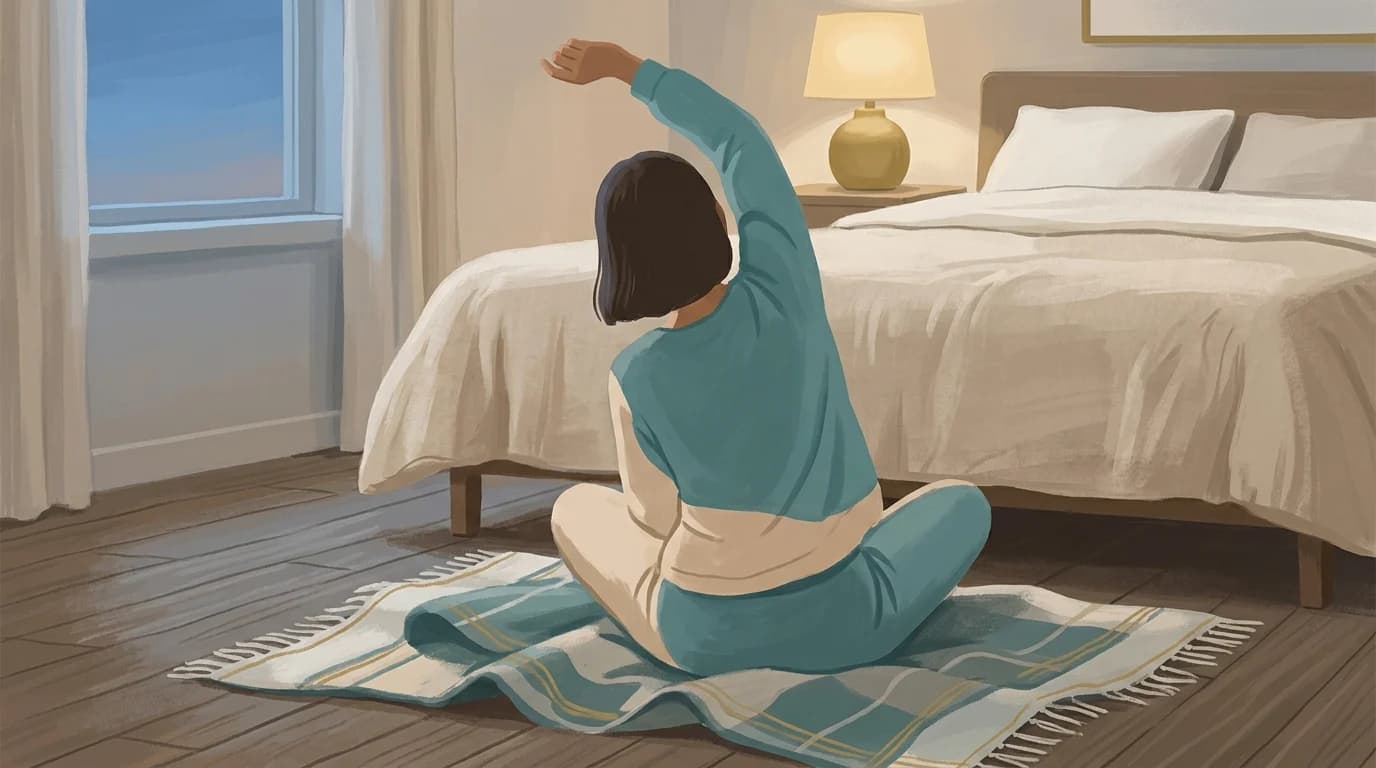
That is not a dodge. Consistency is the quiet variable that decides most of these outcomes, and it is the one trials struggle to measure. A gentle yoga sequence you enjoy, a tai chi form you can follow, a short walk after dinner, or a slow floor lesson in dim light: any of these may help, and the best one is the one that fits your evening and that you will come back to. Each method has its own strengths, and none of them ask you to push. Start smaller and slower than feels necessary, keep the movement easy and pleasant, and treat winding down, rather than working out, as the point. If you would like an app to guide those evenings, our comparison of the best app for stress and tension relief sets movement based options beside the meditation apps.
Keep any of it alongside your clinical care rather than instead of it. If insomnia is entrenched, cognitive behavioral therapy for insomnia remains the best supported treatment, and the June review suggests movement works best sitting right next to it (Frontiers in Public Health, 2026). Movement is a companion to that care, not a replacement, and a good clinician will welcome it.
What a review like this quietly hands back is permission to stop hunting for the perfect protocol. The evidence does not point to one correct exercise for sleep. It points to a family of gentle, attentive ways of moving, most of which seem to help, through a nervous system that learns, night after night, that it is safe to let go. Find the corner of that family that fits your evenings, and let the rest go.
Let Feldy guide you, eyes closed
A calm voice walks you through gentle moves so your attention stays in your body, not on the screen.
Try Feldy Free for 7 daysNo credit card needed.
Sources
- Effects of various exercise interventions in insomnia patients: a systematic review and network meta-analysis— BMJ Evidence Based Medicine
- Yoga, tai chi, walking, and running may help with insomnia— Harvard Health Publishing
- Yoga, tai chi, walking and jogging may be best forms of exercise for insomnia— BMJ Group
- Effects of different intervention modalities combined with exercise in patients with insomnia: a systematic review and network meta-analysis— Frontiers in Public Health
Movement Pulse is informational, not medical advice. See our editorial policy.
Move better with Feldy
See the programMovement Pulse Weekly
The week's best research, in your inbox Tuesday.
Movement science, gentle-practice ideas, and a practitioner's read on what's new. Free.
More from Movement Pulse

Why moving in the evening may matter less for your sleep than how hard you move
A review of 25 comparative studies found no clear group level advantage for morning exercise. The signal that did survive was about intensity, not the hour.
Aug 24, 2026
Why more exercise can stop helping your sleep, and what the curve actually shows
Researchers mapped exercise dose against sleep quality and found a peak, not a ladder. Three questions worth bringing to your next appointment.
Aug 2, 2026
Better sleep, harder mornings: a sleep drug trial
A randomized trial of low dose quetiapine, often prescribed off label for sleep, found it improved sleep but impaired next day alertness and driving.
Jun 22, 2026Ready to start moving better?
Gentle, guided lessons for your body. Try your first one free, no credit card required.