
How to Tell If Your Hip Flexors Are Tight: Signs and Checks
The everyday signs of tight hip flexors, two gentle self checks you can try at home, and an awareness led way to help the front of the hips feel freer.
In short
The clearest way to tell if your hip flexors are tight is to notice everyday signs: trouble standing fully upright after long sitting, a pull at the front of the hip as you stride, or a lower back that arches to make up for it. A simple lying self check can confirm it.

Prefer to ease in gently?
See a few gentle exercises for knees and hips to try.
If you want to know how to tell if your hip flexors are tight, you can learn a surprising amount from a few everyday signs and one simple self check, no clinic required. The hip flexors are the muscles at the front of the hip that lift your thigh toward your body and help hold your spine as you sit and stand. When they stay shortened, often after long hours of sitting, they can quietly change how you stand, stride, and lie down. A gentle approach drawn from the Feldenkrais Method® can then help the front of the hip feel freer without forcing a hard stretch. If you want to see what that approach actually works on, our page on Feldenkrais for hip pain lays it out.
Hip discomfort grows more common with age. About 528 million people worldwide were living with osteoarthritis in 2019, with the knee and hip among the joints most affected (WHO, 2023), and how the hip flexors carry the hip plays a quiet part in how easy or bound that joint feels day to day.
Everyday signs your hip flexors are tight
The first clues show up in ordinary life. After sitting for a while, you may notice it takes a moment to stand fully upright, as if the front of the hip is slow to lengthen. When you walk quickly, you might feel a pull or a short leash at the front of the hip rather than a free, long stride behind you. Lying flat on your back, one or both knees may want to lift slightly off the surface, or your lower back may arch away from the floor as it makes up for hips that will not fully open. None of these prove anything on their own, but together they paint a picture. For the wider context of how a stiff hip feels and behaves, our Feldypedia guide to hip stiffness and limited mobility is a good companion read.
Two gentle self checks you can try at home
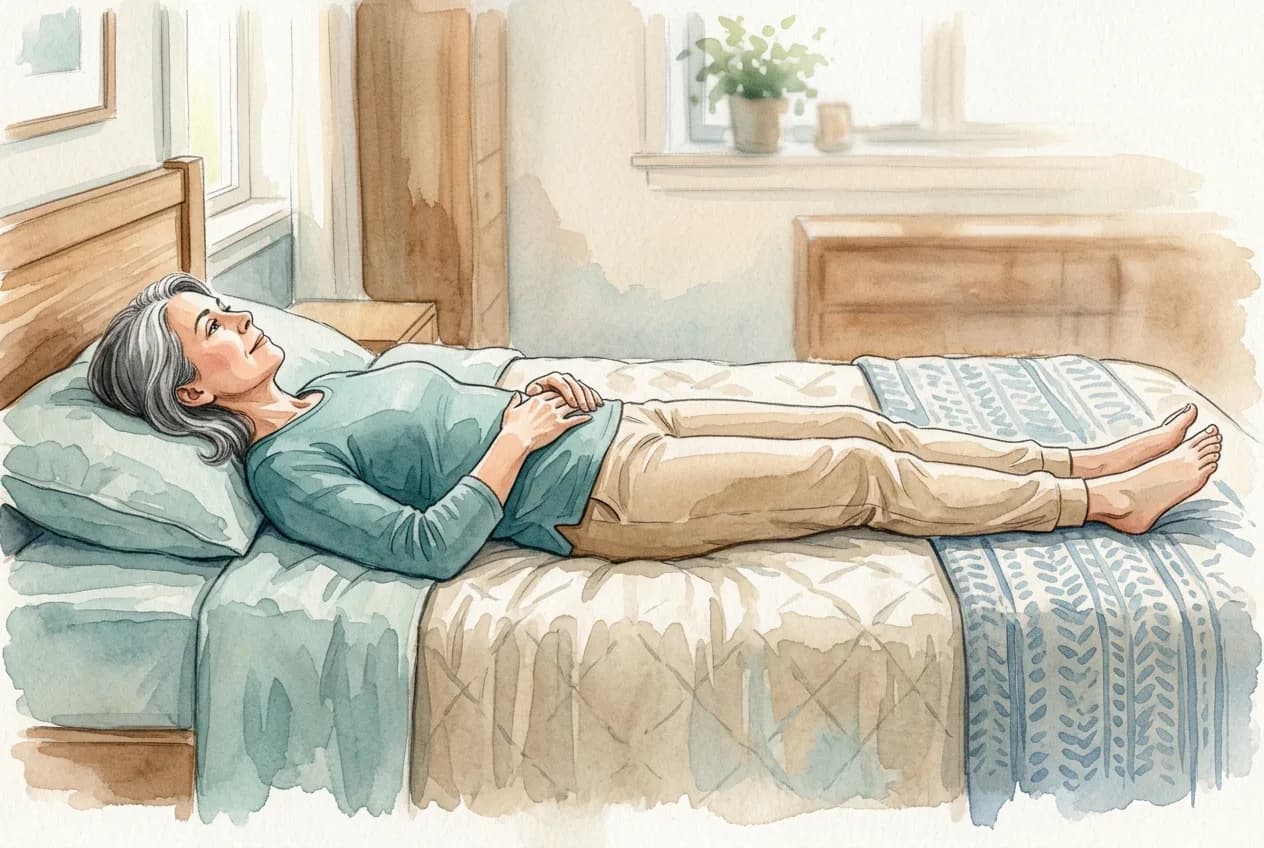
The first check is simple. Lie on your back on a firm surface with your legs long, and see whether the backs of both thighs rest evenly, or whether one side lifts and the lower back arches up. A hip that will not let the thigh settle is often a sign of shortening at the front.
The second is a kinder version of a test clinicians use. Sit at the very edge of a sturdy bed, then lie back as you draw both knees toward your chest. Hold one knee gently and let the other leg lower toward the floor. If that hanging thigh stays lifted, or the knee wants to straighten as it drops, the front of that hip is likely on the tight side. Compare left and right, since a difference between sides is often more telling than either leg alone. If you want to understand the tight versus weak question more fully, our companion piece on whether your hip flexors are tight or weak walks through it.
What tight hip flexors are really telling you
It is tempting to read a positive self check as proof that a muscle is simply too short and needs a harder stretch. Very often that is not the whole story. A hip flexor that tests tight is frequently being held on a low simmer of tension by habit, not because it has genuinely lost length. Pulling it hard toward its limit can read as a threat and leave it gripping harder the next day. That is why gentle, slow movement tends to change the feeling of tightness more kindly than force. Our guide to tight hip flexors that will not loosen goes deeper into why this happens and what to do instead.
Keeping the checks and the movement gentle
Treat all of this as quiet information gathering, not a test to pass. Move slowly enough that you could hold an easy conversation throughout, and pause often, since those pauses are where a hip begins to feel a shade longer than before. If a position nips or sharpens, shrink it or leave it for another day. The same patient, curious quality runs through the Feldy program for knee or hip pain, which looks for more ease and more choices rather than a forced result. Once you have a sense of where you stand, the useful next step is not to strain, but to give the front of the hip slow, comfortable movement and let it respond in its own time. Our knee proprioception exercises are a gentle place to begin that.
Kinder movement for knees and hips
Understanding the strain is half of it. The Feldy program helps knees and hips carry less of it by reorganising how the whole body moves, through Feldenkrais® lessons. Gentle, guided, and self-paced.
Start my free 7-day trialNo credit card needed.
Common Questions about how to tell if your hip flexors are tight (FAQ)
How can I tell if my hip flexors are tight or just weak?
Tightness tends to show up as a pulling or shortening feeling at the front of the hip, most noticeable when you stand tall or let the thigh drop back. Weakness shows up as difficulty lifting the knee high or holding it there. Many people have a mix of both. A gentle self check gives you a starting sense, though only a physical therapist can assess this precisely.
Are these self checks and movements safe?
These are gentle by nature, because you move slowly and stay inside an easy range instead of forcing a stretch. Ease off or shrink a movement the moment it turns sharp. Anyone who is pregnant, healing from hip or back surgery, or managing a diagnosed joint problem should clear it with their own clinician beforehand.
How often should I check and move?
A quick self check once every week or two is plenty to notice change, and a short, easy round of movement most days tends to help more than one long session. Let how the hip feels, rather than a fixed schedule, set the pace.
How long until tight hip flexors start to feel freer?
Quite a few people notice a touch more ease inside one calm session, maybe a feeling that one hip rests longer or lighter than the other. A more lasting shift tends to arrive across several weeks of relaxed, regular movement, as a wary nervous system slowly decides the front of the hip is safe to soften.
Can you have tight hip flexors without any pain?
Yes. Plenty of people feel no pain at all, only a sense that they cannot fully straighten at the hip, or that their stride feels short. Long hours of sitting are a common reason the front of the hip learns to stay shortened, with or without discomfort.
When should I see a professional?
It is worth booking a doctor or physiotherapist when hip or groin pain hangs around, sharpens, or keeps building, or when it arrives alongside numbness, weakness, locking, clicking, or a recent injury. Think of this page as everyday comfort work, not a medical assessment of any particular condition.
Kinder movement for knees and hips
See the programRelated resources
Tight Hip Flexor Symptoms: What They Feel Like Day to Day
The signs people notice most, what the word tight actually describes, and a calm way to pay attention to the front of your hips.
Tight Hip Flexors That Won't Loosen: A Gentler Way
Why stretching tight hip flexors often fails, and a gentle, awareness-based way to invite the front of the hip to lengthen without forcing a hard stretch.
Do Tight Hip Flexors Cause Lower Back Pain?
Do tight hip flexors cause lower back pain? Here is how guarded hip flexors can tilt the pelvis and load the low back, plus a gentle way to ease them.
Ready to start moving better?
Gentle, guided lessons for your body. Try your first one free, no credit card required.