
How to Relieve Nerve Pain After Ankle Surgery
How to relieve nerve pain after ankle surgery with gentle, surgeon-approved self-care: rest and elevation, calm breathing, gentle movement, and desensitisation, plus when nerve pain needs a check.
In short
Some nerve pain or tingling after ankle surgery is common as the nerves heal, and it usually settles over weeks. To relieve it, follow your surgical team's plan: rest and elevation as advised, any prescribed medication, gentle approved movement, and calm desensitisation. Seek prompt medical advice for severe, spreading, or worsening nerve pain.

Not sure where to start?
Take the 2 minute Movement Match quiz for gentle lessons matched to your body.
Before you begin. This is gentle, general self-care information, not medical advice, and it does not replace your surgeon's or physical therapist's plan. Nerve pain after surgery can be part of normal healing, but it can also signal a problem, so do not push through it. Get prompt medical advice for severe, spreading, or burning nerve pain, new numbness, swelling, fever, or changes in the colour or temperature of your foot.
If you are recovering from an operation and wondering how to relieve nerve pain after ankle surgery, the most important thing to know is that this kind of pain deserves gentleness and good medical guidance, not pushing through. Some nerve pain, tingling, or burning is common as nerves heal from the surgery and the swelling that follows, and for many people it eases over weeks to months. While your surgical team leads your recovery, there is also a great deal that calm, gentle self-care can do to support your comfort. The Feldenkrais Method® and similar attentive approaches help here by soothing an overalert nervous system rather than forcing a tender area.
Recovering from injury and surgery is part of life for a great many of us. Musculoskeletal conditions, including the injuries and operations people recover from, affect about 1.71 billion people worldwide (WHO, 2022). Healing well is as much about calming the whole system as it is about the ankle itself.
Why gentle care helps relieve nerve pain after ankle surgery
After surgery, healing nerves can fire off pain, tingling, or burning even when nothing is wrong, simply because they are recovering and are temporarily oversensitive. Pain like this also puts the whole body on alert, so you brace, your breathing shortens, and the nervous system stays wound up, all of which can make the pain feel louder. This is why calm matters so much. Slowing the breath, easing the guarding in the rest of your body, and gently reintroducing safe sensation can quiet that alarm and take some of the edge off how pain feels.
None of this replaces your surgeon's plan. It sits alongside it. Our Feldypedia guide to post surgery movement recovery explains how gentle, mindful movement supports healing within medical guidance.
How the gentle practice supports comfort
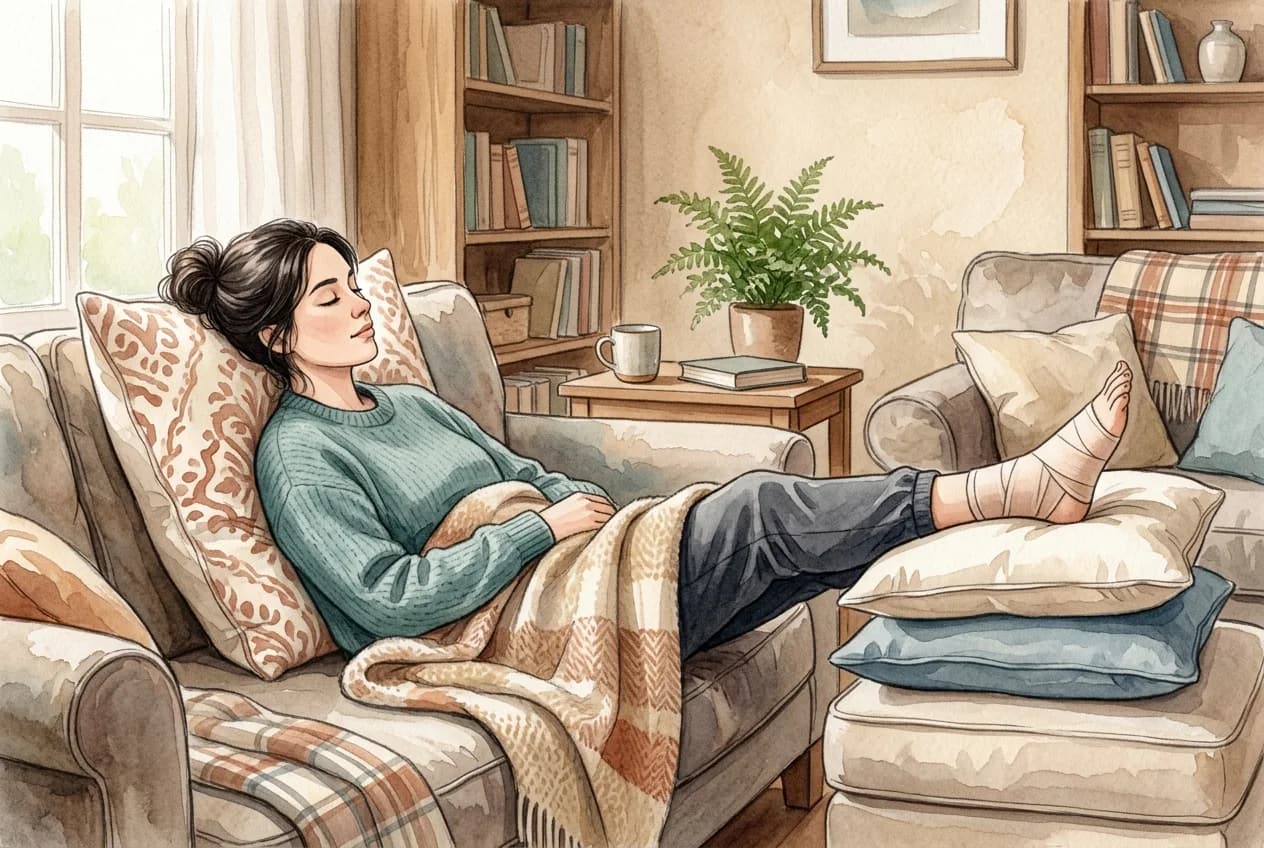
It begins with the foot supported and elevated, uses slow breathing to settle the nervous system, and releases the bracing the pain sets off elsewhere in the body. Only if your surgeon has cleared you to move does it add the tiniest approved movement, and even then it stays completely clear of pain. For an ankle that is not yet ready to move, imagined movement gives the nervous system something kind to practise without any strain at all.
That last idea is more powerful than it sounds. Picturing easy, comfortable movement is real rehearsal for the brain and can gently soothe an area too sore to move. It is a way of staying connected to your foot while you wait for it to be ready.
Desensitisation deserves a place here too. When your team says the area is ready, gently reintroducing soft touch, a fingertip, a soft cloth, a light stroke near the tender spot, helps an oversensitive nervous system relearn that ordinary sensation is safe. Start lighter than you think you need, keep each session brief, and let your physical therapist guide how close to the scar you go.
As your ankle is cleared to move
When your surgical team gives you the go ahead, gentle movement becomes a bigger part of recovery, helping you rebuild comfort, mobility, and confidence in the foot. Always work within the exercises and limits they set. Once you are cleared, our gentle ankle mobility drills and proprioception exercises for the ankle offer slow, attentive ways to wake the joint, and our guide to stiff ankles keeps everything gentle.
The Feldy program for recovering from injury and surgery carries this calm, attentive approach further, supporting you as you find your way back to easy movement.
A note on care
This is gentle, general self-care information, not medical advice, and it does not replace your surgeon's or physical therapist's plan. Nerve pain after surgery can be part of ordinary healing, but it can also be a sign of a problem, so please do not try to push through it. Seek prompt medical advice for severe, spreading, or burning nerve pain, new numbness or weakness, swelling, fever, or any change in the colour or temperature of your foot. Calming, gentle self-care supports your recovery, and it belongs alongside your medical care, never in place of it.
A gentle path back to easy movement
Reading is a start, moving is the rest. The Feldy program meets you where recovery has you today, through slow, safe Feldenkrais® lessons that let your body set the pace. Gentle, guided, and self-paced.
Start my free 7-day trialNo credit card needed.
Common Questions about how to relieve nerve pain after ankle surgery (FAQ)
Is nerve pain after ankle surgery normal?
Some nerve pain, tingling, burning, or numbness is common after ankle surgery as the nerves recover from the operation and swelling, and for many people it settles gradually over weeks to months. That said, nerve pain can also signal a problem, so any pain that is severe, spreading, or getting worse should be checked by your surgical team rather than waited out.
How can I relieve nerve pain after ankle surgery at home?
Follow your team's plan first: rest and elevation as advised, any prescribed medication, and your rehab schedule. Alongside that, calm breathing, easing the bracing in the rest of your body, gentle approved movement, and slow desensitisation can support comfort. Keep everything well clear of sharp pain, and check anything new or worsening with your surgeon.
What is desensitisation and does it help nerve pain?
Desensitisation is gradually and gently reintroducing touch and movement to an oversensitive area, so the nervous system slowly relearns that normal sensation is safe. Done within the limits your team sets, it can help calm the heightened sensitivity that often follows nerve healing. Your physical therapist can show you how to start and how far to go.
When can I start moving my ankle after surgery?
That depends entirely on the type of surgery you had and your surgeon's plan, and it can range from very early gentle movement to a longer period of rest and protection. Never start moving the ankle on your own timetable. Follow the specific clearance and exercises your surgeon and physical therapist give you.
How long does nerve pain last after ankle surgery?
It varies widely. For many people, nerve sensitivity eases over several weeks to a few months as healing progresses, though some take longer. Nerves recover slowly, so patience matters. If your nerve pain is not improving over time, or is worsening, let your surgical team know so they can review it.
When should I see a doctor about nerve pain after ankle surgery?
Seek prompt medical advice for severe or rapidly worsening pain, pain that spreads, intense burning, new numbness or weakness, swelling, fever, or any change in the colour or temperature of your foot. These can point to a complication that needs attention. Gentle self-care is not a substitute for that assessment.
A gentle path back to easy movement
See the programRelated resources
Ankle Mobility Drills: Gentle Moves for Freer Ankles
Easy ankle mobility drills use slow, repeated movement to restore range so walking, squatting, and balance feel freer and more comfortable.
Proprioception Exercises for the Ankle: Steadier Footing
Gentle proprioception exercises for the ankle wake up your sense of where the foot is in space, which steadies walking and helps prevent small rolls.
Stiff Ankles: Gentle Movement to Ease and Steady
Stiff ankles often ease with slow, frequent movement that restores their natural range, and supple ankles also support balance and confident walking.
Ready to start moving better?
Gentle, guided lessons for your body. Try your first one free, no credit card required.