
Hip Circles Exercise: A Gentle Lesson for Easier Hips
The hip circles exercise uses slow, small circular movement to help stiff hips feel freer. A gentle Feldenkrais style lesson you can try lying on the floor.
Before you begin. This is gentle self care, not medical advice. Keep every movement small and well below any pain. If you have a recent hip injury, a hip replacement, or a diagnosed hip problem, follow your surgeon or physiotherapist's guidance first, and see a professional for a hip that is sharply painful, that locks or catches, or that gives way.
The lesson
About 5-10 minutes. Move slowly, do less than you can, and stay well below any pain. Rest whenever you need to.
Prefer to listen than read?
Feldy voices gentle lessons like this for knees and hips, so you can close your eyes and follow along.
- 1
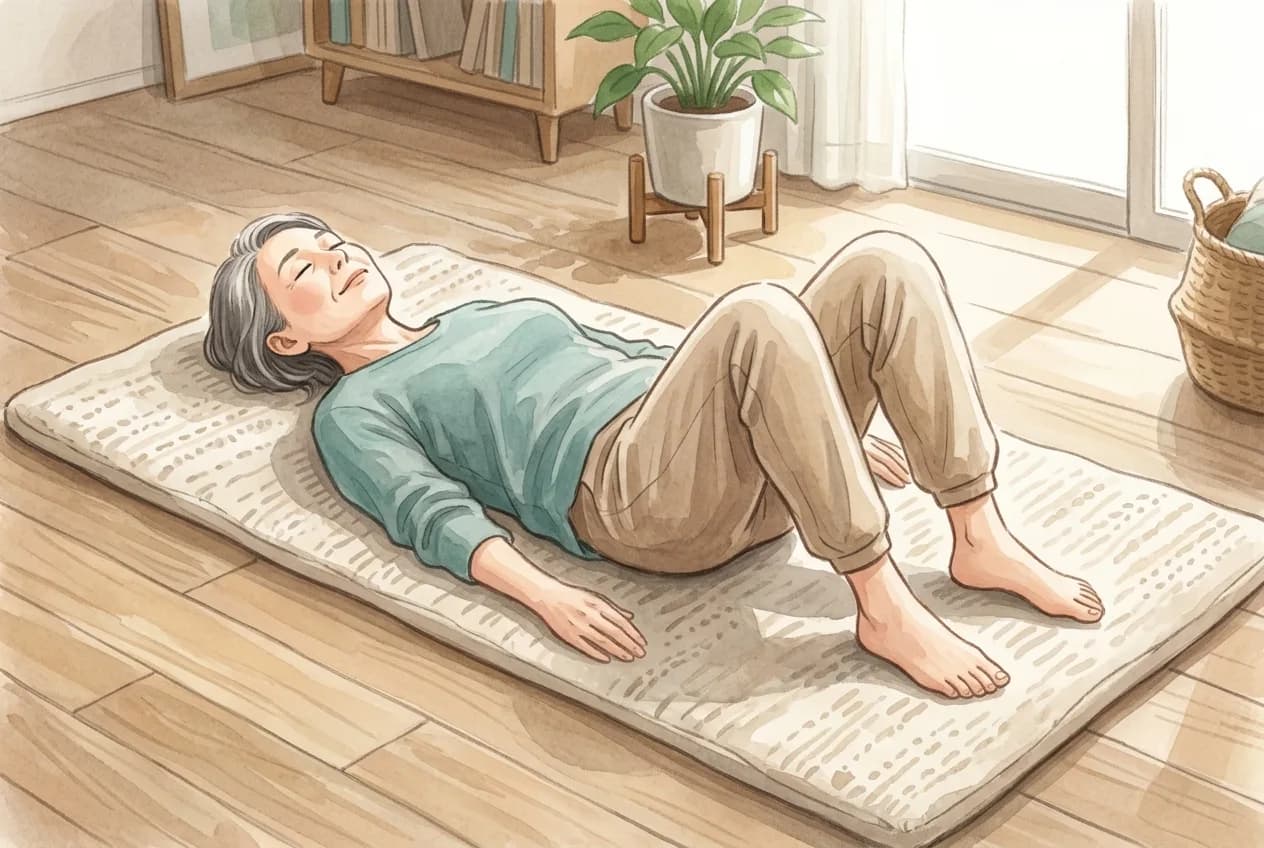
Arriving on the Floor. We begin lying on your back, knees bent, feet standing on the floor. Let your attention settle into your hips, and notice how each one meets the ground. Does one side feel heavier, wider, more familiar than the other?
- 2
A First Small Tilt. Allow your right knee to lean a little toward the middle, only as far as feels easy, then return. Wander through this a few times, slowly, sensing what your hip does as the knee travels.
- 3
Circling the Right Knee. Now let the right knee begin to trace a small, slow circle, as if the thigh were gently stirring in its socket. Make the circle smaller than you think you need to, pausing whenever you like, then let the leg come to rest.
- 4
The Left Hip Explores. When you feel ready, invite the left knee into its own small circles, in whichever direction feels easiest. You might find this side moves differently, and that is simply something to notice.
- 5
Resting with the Breath. Let both legs lengthen along the floor, or stay bent if that is more comfortable, and rest here. Follow a few breaths as they come and go, without changing anything about them.
- 6
A Closing Scan. Bring your attention once more to how each hip meets the floor, and take your time comparing the two sides. What, if anything, feels different from when you began?
Let Feldy guide you, eyes closed
You just read these steps. In the Feldy program, a calm voice guides you through each gentle move, so your attention can stay in your body instead of on the screen.
Try Feldy Free for 7 daysNo credit card needed.
If your hips feel stiff or guarded when you first get moving, the hip circles exercise offers a kind way back to easier motion, through slow, small circular movement rather than force. The hip is a deep ball and socket joint, built to turn in many directions, and the muscles wrapped around it often hold a quiet, protective tension that reads as stiffness. This gentle lesson draws on the Feldenkrais Method®, which works with that tension through curiosity and small movement instead of effort. The short sequence above moves each hip in tiny circles while you lie comfortably on the floor.
Stiff, achy joints are a very widespread experience. The World Health Organization estimates that osteoarthritis touched about 528 million people worldwide in 2019, with the hip among the joints it affects most (WHO, 2023). Plenty of people are simply looking for a kinder way to keep their hips moving.
Why the hips grow stiff
A ring of muscles surrounds each hip: the small rotators buried deep in the socket, the flexors along the front of the thigh, and the broad muscles of the buttock behind. They work constantly to steer how you sit, stand, and walk. After a hip has been sore, or simply parked in a chair for hours, these muscles tend to hold on. That holding registers as tightness, and before long the body reads the guarded state as its new baseline. Asking a tight hip to soften with words rarely lands. Slow movement lands, because it hands the brain clear, first hand information about what the hip can safely do.
What makes the hip circles exercise different
The real ingredient here is the quality of attention, not the size of the circle. Tiny movements, repeated slowly and kept beneath any pain, let the brain refresh its picture of how freely the hip can turn. Push a stretch and a guarding muscle often grips harder still; offer it slow, curious circles and it tends to loosen its hold. Lying on your back matters too. With the floor carrying your weight, the muscles are free to move without also bracing to keep you upright, so a stiff hip can explore with far less effort.
Feldy is built on this same idea, guiding you through short lessons that coax stiff places toward an easier, roomier range. There is more in our Feldypedia guide to the Feldenkrais Method, and if hip or knee stiffness shapes your days, our Feldypedia page on hip stiffness and limited mobility digs deeper.
How to get the most from the movement
Make each circle a touch smaller and slower than feels strictly needed, and keep it inside what is comfortable. Pause between circles and between the two sides, because those pauses belong to the lesson as much as the movement does. If one direction feels rougher than the other, treat it as something to notice rather than a fault to mend. Over a few sessions the circles often round out and ease on their own, without you asking them to.
If this floor based way of moving suits you, our somatic exercises for hips explore the same slow, curious attention, and our hip mobility stretches offer a gentle companion sequence.
A word of care before you begin
If you have had recent hip surgery or a replacement, some hip movements may be off the table for a time, so clear this with your surgeon or physiotherapist first. For hip pain that feels sharp, that locks or catches, or that keeps aching once you stop, please have it looked at rather than pushing on through. Otherwise, settle somewhere comfortable, give the hips a few slow, unpressured minutes, and let them find a little more freedom. When hip ease matters day to day, Feldy gathers this gentle way of moving into a complete program of lessons, and you can try it with a free 7 day trial, no credit card needed.
Common Questions about the hip circles exercise (FAQ)
What is the hip circles exercise good for?
Slow hip circles guide the joint through a small, comfortable arc, so a stiff or wary hip can rediscover easy motion. Many people notice their hips feel a little looser and lighter afterward. Think of it as supportive movement rather than a medical treatment.
How are gentle hip circles different from a workout or a stretch?
A workout or a hard stretch tries to win range through effort. Gentle hip circles go slowly and attentively instead, so the muscles wrapped around the joint let go of their own accord. That usually feels kinder in the moment and tends to stay with you longer than a stretch you have to force.
Are hip circles safe if my hips hurt?
Small, slow circles kept under your pain are usually fine, and lying down takes the load off the joint while you move. If something pinches or hurts, shrink the circle or leave it out. Sharp pain, a catch, or an ache that hangs around afterward is your cue to stop and have the hip checked.
Can I do hip circles after a hip replacement?
After a hip replacement, certain movements, especially turning the hip inward or letting the leg cross the midline, are usually off limits for a while. Stay inside your surgeon's precautions, and ask your physiotherapist before adding any new hip movement.
How often should I practise hip circles?
A handful of minutes on most days does more good than one long session now and then. Brief, regular, comfortable movement keeps reminding the hips that easy motion is close at hand.
Can I do the hip circles exercise standing up?
You can, though standing circles ask the hip to carry your weight as it moves, which is harder to keep soft and slow. Lying down frees the muscles to work with less effort, so a stiff or sore hip travels more freely and you can sense each part of the circle.
Kinder movement for knees and hips
See the programRelated resources
Hip Circles Stretch: Slow Circles to Sense Your Hips
A hip circles stretch done slowly, standing with support or lying down, invites stiff hips toward easier motion. A gentle Feldenkrais style awareness lesson.
Hips Stiff in the Morning: A Gentle Wake-Up Routine
Hips stiff in the morning? A short, gentle in bed routine of slow hip and pelvis movements to ease morning stiffness, well below any pain.
Somatic Exercises for Hips: Gentle Movement to Free Them
Somatic exercises for hips use slow, easy movement to free a stiff or guarded pelvis. Learn why it helps, with a short lesson you can try on the floor.
Ready to start moving better?
Gentle, guided lessons for your body. Try your first one free, no credit card required.