

Hypermobile Knees: A Gentle Guide to a Soft Stance
Hypermobile knees often lock back into hyperextension when standing. This guide explains why a soft, unlocked stance and control help more than stretching.
In short
Hypermobile knees often lock backward into hyperextension when standing, a pattern called genu recurvatum. The aim is gentle control and a soft, unlocked stance within an easy mid-range, not more stretching, so the muscles around the knee learn to hold it steady rather than hanging on the joint.

Prefer to ease in gently?
See a few gentle exercises for hypermobility to try.
Before you begin. Gentle self-care, not medical advice. With hypermobile knees the aim is steady control and a soft, unlocked stance within an easy mid-range, not more flexibility, and never pushing into hyperextension. Hypermobility can be part of hypermobility spectrum disorder or Ehlers-Danlos syndrome. If you have frequent slips, giving-way, or a suspected connective tissue condition, please work with a doctor or physical therapist before starting.
If you have hypermobile knees, you may find them pressing all the way back into the joint when you stand, locked straight or even bowed slightly backward, a pattern often called genu recurvatum. The knee can feel loose, click, or occasionally give way. The instinct to stretch the legs for relief is understandable, yet knees this loose already travel beyond a typical range, so more flexibility is rarely the answer. What hypermobile knees usually want is the opposite: gentle control and a soft, unlocked stance, so that working muscle holds the joint rather than letting it sag onto the ligaments. The Feldenkrais Method® and kindred somatic practices fit this need closely, since their aim is to help a knee sense itself and feel held instead of driving it into a stretch.
Loose joints are more widespread than many realize. In one peer-reviewed study of university students, close to 12.5 percent crossed a strict cutoff for generalized joint hypermobility (PeerJ, 2019), and the knee sits among the joints that can readily press past straight. Plenty of people carry this without any bother. Others live with a wobble and a knee they find hard to count on when it bears weight.
Why hypermobile knees need control, not more stretch
The knee is built to be stable when it carries weight, held steady by the thigh muscles and by ligaments that limit how far it straightens. When that connective tissue is naturally lax, the knee can drift past straight and settle into the back of the joint, which can feel like rest but loads the very tissues that are already loose. Pressing into that hyperextension, locking back in order to stand, or letting the ligaments do the holding usually leaves the looseness feeling worse rather than easier. The standard tip to stretch the legs simply does not suit a knee that is already too slack at the far end of its travel.
What helps instead is finding a softly unlocked stance, where the knee rests a touch short of fully straight while the thigh muscles quietly carry their share. Small, slow movements kept inside a comfortable range let those muscles switch on and take up their steadying work, while the brain redraws a clear picture of where the knee sits. That read on position, called proprioception, tends to fade when ligaments run slack, and that fading is a big reason a knee can buckle before you sense it coming.
Building control in your hypermobile knees
What truly shifts this is slow, careful movement that never sends the knee into hyperextension. As you coax the knee out of its locked habit and feel the thigh muscles pick up the load, the joint grows steadier and more clearly yours. Nothing here asks you to push, stretch, or reach for extra range. You are inviting the knee to be carried by muscle rather than propped on bone.
That control-first idea sits at the heart of Feldy, whose lessons lead you gently, one modest step at a time, toward steadier ways of standing. You can read more in our guide to the Feldenkrais Method, and when slack, untrustworthy joints color your everyday life, the program for hypermobility carries it further. When the looseness spreads beyond the knee, our whole-body exercises for joint hypermobility bring the same thinking to the rest of you, and if the ground under you feels unreliable as well, the comparison of hypermobile ankles vs normal looks at the joint one floor down.
How to explore this safely
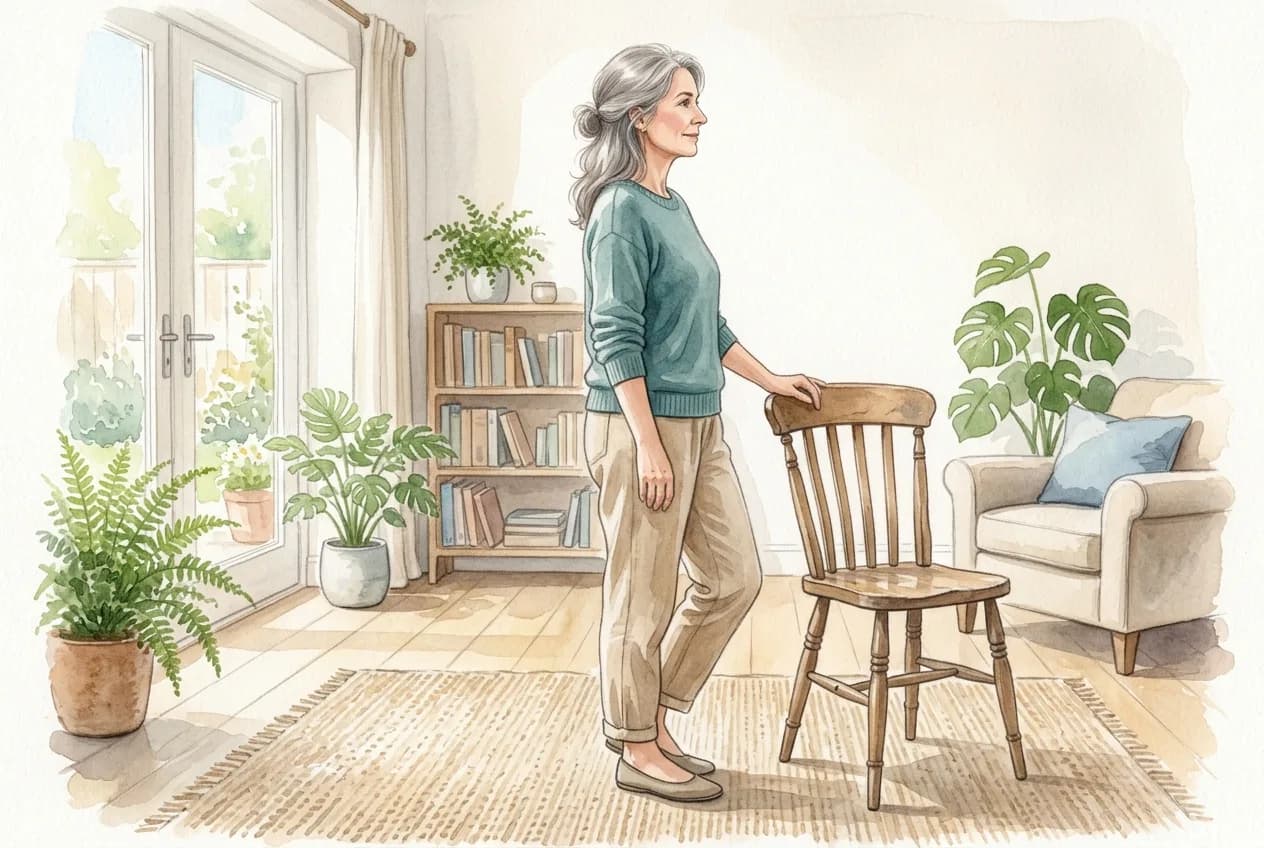
Choose a calm space and keep a steady counter or chair back within reach for the standing portions. Let every motion stay gentle and unhurried, even smaller than seems necessary, and never drive the knee back into hyperextension, however restful that lock can feel. Remain inside a comfortable range and draw back before you reach the limit. The instant you feel pain, a sense of the knee slipping or giving way, or any strain, shrink the movement or simply pause. Anyone living with frequent buckling, body-wide symptoms, or a possible connective tissue diagnosis should let a doctor or physical therapist guide them first.
Stability without gripping
Now for stability that does not rely on gripping. The Feldy program builds a clearer sense of where the body rests, so steadiness grows from awareness, through Feldenkrais® lessons. Gentle, guided, and self-paced.
Start my free 7-day trialNo credit card needed.
Common Questions about hypermobile knees (FAQ)
What do hypermobile knees feel like?
Many people notice their knees pressing all the way back into the joint when standing, called hyperextension or genu recurvatum, along with a sense of looseness, clicking, or the knee occasionally giving way. If your knees buckle or give way often, see a doctor or physical therapist.
Should I stretch hypermobile knees?
Usually not into or beyond the end of the range, and never into hyperextension. Because hypermobile knees already travel further than typical, deep stretching tends to load tissue that is already slack. The goal is control and a soft, unlocked stance inside a comfortable mid-range, rather than added flexibility.
Why do my hypermobile knees lock backward when I stand?
Loose ligaments let the knee drift past straight, so it can feel easier to hang on the joint than to hold a soft stance with muscle. Over time this becomes a habit. Learning a softly unlocked stance shares the load with the thigh muscles instead.
Are hypermobile knees a sign of a condition?
They can be. A knee that presses past straight sometimes stands alone and sometimes travels with hypermobility spectrum disorder or Ehlers-Danlos syndrome. Where symptoms are widespread, where the knee gives way often, or where a connective tissue condition might be at play, get it assessed.
How often should I practice a soft stance?
Short, gentle sessions most days tend to help more than long, occasional ones. Even a few minutes of noticing and softening the knees while you stand keeps building the awareness and muscular support the joint relies on.
When should I see a professional?
It is worth seeing a doctor or physical therapist when the knees buckle or give way often, when pain spreads or builds, or when a connective tissue condition seems possible. In a practice meant to feel easy, anything sharp or persistent deserves a proper look.
Stability without gripping
See the programRelated resources
Hypermobile Knees vs Normal: How to Tell the Difference
Hypermobile knees vs normal: a typical knee arrives at straight and stops firmly, while a hypermobile knee drifts past it into hyperextension. Here is how to tell.
Hypermobile Pelvis: Steadiness Without More Stretching
A hypermobile pelvis often aches, clicks, or feels unreliable. The aim is steady control and a clearer sense of where you are, not extra range.
Nobody asked about your joints at the headache appointment, and that may matter

Ready to start moving better?
Gentle, guided lessons for your body. Try your first one free, no credit card required.