

How to Realign Hips Gently: Easing Uneven Tension
How to realign hips with gentle, attentive movement that helps the pelvis settle more evenly, easing uneven muscle tension from how you stand and sit.
In short
You do not snap bones into place to realign hips. Uneven-feeling hips usually reflect habitual muscle tension and how you stand and sit. Gentle awareness movement helps the pelvis settle more evenly, so the hips feel freer and more balanced over time.

Prefer to ease in gently?
See a few gentle exercises for knees and hips to try.
Before you begin. This is general movement guidance, not medical advice. Gentle movement can help your hips feel more even and free, but it does not force bones into place. If you have hip pain, a leg-length difference, or a diagnosed condition, check with a doctor or physical therapist.
If your hips feel twisted, higher on one side, or somehow uneven, you are probably wondering how to realign hips so they feel balanced again. The answer is that you do not snap bones into place, and you should be cautious of anyone who promises that gentle movement will. Uneven-feeling hips usually reflect habitual muscle tension and the way you stand and sit through the day. With slow, attentive movement drawn from the Feldenkrais Method®, the muscles around the pelvis can let go, and the pelvis settles more evenly on its own.
Hip and pelvis discomfort sits within a very large picture of body aches. Musculoskeletal conditions affect about 1.71 billion people worldwide (WHO, 2022). For many of those people, the feeling of being out of alignment is less about a displaced bone and more about long-held tension and one-sided habits, which is exactly what gentle movement is well suited to address.
What it really means to realign hips
When the hips feel off, it is tempting to imagine a bone has slipped and needs putting back. In most everyday cases that is not what is happening. The muscles that wrap the pelvis, the hip flexors, the glutes, the lower back, can pull unevenly when you favor one leg, sit twisted, or carry tension on one side. That uneven pull is what reads as a twisted or lopsided hip. So learning how to realign hips is mostly about helping those muscles soften and balance; once the holding eases, the pelvis tends to find a more even resting place by itself.
How gentle movement helps the pelvis settle evenly
Slow pelvic movement gives your nervous system a chance to notice the imbalance and quietly correct it. As you roll the pelvis in small, easy arcs and pay attention to how each side feels, your brain gathers information about where you grip and where you let go, then distributes effort more evenly, the way you might level a slightly tilted tray once you feel the wobble. There is no stretching to the edge and no pushing through pain; the change comes from awareness and ease, which is why this approach to realign hips feels so different from yanking or cracking.
Sensing weight even on both sit-bones
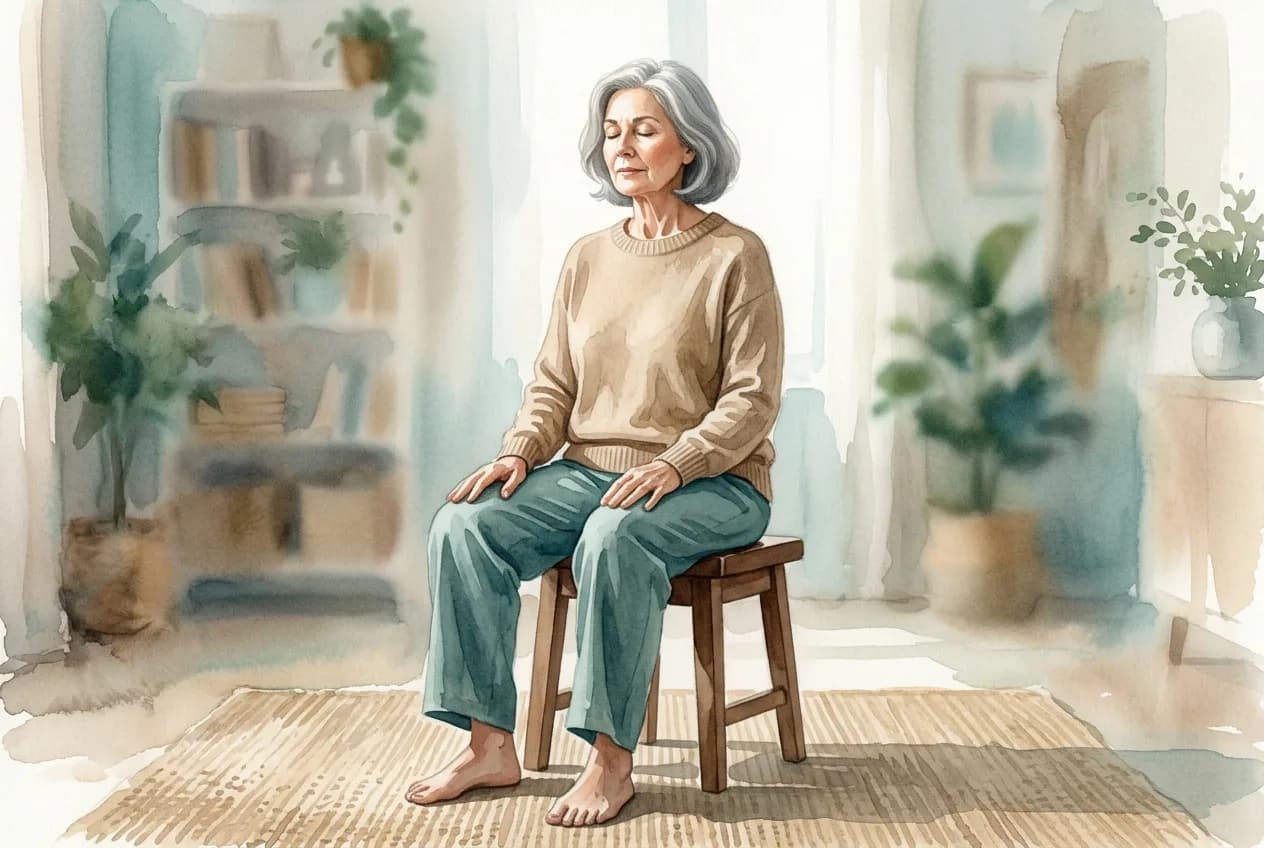
A simple, powerful place to begin is your sit-bones. Sitting on a firm surface, feel the two bony points under your pelvis and notice whether you lean more into one. Most of us do, often without realizing it, and that habitual lean is one quiet driver of uneven hips. By gently rocking toward the middle and resting where the weight feels shared, you teach yourself a more balanced base. Carried into daily life, that small awareness does as much for your hips as any single exercise, because it changes the posture you hold for hours.
A gentle practice to free and balance the hips
The practice uses pelvic clock-style movements: tiny, soft rolls and circles of the pelvis done lying on your back. The point is never to reach a stretch or to force a correction, but to move slowly enough that your body trusts it is safe to let go. As the surrounding muscles release, many people feel their hips rest a little more evenly and freely afterward, with no cracking or effort involved. To explore the same theme another way, see our gentle somatic exercises for hips, and if a lopsided feeling is your main concern, our guide to twisted hips goes deeper. For the bigger picture on why hips stiffen, the Feldypedia page on hip stiffness and limited mobility is a good companion. And because the knees follow wherever the pelvis leads, our gentle knee proprioception exercises build the same clear inner sense a little further down the leg.
Kinder movement for knees and hips
Understanding the strain is half of it. The Feldy program helps knees and hips carry less of it by reorganising how the whole body moves, through Feldenkrais® lessons. Gentle, guided, and self-paced.
Start my free 7-day trialNo credit card needed.
Common Questions about how to realign hips (FAQ)
Can you really realign hips?
Not in the sense of snapping bones into a new position, and you should be wary of any claim that gentle movement does that. What usually shifts is muscle tension. When the muscles around the pelvis are pulling unevenly, the hips can feel twisted or higher on one side. Gentle awareness movement helps that holding ease, so the pelvis settles more evenly and the hips feel freer.
Is it safe, and who should avoid it?
Small, slow, pain-free pelvic movements are gentle for most people. Stay well below any pain and stop if something sharpens. If you have a recent hip injury or surgery, a hip replacement, severe hip pain, numbness or tingling down the leg, or a diagnosed condition, check with a doctor or physical therapist before starting. This is general guidance, not medical advice.
How often should I do it?
A short session most days usually helps more than one long, forceful push. The aim is to let the nervous system learn a more even way of organizing the pelvis, and gentle repetition is how that settles in. Keep each session short and pleasant. If you feel worse rather than easier, do less or take a rest day.
How is this different from a chiropractic adjustment?
A chiropractic adjustment is a hands-on manipulation done by a practitioner, often with a quick thrust. This is the opposite: there is no cracking, no force, and no one pushing your bones. You move yourself, slowly and gently, so your own muscles can let go and the pelvis can settle. Both can have a place, but they work in very different ways.
How long until my hips feel more even?
Some people notice a more balanced, easier feeling right after a session, because muscle tension has eased. A steadier change usually builds over weeks of gentle practice, and how you stand and sit during the day matters too. There is no fixed timeline, so let comfort and curiosity guide you rather than chasing a result.
When should I check with a professional?
Talk to a doctor or physical therapist if hip pain persists or worsens, if one leg feels clearly shorter, if you have numbness, weakness, or tingling down the leg, or if your symptoms followed a fall or injury. They can check for a true leg-length difference or a joint problem. Gentle movement complements that care; it does not replace it.
Kinder movement for knees and hips
See the programRelated resources
How to Fix Uneven Hips With Gentle Movement
How to fix uneven hips: why one hip can sit higher, the everyday habits that pull the pelvis off balance, and a gentle practice to even things out.
Twisted Hips: Gentle Movement to Feel More Balanced
Twisted hips often describe a sensation that the pelvis sits uneven or rotated. Explore gentle movement to feel more balanced, with a short guided lesson.
Tight Outer Hips: Gentle Ways to Ease the Side of the Hip
Tight outer hips usually mean the side of the pelvis has been working hard and moving little. Small, comfortable movement eases it more kindly than digging into the spot.
Ready to start moving better?
Gentle, guided lessons for your body. Try your first one free, no credit card required.