

How to Go Down Stairs Safely With Stiff or Sore Knees
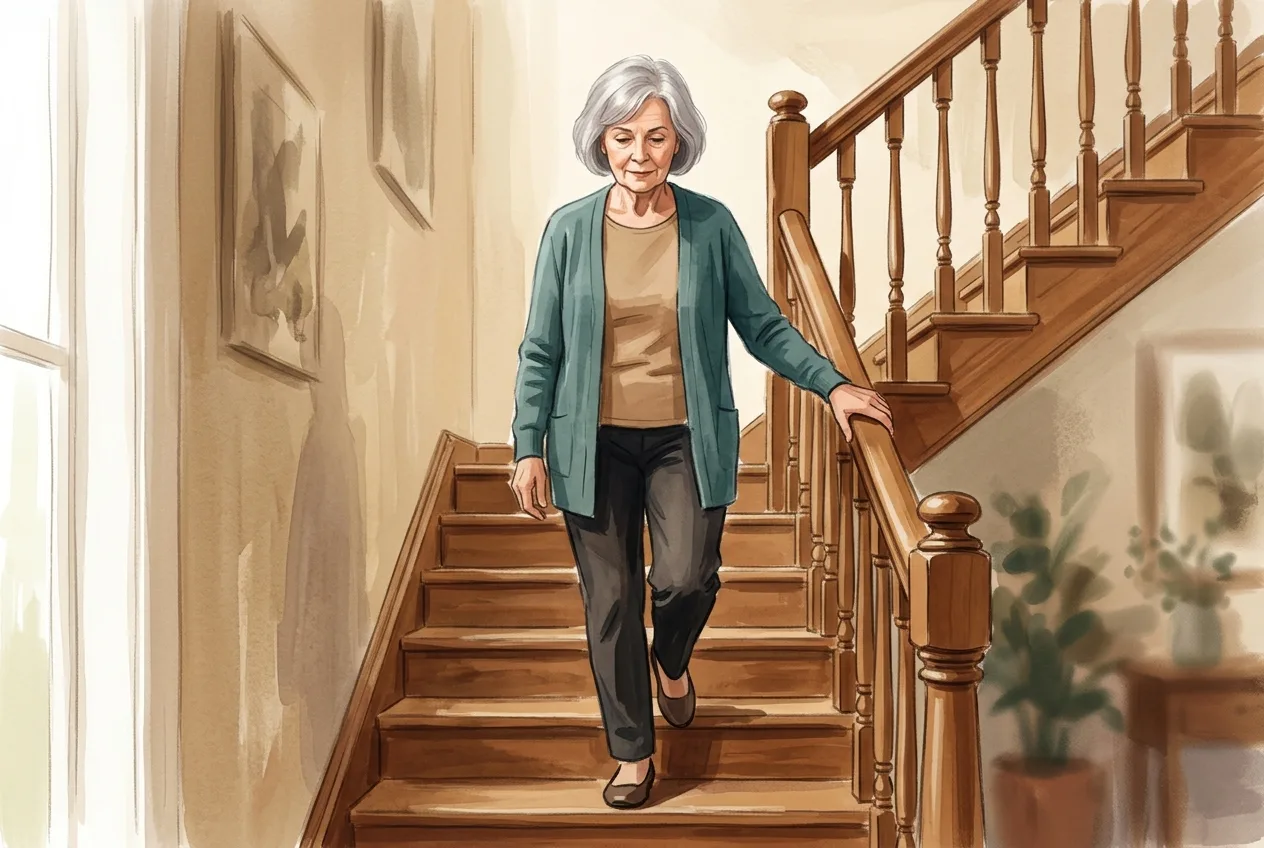
How to go down stairs more safely when knees feel stiff or sore: use the handrail, lead with one foot, and lower yourself slowly over a soft, supporting leg.
In short
To go down stairs more safely and with less knee strain, use the handrail, lead with the same foot, and keep your weight over the supporting leg. Lower yourself slowly with a soft, bending knee rather than dropping onto a locked one. Take one step at a time, never rushing.

Prefer to ease in gently?
See a few gentle exercises for stiffness after 60 to try.
Before you begin. This is general comfort guidance, not medical advice. Use the handrail, take your time, and if going downstairs brings pain, marked unsteadiness, or you have had falls, please check with a doctor or physical therapist. These suggestions support, but do not replace, professional assessment.
If your knees feel stiff or sore, learning how to go down stairs with less strain and more steadiness can make a real difference to your day. The short answer is to use the handrail, lead with the same foot each time, keep your weight over the supporting leg, and lower yourself slowly with a soft, bending knee instead of dropping onto a locked one. Below we look at why descending feels harder, the gentle technique that helps, and a short practice, drawn from the Feldenkrais Method® and other attentive movement work, to build the leg control stairs ask for.
Why going down stairs feels harder
Going down is the hard direction for most stiff knees. On the way up, your legs push you toward the next step. On the way down, the supporting leg has to lower your whole body weight under control, bending the knee while it carries you. That slow, loaded lowering is demanding, and it asks for both steadiness and confidence. Sore or stiff knees often protest most here, which is why so many people slow down or grip the rail going down. Osteoarthritis, a common reason stairs become harder with age, affected about 528 million people worldwide in 2019 (WHO, 2023). If that is part of your picture, the gentler technique below is worth practicing.
How to go down stairs with less strain
A few small habits make descending kinder to your knees. First, keep a hand on the handrail every time, so the rail shares your balance and gives you something to trust. Second, lead with the same foot each time, so the movement becomes familiar and predictable rather than improvised. Many people find it easiest to step down with the weaker or sorer leg first, leaving the stronger leg up top to control the lowering.
Third, and most important, keep your weight over the supporting leg and lower yourself slowly with a soft, bending knee. Rather than reaching the lower foot down and dropping onto a straight, locked leg, let the top knee bend gradually, easing your weight down step by step. Think of the supporting leg as a slow elevator, not a sudden drop. Take one step at a time, pause if you like, and never hurry. Looking down at the steps now and then helps you place each foot with care.
A gentle practice to prepare for stairs
Technique helps most when the legs underneath it feel steady, and that steadiness can be quietly built. You start standing tall beside a counter or rail, then explore slow weight shifts from foot to foot, feeling each leg take the load in turn. From there come small, controlled knee bends with a hand on your support, so the supporting leg learns to lower and lift you smoothly rather than dropping. As you move slowly and notice how each motion lands, your nervous system gathers gentle proof that lowering your weight is safe, and the leg control grows.
Only once that feels familiar do you step down to a single low step, with a firm hand on a handrail, letting the supporting knee bend slowly to ease you down. This is the same controlled lowering real stairs ask for, practiced in a safe, supported way. The same slow, attentive approach runs through every Feldy lesson, where you build steadiness by noticing rather than straining. For the wider picture of how walking and stepping change with age, see our Feldypedia guide to gait changes and walking difficulty. To keep building the steadiness stairs rely on, the stiff-after-60 program takes it further, and you may also enjoy our balance exercises for seniors and gentle work for stiff ankles, since supple ankles help your footing on every step. For an easy daily foundation beyond the staircase, our gentle exercises for seniors keep the whole body willing.
Move easier again, whatever the calendar says
Now for the part that changes it. The Feldy program helps a body that has carried itself for decades find lighter, freer movement, through gentle Feldenkrais® lessons at home. Gentle, guided, and self-paced.
Start my free 7-day trialNo credit card needed.
Common Questions about how to go down stairs (FAQ)
Why are stairs harder going down than going up?
Going down asks the supporting leg to lower your whole weight under control, so the knee bends while carrying you. That controlled lowering loads the knee and asks for steadiness and confidence, which is why descending often feels harder and less safe than going up, especially when knees are stiff or sore.
Which foot should I lead with going down stairs?
Lead with the same foot each time so the movement becomes familiar and predictable. Many people find it easier to step down with the weaker or sorer leg while the stronger leg stays up to control the descent. Try both and keep whichever feels steadier and more comfortable for you.
Is it safe for me to go down stairs alone?
If stairs bring pain, marked unsteadiness, dizziness, or you have had falls, please check with a doctor or physical therapist before going down alone. Always use the handrail, take one step at a time, and never hurry. These suggestions support comfort but do not replace professional assessment.
How can I build the strength and control to go down stairs?
Gentle, regular practice helps: slow weight shifts, small controlled knee bends with a hand on a support, and stepping down to a single low step. Working over a soft, bending knee teaches the leg to lower you smoothly. Build slowly, within easy comfort, and let steadiness grow over weeks.
When should I see a professional about stairs?
See a doctor or physical therapist if going down stairs brings pain, your knee gives way, you feel dizzy or markedly unsteady, or you have had falls. A professional can assess your knees, balance, and strength and guide you safely. This guidance is for general comfort, not medical advice.
Move easier again, whatever the calendar says
See the programRelated resources
Fall Prevention Exercises for Seniors: The Turning Lesson
Most falls happen mid turn, not mid stride. A short seated lesson that explores how looking behind you travels through the whole of you.
Ascending the Stairs: Going Up With Less Effort
Ascending the stairs with less effort after 60: let your weight travel over the stepping foot, let the leg push you up smoothly, and rest a light hand on the rail.
The clinic that watches your bones and the one that watches your balance rarely talk
Ready to start moving better?
Gentle, guided lessons for your body. Try your first one free, no credit card required.