


Correct Forward Head Posture While Sleeping: Pillows & Positions
How to correct forward head posture while sleeping with kinder pillow heights and sleeping positions, plus a gentle pre-sleep neck release to help you settle.
In short
You cannot truly correct forward head posture while sleeping by holding one shape, because your head moves all night and posture is meant to be dynamic. What helps is a kinder setup: a pillow that keeps your head roughly level with your spine rather than propped forward, side or back sleeping that supports the neck, and a body relaxed enough to settle. A gentle pre-sleep neck release helps the holding ease.

Prefer to ease in gently?
See a few gentle exercises for stress and sleep to try.
Before you begin. This is general comfort guidance, not medical advice. Posture is dynamic and there is no single correct position to hold all night. If neck pain, numbness, tingling into the arms, headaches, or unrefreshing sleep persists, or if your symptoms followed an injury, please see a doctor or physical therapist.
If your head tends to ride forward of your shoulders and you wonder whether your sleeping setup is making it worse, a few gentle changes can help. The place to start is this: you cannot truly correct forward head posture while sleeping by training yourself into one position and holding it, because your head moves all night and healthy posture is meant to be dynamic. What you can do is make the night kinder to your neck through pillow height, sleeping position, and a calmer body, an approach drawn from the Feldenkrais Method® and other gentle, attentive movement work.
Neck discomfort is widespread, and how you spend the night is one piece of the picture. The World Health Organization estimates that neck pain affected about 222 million people worldwide in 2020 (WHO, 2022). For many of them, daytime screen habits and nighttime support both feed into how the neck feels on waking, which is why a thoughtful sleep setup is worth getting right.
Pillow height to keep the head from craning forward
The pillow is often the change that does the most. Aim for a loft that lets your head sit about in line with your spine, not jacked up high and not pressed nearly flat. Set too high, a pillow nudges the head forward and kinks the neck for hours, echoing the very forward head pattern you are hoping to soften. Set too low, it lets the head sag backward. Side sleepers usually want a touch more thickness to bridge the gap above the shoulder, keeping the head level rather than dipping toward the mattress. Treat none of this as a hard rule. Your own neck and what feels easy are the real test.
Sleeping positions that are kinder to the neck
Position matters too. Side and back sleeping both tend to support the neck well, while sleeping face down often turns and cranes the neck for hours, which many necks do not enjoy. On your back, a pillow that cradles the natural curve of the neck keeps the head from jutting forward. On your side, the goal is the same level head and supported neck. Remember that posture is dynamic, so the aim is not to lock into one perfect shape and stay frozen. It is to make the positions you favor more comfortable, then let your body shift naturally as it always does.
That patient, awareness-first spirit threads through the Feldy program, whose unhurried guided lessons invite the body toward ease instead of chasing a stretch. For the thinking behind it, see our Feldypedia guide to the Feldenkrais Method; when stress and sleep are the pieces you are wrestling with, the stress and sleep program takes it considerably further. To work the same pattern by day, try our forward head posture exercises.
A gentle pre-sleep neck release
A neck that has been on guard all day hauls that tension straight into bed, and a guarded neck is the one most likely to jut forward as you fade toward sleep. A brief, gentle release is what helps here. As you move slowly and tune into how each small motion lands, your nervous system collects quiet proof that easing off is perfectly safe, and the bracing lets go on its own.
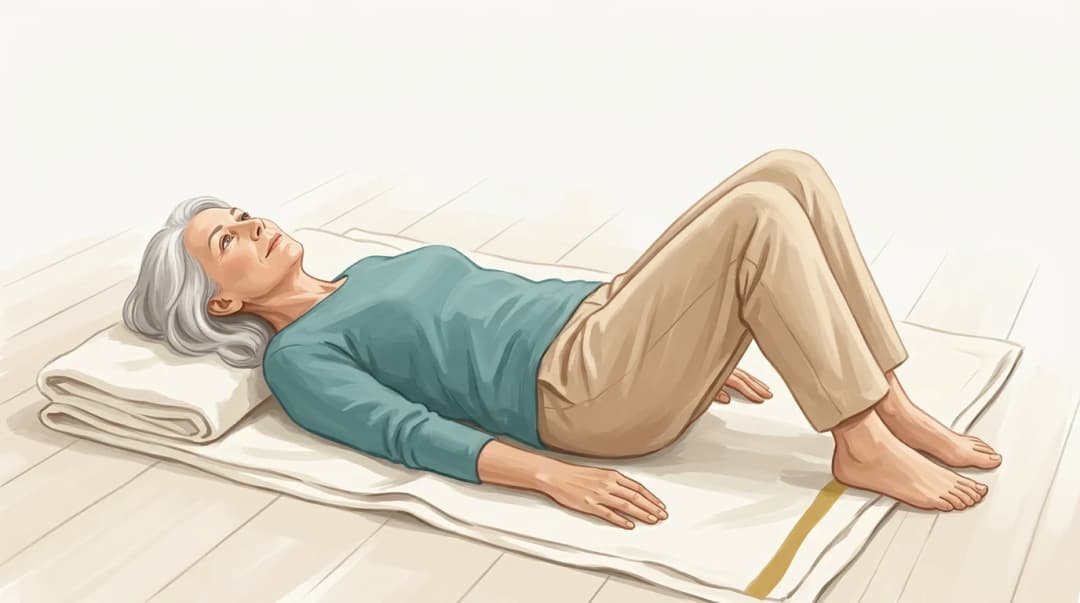
The wind-down itself is simple. Lying on your back in bed, let your head nod yes in the tiniest range you can feel, slowly, five or six times, and notice where the back of your head rests on the pillow. Pause. Then spend a few quiet rounds letting the exhale last a touch longer than the inhale, and picture the head resting more lightly at the top of the spine. There is no target and no shape to clench. Come back to it on any night you like, then leave your body to find sleep in whatever position it favors. For a fuller wind-down in the same spirit, our somatic exercises for sleep walk you through one gently.
A calmer body, easier nights
Understanding it is calming, moving with it more so. The Feldy program is meditation in movement, slow Feldenkrais® lessons that help a busy body settle so sleep can arrive on its own. Gentle, guided, and self-paced.
Start my free 7-day trialNo credit card needed.
Common Questions about forward head posture while sleeping (FAQ)
Can you correct forward head posture while sleeping?
Not by holding one fixed shape, because your head moves throughout the night and posture is meant to be dynamic. What you can do is set up a kinder night: a pillow that keeps your head roughly level with your spine, a sleeping position that supports the neck, and a relaxed body. A gentle pre-sleep release helps the holding ease.
What pillow height is best for forward head posture?
Choose a loft that lets your head sit about in line with the spine, not jacked up high and not pressed nearly flat. Too high nudges the head forward and kinks the neck; too low lets it sag backward. Side sleepers usually want a little more thickness to bridge the gap above the shoulder. Comfort is the best guide.
What is the best sleeping position for forward head posture?
Side and back sleeping both tend to be kinder to the neck than sleeping face down, which often turns and cranes it. The most useful aim is a position where your head rests level and supported, not one rigid shape. Let your body shift naturally through the night.
Does a pre-sleep neck release really help?
A short, gentle release helps the neck and shoulders let go of the day's holding, so you settle into bed less braced. A more relaxed neck tends to rest more easily on the pillow and is less likely to crane forward as you drift off.
How long until sleeping setup changes help my neck?
Some people feel a more comfortable neck within a few nights of a better pillow and a calmer wind-down. A steadier ease usually builds over weeks, and daytime habits matter too. Forward head posture is shaped across the whole day, not only at night.
Should I sleep without a pillow to fix forward head posture?
Usually not. Side sleepers need loft to bridge the shoulder, and going pillowless there tips the head sharply downhill. Some back sleepers do fine with a very thin pillow, but dropping support suddenly often leaves the neck stiffer, not freer. If you want to try less loft, reduce it gradually and let a week of mornings tell you whether it suits your neck.
When should I see a professional about my neck?
See a doctor or physical therapist if neck pain, headaches, numbness or tingling into the arms, or unrefreshing sleep persists despite a comfortable setup, or if your symptoms followed an injury. These suggestions are for general comfort, not medical advice.
A calmer body, easier nights
See the programRelated resources
Posture While Sleeping: A Gentle Guide to Comfort
A gentle guide to posture while sleeping: comfortable positions, pillow ideas, and a slow wind-down to help your body settle before bed.
Feldenkrais® for Sleep: What It Can Do
For nights when the body will not settle, here is where Feldenkrais lessons sit next to cognitive behavioural therapy for insomnia, yoga nidra, and sleep apps.
Lying down is not the same as resting, and researchers have now measured the difference
Ready to start moving better?
Gentle, guided lessons for your body. Try your first one free, no credit card required.