
How to Sleep With Tight Hip Flexors, Comfortably
How to sleep with tight hip flexors: ease the front of the hips before bed, then settle into a position that lets them lie long, so the pull does not disturb your night.
In short
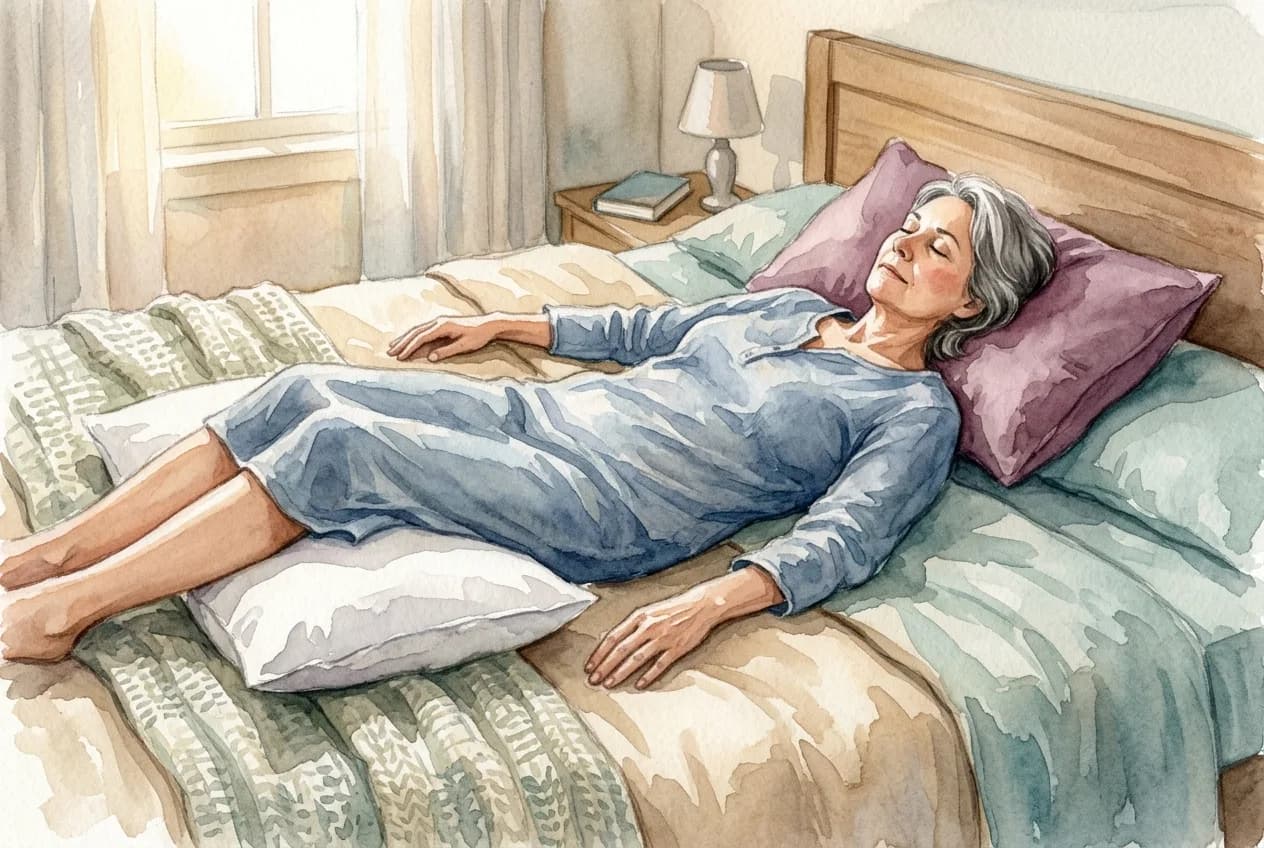
To sleep with tight hip flexors more comfortably, ease the front of the hips with slow, gentle movement before bed, then choose a position that lets them lie long: on your back with a pillow under your knees, or on your side with a pillow between your knees so the top hip does not pull forward.

Prefer to ease in gently?
See a few gentle exercises for stress and sleep to try.
If the front of your hips feels tight and tugging the moment you lie down, learning how to sleep with tight hip flexors mostly comes down to two things: easing the hips a little before bed, and settling into a position that lets them rest long instead of pulling. The hip flexors are the band of muscles across the front of the hip that lift the knee and connect up toward the lower spine, and a day full of sitting leaves many of them short and tense by nightfall. Lying down can then feel restless rather than restful. The good news is that a few gentle habits, in the spirit of the Feldenkrais Method® and similar attentive movement, tend to settle the hips so sleep comes more easily.
None of this is unusual. Low back and hip discomfort is part of an enormous worldwide picture, and low back pain alone affects about 619 million people (WHO, 2023), with tight hip flexors often part of the story because of how much of modern life is spent sitting. Working gently with the hips is a friendly place to begin.
Why tight hip flexors disturb your sleep
When the hip flexors are short and busy, they quietly pull on the front of the hip and the low back, and that pull becomes more noticeable when you finally stop moving and lie still. On your back with your legs straight, these muscles are drawn toward their full length, which some people feel as an ache or a fidgety urge to shift. Hours of sitting, at a desk, in a car, on the sofa, teach the hips to stay folded, so by bedtime the front feels reluctant to lengthen. Understanding that helps, because the answer is rarely to force the hips open and much more often to let them settle. Our Feldypedia guide to lower back pain from sitting explains this sitting habit in more depth.
The kindest sleep positions for tight hip flexors
Small changes to how you lie can make a real difference. On your back, slip a pillow or a rolled blanket under your knees so the hips rest in a soft, comfortable bend rather than pulling long all night. On your side, a pillow between your knees keeps the upper hip from rolling forward and tugging on the tight front, and a second pillow supporting the top leg can feel even easier. If you like to curl up, that is fine too, just try not to fold into the exact same tight shape every night. Let comfort at the front of the hips be your guide, and give yourself permission to adjust until the tug quiets.
A few gentle movements before bed
A short, unhurried wind down helps the hips let go of the day. Lying on your back with your knees bent, you can rock the pelvis a tiny amount, let both knees sway slowly from side to side, or draw one knee gently toward your chest and let the other leg rest long, only ever as far as feels pleasant. The aim is not a deep stretch but a soft invitation, moving slowly enough to feel what changes. Because tension in the hips and tension in a busy mind often travel together, this kind of quiet movement tends to settle both.
Breaking up long stretches of sitting during the day, with a stroll or an easy change of position, keeps the hips from settling into tightness in the first place, so the evening has less to undo.
Our guide to preventing lower back pain when sleeping and our guide to loosening tight hip flexors share this gentle feel and fit naturally alongside a kinder bedtime. If you would like that wind down guided, our comparison of the best app for stress and tension relief looks at which apps work through the body rather than the mind alone. Once you are lying down, our somatic exercises for sleep offer slow, small movements and longer out breaths to help the front of your hips soften into the mattress.
A calmer body, easier nights
Understanding it is calming, moving with it more so. The Feldy program is meditation in movement, slow Feldenkrais® lessons that help a busy body settle so sleep can arrive on its own. Gentle, guided, and self-paced.
Start my free 7-day trialNo credit card needed.
Common Questions about how to sleep with tight hip flexors (FAQ)
What is the best sleep position for tight hip flexors?
Two positions tend to feel kindest. On your back, a pillow under your knees lets the front of the hips rest in a gentle, comfortable bend rather than pulling long. On your side, a pillow between your knees keeps the upper hip from rolling forward and tugging on the tight front. Many people also like a small pillow supporting the top leg. The best position is simply the one where the front of your hips feels at ease.
Why do tight hip flexors bother me at night?
The hip flexors run across the front of the hip and join in toward the lower spine, so when they are short and tense they can tug on the hip and the low back as you lie down and shift about. Lying flat on your back with straight legs can draw them to their longest, which some people feel as an ache or a restless need to move. Adjusting the position so the hips rest in a little bend usually settles it.
What gentle movements before bed help tight hip flexors?
Slow, comfortable movements that let the front of the hips find a little more ease work well: a gentle rocking of the pelvis while lying down, easy knee sways from side to side, or a soft, supported lunge shape held only lightly and briefly. The idea is not to force a deep stretch but to invite the hips to soften with attention, which suits a body that is winding down for sleep.
Can my sleep position make hip flexors tighter?
Sleeping curled tightly into a ball night after night keeps the hips folded for hours, which can add to a short, tense feeling in the front by morning. It is not harmful, but if you wake stiff there, gently lengthening the legs and moving a little before you rise helps. Varying how you lie, rather than always folding into the same shape, tends to keep the hips more comfortable.
How long until my hip flexors feel easier?
Many people feel a little looser after a single session of gentle evening movement, especially paired with a kinder sleep position that night. A steadier change, where the front of the hips simply bothers you less, usually builds over a few weeks of moving gently and often and breaking up long stretches of sitting during the day. Ease grows with repetition rather than effort.
When should I see a professional about tight hips and disturbed sleep?
See a doctor or physiotherapist if hip or back pain is severe, keeps waking you, or is getting worse, or if you feel numbness, tingling, or a shooting pain down the leg, which can point to a nerve rather than a muscle. Get prompt care for a hip that is hot, swollen, or hard to bear weight on. Gentle movement is helpful self care, not a replacement for having a specific problem looked at.
A calmer body, easier nights
See the programRelated resources
How to Prevent Lower Back Pain When Sleeping
How to prevent lower back pain when sleeping: the positions that support your spine, the pillows that help, and the gentle movement that stops your back bracing all night.
How to Loosen Tight Hip Flexors, Gently
How to loosen tight hip flexors without forcing a stretch, using slow, attentive movement so the hips ease and stay easier. A gentle, practical guide for stiff hips.
When stress has worn you out, gentler exercise was easier on the nervous system
Ready to start moving better?
Gentle, guided lessons for your body. Try your first one free, no credit card required.