

Posture While Sleeping: A Gentle Guide to Comfort
A gentle guide to posture while sleeping: comfortable positions, pillow ideas, and a slow wind-down to help your body settle before bed.
In short
There is no single correct posture while sleeping. Your body naturally shifts through several positions each night, so comfort and good support matter far more than holding one rigid shape. Side and back sleeping both work well with a pillow that keeps your head roughly level with your spine.

Prefer to ease in gently?
See a few gentle exercises for stress and sleep to try.
If you wake feeling stiff or sore and wonder whether your sleeping position is to blame, a few gentle changes to your posture while sleeping can make bedtime more comfortable. If you have searched how to fix posture while sleeping, the most useful thing to know is that there is no single correct position to hold. Your body shifts naturally through the night, and comfort matters far more than rigid alignment. A short wind-down, drawn from the Feldenkrais Method®, can help your body settle so it finds an easier rest.
Sleep is worth caring for. The Centers for Disease Control and Prevention reports that more than one in three adults does not get enough sleep on a regular basis (CDC, 2022), and discomfort in bed is one common reason people wake during the night. A more comfortable setup, paired with a calmer body, can quietly support better rest.
What comfortable posture while sleeping really means
It helps to let go of the idea that there is a perfect position to lock into. Posture is dynamic, even at night. Most people move through several positions while they sleep, and that movement is healthy. So the goal is not to train yourself into one shape. It is to make whatever positions you favor more comfortable and well supported.
A few simple ideas help. Side and back sleeping both work well for many people. A pillow that keeps your head roughly level with your spine, neither propped too high nor lying too flat, tends to keep the neck comfortable. A pillow between or under the knees can ease the lower back. None of this is a rule. Comfort is the test, and your own body is the best guide.
How a gentle wind-down settles the body
A busy body carries the day's holding into bed, and a braced body finds it harder to settle. This is where slow, attentive movement helps. When you move gently and notice how each small motion feels, the nervous system gathers evidence that it is safe to do less, and the holding eases. A longer, slower exhale adds to that signal of safety.
This same idea sits at the heart of the Feldy program, whose lessons use slow, guided movement to let the body find ease rather than chase a result. You can read more in our Feldypedia guide to the Feldenkrais Method, and if stress and sleep are what you are working with, the stress and sleep program goes further. For a guided version you can do right in bed, our somatic exercises for sleep walk you through the same gentle settling.
Before you begin
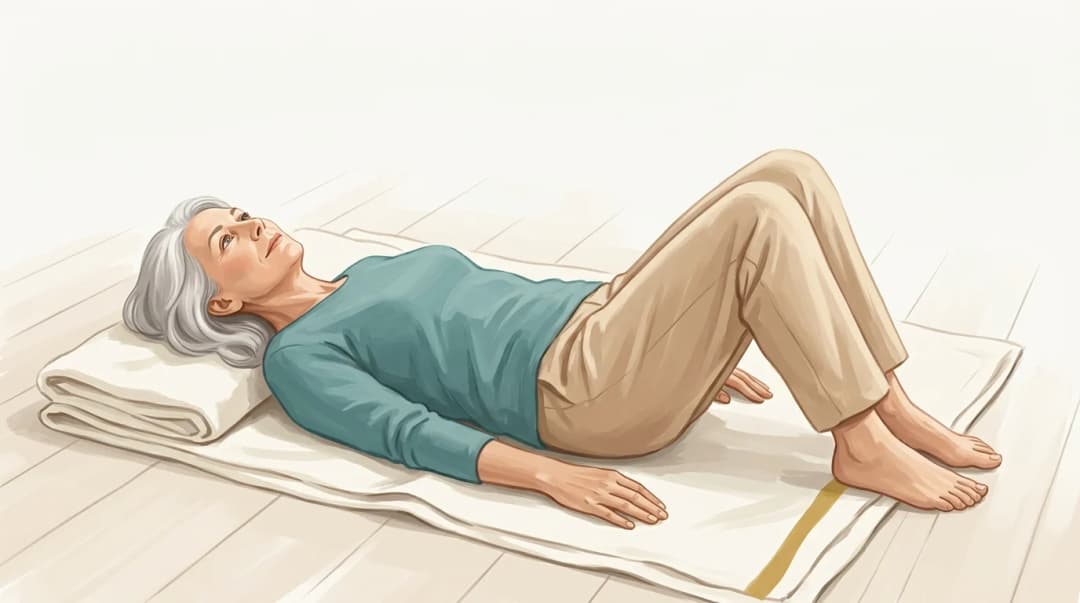
This guide is for general comfort and is not medical advice. If pain or poor sleep persists despite a comfortable setup, talk with a doctor. Otherwise, set up your bed in a way that feels inviting, then move slowly and breathe easily. There is nothing to achieve. The short wind-down below is one gentle way to help your body let go before sleep, and you can return to it any night you like.
A calmer body, easier nights
Understanding it is calming, moving with it more so. The Feldy program is meditation in movement, slow Feldenkrais® lessons that help a busy body settle so sleep can arrive on its own. Gentle, guided, and self-paced.
Start my free 7-day trialNo credit card needed.
Common Questions about posture while sleeping (FAQ)
Is there one correct posture while sleeping?
No. There is no single correct sleeping position, and your body naturally shifts through several positions each night. The most useful approach is comfort and good support, not holding one rigid shape. Side, back, and other positions can all work well with the right pillow.
What is the most comfortable sleeping position?
It varies from person to person. Many people find sleeping on the side or back comfortable, often with a pillow between or under the knees to ease the lower back. The best position is the one that lets you relax and stay asleep without waking in discomfort.
How can I keep my neck comfortable at night?
Aim for a pillow that keeps your head roughly level with your spine, neither propped too high nor too flat. If you sleep on your side, a slightly thicker pillow can fill the gap above your shoulder. Comfort is the best guide.
Does a wind-down really help posture while sleeping?
A slow wind-down helps the body release the holding it carries through the day, so you settle into bed less braced. A more relaxed body tends to find a comfortable position more easily and rest more deeply.
Can changing my sleep position stop morning stiffness?
It may help, since support and comfort affect how rested you feel. Morning stiffness has many causes, though, and a gentle wind-down plus slow movement on waking often helps as much as the position itself.
When should I talk to a professional about sleep?
If poor sleep, pain, or stiffness persists despite a comfortable setup, or if you snore heavily or wake unrefreshed, speak with a doctor. This guide is for general comfort and is not medical advice.
A calmer body, easier nights
See the programRelated resources
Progressive Muscle Relaxation for Sleep: Tense, Then Let Go
A guided progressive muscle relaxation lesson for bed: mildly tense each muscle group, let go fully, and notice the contrast that helps a braced body settle.
How to Get Comfortable in Bed: Settle and Soften
A gentle guide to how to get comfortable in bed: support for the neck and knees, a longer exhale, and small settling movements to help your body release its weight.
Lying down is not the same as resting, and researchers have now measured the difference
Ready to start moving better?
Gentle, guided lessons for your body. Try your first one free, no credit card required.