


How to Sleep With Anterior Pelvic Tilt
How to sleep with anterior pelvic tilt: comfortable positions, simple pillow ideas, and a gentle wind-down to help a forward-tipped pelvis settle for the night.
In short
To sleep with anterior pelvic tilt, choose positions that take strain off the lower back. On your back, a pillow under the knees lets the back ease toward the mattress. On your side, a pillow between the knees keeps the pelvis level. A gentle wind-down helps too. There is no single correct position to hold.

Prefer to ease in gently?
See a few gentle exercises for stress and sleep to try.
Before you begin. This is general comfort guidance, not medical advice. Anterior pelvic tilt is a normal postural variation, not a disease. If back or hip pain, numbness, tingling, or poor sleep persists despite a comfortable setup, please consult a doctor or physical therapist.
If a forward tipped pelvis leaves your lower back feeling tight at bedtime, knowing how to sleep with anterior pelvic tilt mostly comes down to good support and a calmer body, not a perfect position. Anterior pelvic tilt simply means the top of the pelvis tips forward and the lower back curves a little more. It is a normal variation, not a disease to be fixed, so the aim here is comfort rather than correction. A short wind-down, drawn from the Feldenkrais Method®, can help your body settle so it finds an easier rest.
This pattern is very common, which is reassuring. When researchers measured a group of healthy adults with no pain, around 85% of the men and 75% of the women turned out to have at least some anterior pelvic tilt (Herrington, 2011). A pelvis that tips forward is plainly more typical than not, so the job at night is simply to make the positions you already love kinder to your back.
Comfortable positions for sleeping with anterior pelvic tilt
It helps to drop the idea that there is one correct position to lock into. Your body shifts through several positions each night, and that movement is healthy. The goal is to make whatever positions you favor better supported, so a forward tilted pelvis is not left to arch the lower back all night.
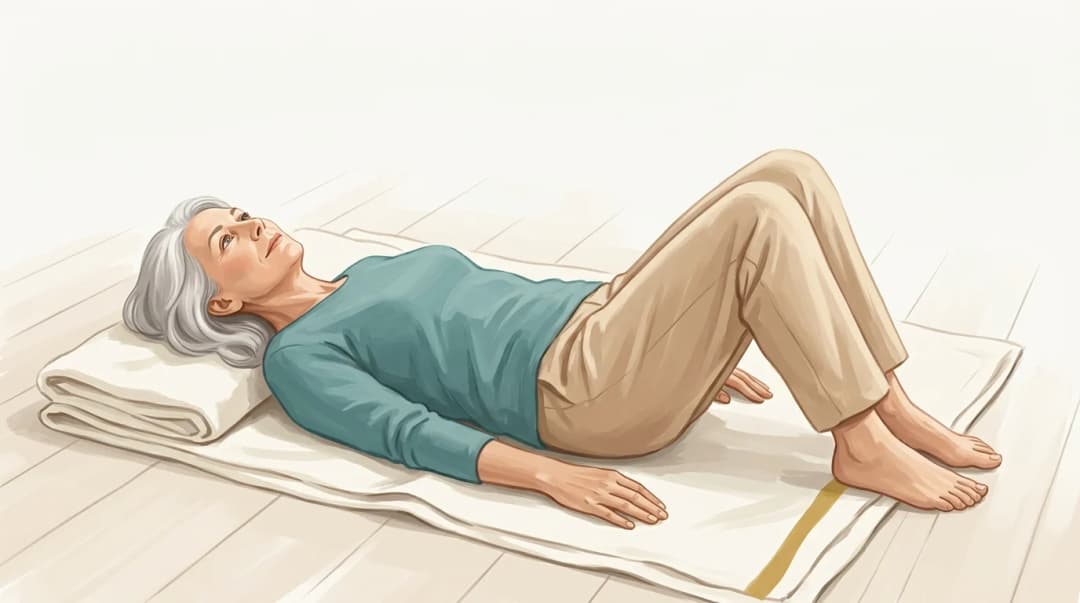
Two simple ideas do most of the work. On your back, a pillow under the knees lets the thighs and pelvis settle so the lower back eases toward the mattress instead of holding its arch. On your side, a pillow between the knees keeps the top leg from dragging the pelvis forward and keeps the hips more level. A head pillow that keeps your head roughly level with your spine completes the picture. None of this is a rule, and comfort is the test. If you spend most of the night on your side, our guide to how to fix anterior pelvic tilt while sleeping on your side goes deeper into that particular setup.
How a gentle wind-down helps a forward-tipped pelvis settle
A busy body brings the day's holding to bed, and around the hips and lower back that holding can deepen a forward tilt. Slow, attentive movement is what helps here. As you move gently and notice how each small motion lands, your nervous system collects proof that less effort is safe, and the muscles cradling the pelvis can release. A handful of tiny pelvic rocks and a longer, calmer breath out reinforce that sense of safety.
In practice: lying on your back with the pillow under your knees, roll the pelvis a few millimeters toward your feet and back again, four or five times, letting each pass grow smaller than the last. Then leave it alone, and let the next breath out take a little longer than the one before. Thirty seconds of this is plenty. If you would like that wind-down guided step by step, our somatic exercises for sleep can be done lying in bed.
That listening, unhurried quality runs all through Feldy, whose lessons guide the body toward ease at its own pace instead of pushing for an outcome. There is more in our Feldypedia guide to the Feldenkrais Method, and when stress and sleep are knotted together, the stress and sleep program takes the work further.
Before you begin
Treat this as general comfort guidance rather than medical advice. Anterior pelvic tilt is a normal postural variation, and no sleeping position will permanently realign your pelvis. Should back or hip pain, numbness, tingling, or restless sleep linger even with a comfortable setup, speak with a doctor or physical therapist. Otherwise, arrange your pillows so the bed feels welcoming, then take each movement slowly and let your breathing stay easy. Nothing here is a goal to reach, just a gentler way to close out the day.
A calmer body, easier nights
Understanding it is calming, moving with it more so. The Feldy program is meditation in movement, slow Feldenkrais® lessons that help a busy body settle so sleep can arrive on its own. Gentle, guided, and self-paced.
Start my free 7-day trialNo credit card needed.
Common Questions about how to sleep with anterior pelvic tilt (FAQ)
What is the best sleeping position for anterior pelvic tilt?
There is no single best position, only better supported and more comfortable ones. Lying on your back with a pillow beneath the knees lets the lower back drift toward the mattress, while lying on your side with a pillow between the knees keeps the pelvis level. Good support and genuine comfort count for far more than locking into one stiff shape.
How should I use pillows to sleep with anterior pelvic tilt?
On your back, a pillow under the knees softens the lower back curve. On your side, a pillow between the knees stops the top leg from pulling the pelvis forward. A head pillow that keeps your head roughly level with your spine rounds it out. Adjust until it simply feels easy.
Is sleeping on my stomach bad with anterior pelvic tilt?
It is not bad, though many people with a forward tilt find stomach sleeping deepens the lower back arch and feels less comfortable. If you love it, a flat pillow under the hips and belly can take some strain off. Comfort is the real test, so let how you feel guide you rather than a rule.
Will sleeping position fix or cure anterior pelvic tilt?
No. Anterior pelvic tilt is a normal variation, not a disease, and a sleeping position does not permanently realign the pelvis. Good support and a calmer body simply make the night more comfortable and may ease related tension. Daytime gentle movement matters more for a clearer sense of neutral.
Why does my lower back feel stiff in the morning?
Morning stiffness has many causes, including how braced the body is at bedtime and how long it stays in one position. A supportive setup plus a slow wind-down often helps, as does easy movement on waking. If stiffness is severe or persistent, check with a professional.
When should I see a professional about pelvic tilt and sleep?
Speak with a doctor or physical therapist if back or hip pain, numbness, tingling, or poor sleep continues despite a comfortable setup, or if pain wakes you regularly. On its own a pelvic tilt is typically nothing to treat, so it is the company of pain or other symptoms that makes expert input worthwhile.
A calmer body, easier nights
See the programRelated resources
Feldenkrais® for Sleep: What It Can Do
For nights when the body will not settle, here is where Feldenkrais lessons sit next to cognitive behavioural therapy for insomnia, yoga nidra, and sleep apps.
Progressive Muscle Relaxation for Sleep: Tense, Then Let Go
A guided progressive muscle relaxation lesson for bed: mildly tense each muscle group, let go fully, and notice the contrast that helps a braced body settle.
Lying down is not the same as resting, and researchers have now measured the difference
Ready to start moving better?
Gentle, guided lessons for your body. Try your first one free, no credit card required.