

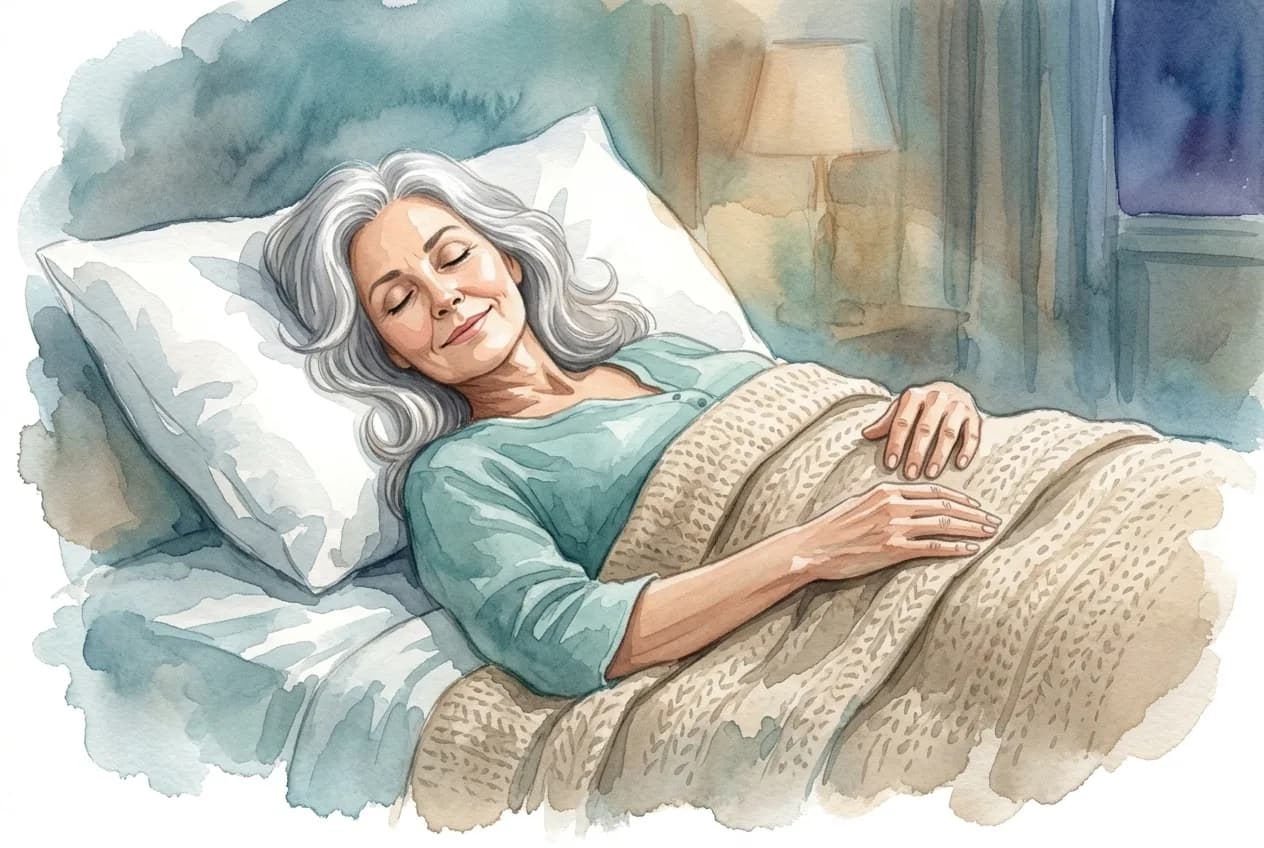
How to Fall Asleep Fast: Gentle Body-Based Ways to Settle
How to fall asleep fast by letting the body let go rather than forcing sleep: a longer exhale, releasing tension from feet to face, and feeling heavy and held.
In short
You fall asleep faster by helping the body let go rather than forcing sleep. A longer, slower exhale, releasing held muscles from your feet up to your face, and letting the body feel heavy and supported all signal that it is safe to drift off.

Prefer to ease in gently?
See a few gentle exercises for stress and sleep to try.
Before you begin. This is general self-care, not medical advice. If you regularly cannot fall asleep, wake unrefreshed, or suspect a sleep disorder, please see a doctor. These are gentle body-based ways to wind down, not a treatment for insomnia.
If you want to know how to fall asleep fast, the answer is gentler than most advice: you cannot make yourself fall asleep, you can only let yourself. So instead of chasing sleep, help the body let go: lengthen your exhale, release held muscles from your feet up to your face, and let your weight grow heavy on the mattress. This body-based approach grows out of the Feldenkrais Method® and works with the nervous system rather than against it.
The strain that keeps people awake is often physical as much as mental. The American Psychological Association reports that most US adults experience physical symptoms of stress, the kind of bracing and tension that easily follows you to bed and disturbs sleep (APA). A body still primed from the day does not soften just because the lights go out.
Why you cannot force sleep, only allow it
Falling asleep is a downshift, not an action. During the day your body runs on its alert, get-things-done setting, muscles slightly braced, breath kept ready. Sleep belongs to the opposite setting, the one that handles rest and recovery, and you cannot flip that switch by willpower: trying hard keeps the alert system engaged. The kinder move is to give the body conditions it can read as safe, then get out of its way. There is nothing to perform and no target to hit.
How to fall asleep fast by lengthening the exhale
The single most useful change is to ease your out-breath into something a touch longer and slower than the breath in. The exhale is tied to the resting branch of the nervous system, so an unhurried out-breath nudges the whole body toward settling. Do not gulp air or push it out. Just let each exhale spill a touch longer, soft and quiet, for a handful of rounds, and let your belly stay loose so the breath can move low. Within a minute or two many people feel the first loosening, a sense that there is a little less to hold.
How to fall asleep fast by releasing the body from feet to face
Once the breath has slowed, travel slowly up through the body and let each part grow heavier. Begin at your feet and let them give, then your calves, your thighs, your hips, pausing at each place long enough to actually feel it soften. Let your back, shoulders, and arms spread a little wider on the bed, as if the mattress is carrying more of you. Save the face for last, because it often holds the final tension of the day: let your jaw unclench so your back teeth come apart, let your tongue rest low, and let the small muscles around your eyes go still. You can learn more about how this works in our Feldypedia guide to sleep disruption and physical tension.
When the body stays heavy and supported, sleep comes easier
The aim of all this is one feeling: heavy, held, and safe. A body that feels supported has no reason to stay on guard, and that is the state sleep slips into. If you would like this wind-down walked through step by step, our somatic exercises for sleep do exactly that. And when stress and poor sleep feed each other in your life, the stress and sleep program goes further with a gentle, guided path. Approach all of it with curiosity rather than pressure, since pressure is the very thing that keeps you awake.
A calmer body, easier nights
Understanding it is calming, moving with it more so. The Feldy program is meditation in movement, slow Feldenkrais® lessons that help a busy body settle so sleep can arrive on its own. Gentle, guided, and self-paced.
Start my free 7-day trialNo credit card needed.
Common Questions about how to fall asleep fast (FAQ)
How do I fall asleep fast?
You fall asleep faster by helping the body let go rather than chasing sleep. Lengthen the exhale, release held muscles from your feet up to your face, and let your weight sink into the mattress so the body feels safe enough to drift off.
Why can't I force myself to fall asleep?
Sleep is not something you can do on purpose, the way you might lift an arm. It is a state the body slips into once it feels safe and unhurried. Trying hard keeps the alert system switched on, which is why effort tends to push sleep further away.
What should I do if this is not working?
If you have been lying awake and feeling frustrated, it can help to stop trying, get up for a few minutes in dim light, and do something calm and boring. Return to bed when you feel drowsy, and begin again with the long, slow exhale.
How is this different from taking sleeping pills?
Sleeping pills act on brain chemistry to sedate you. These are gentle body-based ways to wind down by lowering the tension and arousal that keep you awake. They are a self-care practice, not a medication, and they are not a treatment for insomnia.
When should I see a professional about my sleep?
If you regularly cannot fall asleep, wake unrefreshed, snore heavily, or suspect a sleep disorder, please see a doctor. Ongoing sleep trouble deserves real assessment, and gentle practices like these can sit alongside professional care rather than replace it.
How long before I notice a difference?
On a given night, slowing the exhale and releasing tension may help you settle within minutes. A more reliable, easier wind-down usually builds over a couple of weeks, as the body learns to read the same quiet cues as a signal that it is time to let go.
A calmer body, easier nights
See the programRelated resources
How to Fall Back Asleep After Waking in the Night
How to fall back asleep after a 3am waking: stay still, skip the clock, lengthen the exhale, and let a held body soften so drowsiness can return on its own.
Bedtime Stretches in Bed: A Short Wind-Down
A few slow bedtime stretches in bed to help a busy body settle for sleep. Small, gentle, and beginner-friendly, so you can do the whole set lying down.
Lying down is not the same as resting, and researchers have now measured the difference
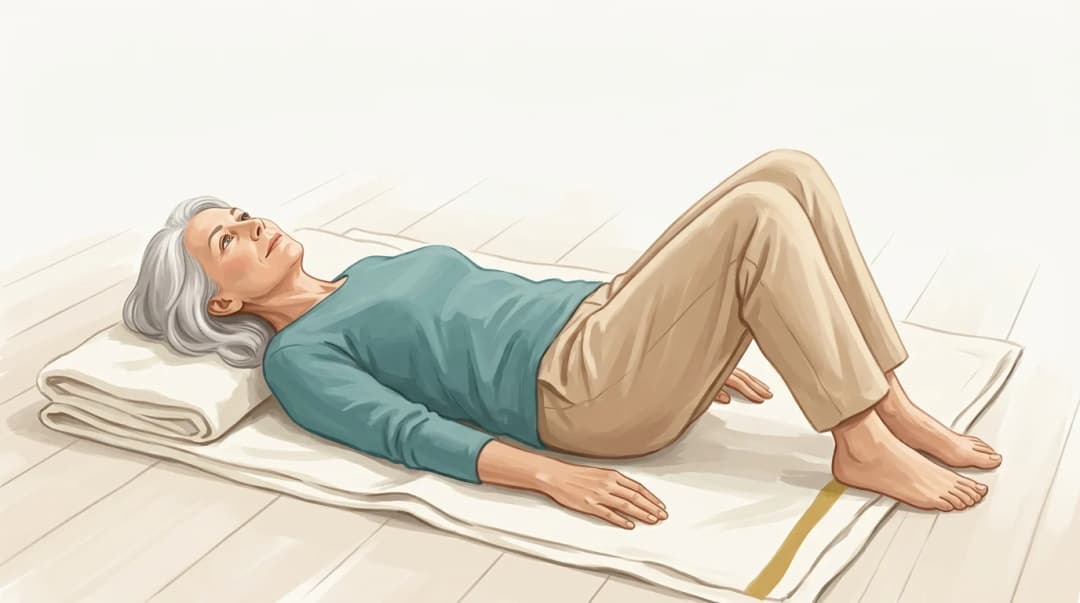
Ready to start moving better?
Gentle, guided lessons for your body. Try your first one free, no credit card required.