
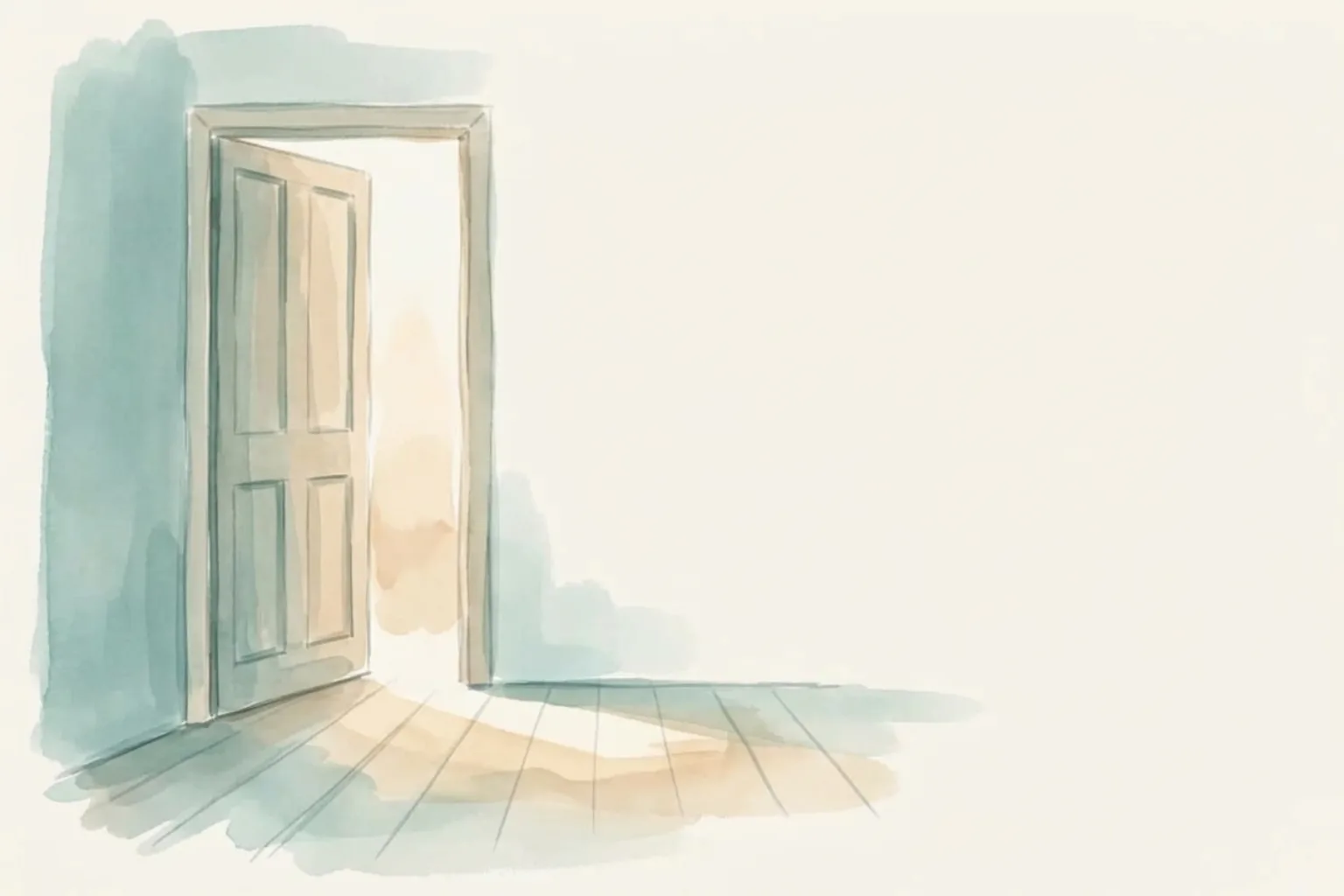
Curiosity: Gentler Than Correction
What changes when the question in your mind shifts from "Am I doing it right?" to "What do I notice?"
Part 7 of the At Home in Yourself series.
Many of us come to a Feldenkrais lesson with the same question.
Am I doing it right?
In a group class, you can sometimes see it: eyes open, and heads turn to check what the person on the next mat is doing.
Most of us learned to move by being corrected. Stand up straight. Don't slouch. Knees behind your toes. In school, in sports, in exercise classes, someone showed us the right way and told us when we missed it. So it is easy to keep looking for the right way, even when nobody is watching.
In an Awareness Through Movement® lesson, the teacher usually doesn't demonstrate. There is no position you have to reach and no movement you have to copy. You are guided by words, and by what you feel.
The Feldenkrais Method® asks a different question: what do I notice?
Is this movement easier to the right or to the left? Where does it begin? What happens to my breath? Does it feel different if I make it smaller?
These questions have no wrong answers. Whatever you notice is useful.
This is more than a gentle teaching style. It may change how we move.
When we try to get something right, we often try harder. We tighten a little, hold the breath, and watch ourselves from the outside. Correction, even kind correction, can carry a small message that something is wrong, and we may end up using more effort than the movement needs.
Curiosity carries a different message: let's see. There is nothing to prove. There is more room to explore, compare, and notice what happens.
Moshe Feldenkrais often emphasized that when we use less effort, we can sense finer differences. Trying hard to be right may make those differences harder to feel. Curiosity makes room for them.
You can notice something of this in a simple movement.
Interlace your fingers, the way you usually do, and notice which thumb is on top.
Then open your hands and interlace them the other way, with the other thumb on top.
For most people, the second way feels strange. It may even feel wrong. But it isn't wrong. It is only unfamiliar.
Often, what feels wrong is simply new.
The same question can follow us outside the lesson. We ask it as the body changes over the years, when a movement that used to be easy isn't anymore, when we try something new. It can make us more cautious, or keep us from exploring at all.
Curiosity doesn't ignore what is difficult. It meets it with interest instead of judgement. What happens if I turn a little less? What if I let my eyes lead? Is there another way up from the floor?
You don't have to find an answer to any of these. You only have to be interested.
"Am I doing it right?" asks us to find the right answer.
"What do I notice?" gives us something to explore.
Feel It for Yourself
In Feldy's short audio lessons, Chava guides you through gentle movements with no movement you have to copy and no position you have to reach. You simply [notice what happens](/for/body-awareness), at your own pace, lying down at home. Your first 7 days are free, no credit card needed.
Begin your free trialFAQ about curiosity in Feldenkrais
What if a movement is uncomfortable or hurts?
Then that is important information, and it is the first thing worth noticing. In a Feldenkrais lesson you are invited to go only where it feels easy, pleasant, and comfortable: you can make the movement smaller, slower, or simply imagine it. If pain persists, please see a professional.
Isn't some guidance useful?
Very much so. A teacher's words help you find your way into a movement. The difference is the question you hold while you move. Instead of checking yourself against a standard, you explore and compare, and the nervous system learns from what you discover.
← Previous:
Breath: The Movement You Never Stop Making
At Home in Yourself is a series on what actually changes in a Feldenkrais lesson, one idea at a time. More are on the way.
Start your free 7-day trial
Start free trialMore Articles
Listening: The Body Was Talking All Along
In a Feldenkrais lesson, change begins with noticing. Listening to your body is not looking for what is wrong, but a gentle curiosity that opens easier movement.
Aug 30, 2026
Sensing: The Difference Between Doing and Feeling
What changes when you learn to feel how you move, rather than simply getting the movement done?
Sep 20, 2026
Why Patients Do Their Exercises in Clinic but Not at Home
Home exercise program adherence often drops between visits. Why "three sets of ten" can stall at home, and one small idea from Feldenkrais teaching.
Oct 12, 2026Ready to Start Moving Better?
Try your first lesson for free. No credit card required.