
Why Patients Do Their Exercises in Clinic but Not at Home
Home exercise program adherence often drops between visits. Why "three sets of ten" can stall at home, and one small idea from Feldenkrais teaching.
Between Sessions, No. 2: the Feldenkrais Method® alongside physiotherapy.
"Three sets of ten, every day." Your patient nods. In the clinic they did a good set of bridges, slow and steady, with you next to them.
A week later they are back. The same movement looks stiff and unsure. You ask about the home exercises, and there is a long pause. Then: "Some days."
I am not a physiotherapist. I am a Feldenkrais teacher, and many of the people in my classes, and many Feldy users, also see a physiotherapist. So I see the same gap from the other side: the days between visits. This post is about that gap, and how we might work on it together.
How often patients skip home exercises
A lot. A review of 30 studies on home exercise programs notes that up to 70% of patients may not do them as planned (Essery and colleagues, 2017). The people most likely to keep going were those who believed they could do it, had exercised before, and had support from the people around them.
You know this better than I do. My interest is smaller: what happens to "three sets of ten" when the patient is home alone.
What "three sets of ten" does at home
In the clinic, the number comes with a lot of help. You are there. You show the start position. You say "smaller is fine." You notice when the patient holds their breath, sometimes before they do.
At home, the number is often the only thing left, and a number does a few things on its own.
It tells the patient where to look. Their attention goes to counting. Seven, eight, nine. The movement becomes a task to finish.
It turns a sore day into pass or fail. Thirty repetitions feels like a big task when you are tired or stiff. If you cannot do all thirty, it is easy to think you failed, and do none.
It does not say what to do when it hurts. At repetition six, something hurts a little. Should they go smaller? Slower? Stop? The number has no answer. Some people stop, and find it hard to start again.
None of this is about the exercise you chose. It is about what a number can and cannot carry without you. People with neck pain said something similar in a recent study: what got in their way most was whether the program suited their body, not the schedule (more on Movement Pulse).
A small habit next to the home program
Feldenkrais lessons may help here, and I want to keep the claim small.
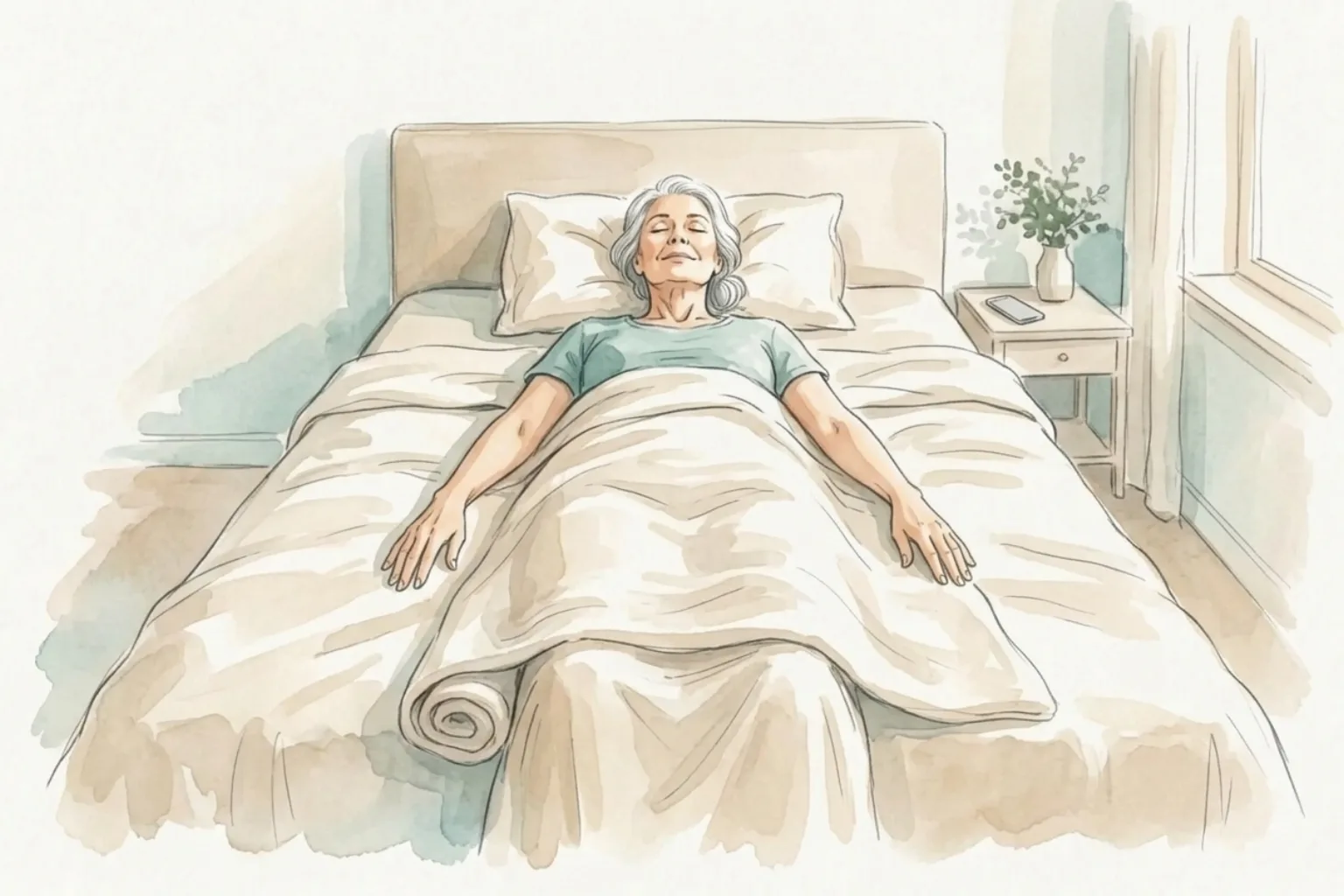
An Awareness Through Movement® lesson is an audio recording. A teacher guides small, slow movements, usually lying down. There is no count. The patient makes the movement smaller until it is easy, rests often, and notices what changes. Most Feldy lessons can be done in bed, and the morning and bedtime lessons take 10 to 15 minutes.
It does not build strength or follow a progressive plan. It does not replace anything in your plan of care or change your precautions. You know your patient best, and you decide whether it fits. If it does, your program stays the main plan.
I have no data showing that it helps people do their home exercises, and I know of no study that has tested it. What it can do is smaller: on the days the program is not happening, it keeps a daily time for gentle movement, ready for when the patient goes back to your exercises.
Who this is not for
It is not for people soon after surgery whose precautions have not been checked with you or their surgeon. It is not a response to red flags: new weakness, changes in bladder or bowel control, numbness in the saddle area, or signs of myelopathy need prompt medical review. It may not suit people who cannot follow spoken instructions.
A small idea from Feldenkrais teaching
In a Feldenkrais lesson, we often ask people to do a movement slowly, at about half their range, and then say one thing they noticed. Which side felt easier. Where they held their breath. What moved that they did not expect.
Some physiotherapists already do something similar with home exercises. Next to "three sets of ten," they add one line in the patient's own words, about what the patient noticed. Then the patient has two things to aim for at home: the number you chose, and a feeling they know. The exercise and the dose stay the same. It takes about two minutes, and you will know best whether it suits a given patient.
Our page for physiotherapists shows what a lesson is like and what has been studied, and does Feldenkrais work collects the research. For your patients, there is a plain guide to physical therapy exercises at home.
We want to support the work you already do, and help your patients come back to the exercises you chose for them.
Try a Lesson Before You Suggest One
See how Feldy can sit alongside physiotherapy, try it yourself with a free 7-day trial, or ask Chava a question.
Feldy for physiotherapists← Previous: Sore After Physical Therapy? What to Do the Next Day
Start your free 7-day trial
Start free trialMore Articles
Does Feldenkrais Actually Work? What the Evidence Shows
A 2022 meta-analysis of 16 randomized trials found Feldenkrais eased pain and improved balance and mobility in older adults. Here is what the evidence shows.
Jun 28, 2026
Why Feldenkrais Lessons Are Done Lying on the Floor
Lying down is not just comfortable. It reduces effort, sharpens awareness, and turns the floor into an active partner in movement learning.
Apr 20, 2026
Sore After Physical Therapy? What to Do the Next Day
Soreness after physical therapy is often a normal part of the work. What to watch for, and how gentle movement can sit alongside your program.
Oct 4, 2026Ready to Start Moving Better?
Try your first lesson for free. No credit card required.