
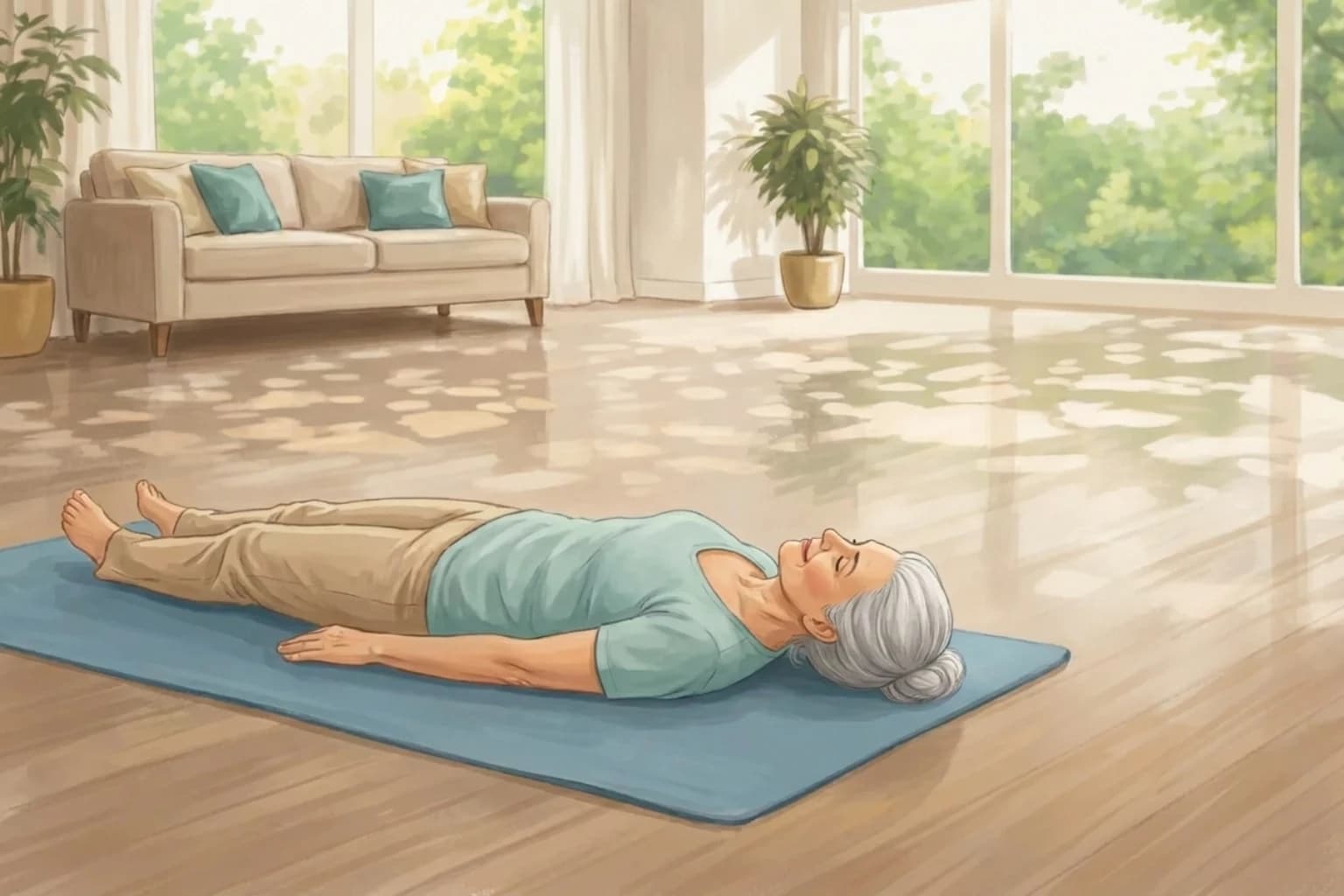
Does Feldenkrais Actually Work? What the Evidence Shows
A 2022 meta-analysis of 16 randomized trials found Feldenkrais eased pain and improved balance and mobility in older adults. Here is what the evidence shows.
If you have tried exercise programs that did not help, the idea behind the Feldenkrais Method® can sound almost too quiet to matter. The movements are small. Nobody counts repetitions. So it is fair to ask the honest question: does Feldenkrais actually work, or does it just feel pleasant for an hour and change nothing?
It is a fair question, and it deserves a straight answer grounded in the research. This post walks through what the research on Feldenkrais shows, including the places where the evidence is strong, the places where it is thin, and one study that hints at why a gentle practice can change anything at all.
Feldenkrais is a way of learning easier, more comfortable movement through slow, attentive exploration rather than effort or stretching. Most people meet it first as an Awareness Through Movement® lesson, a guided sequence you usually do lying down, noticing how you move. If the method is new to you, it is worth reading more about the Feldenkrais Method and how it differs from ordinary exercise.
What the research on Feldenkrais shows
The strongest single piece of evidence is a 2022 systematic review and meta-analysis published in the International Journal of Environmental Research and Public Health. It pooled 16 randomized controlled trials of the Feldenkrais Method® across several different groups of people, which makes it the closest thing the field has to a wide view of the evidence.
A few findings stand out. In older adults, Feldenkrais improved balance and everyday mobility. On the Timed Up and Go test, a standard measure of how steadily a person stands, walks a short distance, and turns, the pooled effect was large (Berland et al., 2022). For someone who has grown cautious on their feet, steadiness like that is not a small thing.
In people with ongoing spine pain, including the neck, upper back, and lower back, Feldenkrais reduced pain and improved function about as well as other established physiotherapy approaches. It did not beat them by a wide margin. It held its own, which for a method this gentle is itself worth noting. The review also reported gains in quality of life and functional tests for people with Parkinson's disease, and better interoceptive awareness, the felt sense of what is happening inside the body, in those with chronic low back pain.
What makes the review trustworthy is that it did not oversell. For multiple sclerosis, it found no clear advantage for Feldenkrais over the comparison groups. Real evidence usually looks like this: solid gains in some areas, a flat result in others, rather than a clean win everywhere. A method that quietly reports its own limits is easier to believe than one that promises the world.
Is it just relaxation, or something more?
A reasonable skeptic might say that anything slow and pleasant will help a little, and that this is really just relaxation or attention from a teacher. It is a fair challenge. Two things in the research push back on it.
First, these are controlled trials. Participants were compared against other active treatments, including conventional exercise and physiotherapy, not against doing nothing. Feldenkrais still held its own. Second, the changes show up in the body's movement system, not only in how relaxed someone feels.
A look at why the moving brain reorganizes
One smaller study offers a clue about the mechanism. Using brain imaging, researchers found that a single short Feldenkrais-based lesson changed the resting activity of the brain's primary and higher-order motor areas, the regions that plan and coordinate movement (Verrel et al., 2015). In plain terms, even one quiet lesson appeared to shift how the moving brain organizes itself, not only how the muscles felt afterward.
That fits the central idea of the method: Feldenkrais works by teaching the nervous system, which is also why people often notice changes spread to parts of the body they were not focused on. It lines up with the broader neuroplasticity research showing that novel, attentive movement can reshape how the body coordinates itself.
A caveat matters here. This was a small study of 21 healthy young adults, not the people in their sixties and beyond this blog is usually written for. So it explains a plausible reason rather than proving a benefit. Set next to the larger outcome trials, though, it helps the whole picture make sense.
Where the Feldenkrais Method fits
In my work with clients, the people most doubtful that something so gentle could help are often the ones who have tried the hardest. They have done the stretches and the strengthening and felt let down. What tends to surprise them is how little the method asks. You do not push into pain or chase a stretch. You stay where the movement feels easy and comfortable, explore small variations with attention, and the body gradually finds a smoother way to organize itself. If you want to feel what that looks like in practice, our collection of 10 gentle Feldenkrais exercises is a simple way to try it at home.
It helps to be clear about what Feldenkrais is and is not. It is a learning practice, not medical care. It works alongside physiotherapy, chiropractic, and other clinical care rather than replacing it. If you already practice yoga or Pilates, Feldenkrais works on a different mechanism, very gentle and soft. Much of what shifts is body awareness, the quiet sense of where you are and how you are moving, which the research keeps linking to changes in pain and balance.
This learning-first approach is the principle Feldy is built around: short, guided lessons, voiced so you can keep your eyes closed and your attention inward, designed to be done at home at whatever pace suits your body. If you want the longer version of the thinking and the science, it lives on our method page.
What this means if you are wondering whether to try it
So, does Feldenkrais work? The fairest answer the evidence supports is a qualified yes. For balance and mobility in older adults, and for several kinds of ongoing pain, the research shows real improvement, comparable to other respected approaches, along with a believable reason why. For some conditions the evidence is still thin or mixed, and many of the underlying trials are small.
A few honest caveats are worth stating plainly. A meta-analysis is only as strong as the trials inside it, and several of these had modest sample sizes. The brain imaging study was small and used young, healthy volunteers. None of this guarantees the method will help any one person, and it is not a substitute for care you may need from a clinician.
What the evidence does suggest is that Feldenkrais is more than a nice hour. There is real, if still growing, research behind it, the risk is very low, and what it asks of you is gentle. For a lot of people, that combination makes it a reasonable thing to explore.
Feel It for Yourself
A free 7-day trial of the Feldy online movement program, voiced by Chava. Gentle, guided lessons you do lying down. No credit card needed.
See if Feldy fits youFAQ about Feldenkrais and the evidence
Does Feldenkrais actually work?
The strongest evidence is a 2022 systematic review and meta-analysis of 16 randomized controlled trials. It found that Feldenkrais improved balance and everyday mobility in older adults and reduced pain in people with neck and back conditions, with results comparable to other established physiotherapy. The evidence is thinner or mixed for some conditions, but the method is gentle and carries very low risk.
What does the research say about Feldenkrais and balance?
In the 2022 meta-analysis, older adults improved on the Timed Up and Go test, a standard measure of standing, walking, and turning, with a large pooled effect. Other trials report less fear of falling. Steadier balance is one of the most consistent findings in the Feldenkrais research.
Is Feldenkrais evidence-based or just relaxation?
It is more than relaxation. The trials use comparison groups and still find gains in pain, balance, and mobility, and brain imaging shows that even a single lesson changes activity in the brain's movement areas. That said, the evidence is still growing and some areas remain thin, so honest expectations matter.
Is Feldenkrais safe for older adults?
Yes. Lessons are slow and gentle, usually done lying down, with no stretching and no force. You stay within a comfortable range the whole time. It is not a substitute for medical care, so if you have a health condition it is wise to check with your doctor before starting.
How is Feldenkrais different from yoga or Pilates?
It works on a different mechanism. Rather than stretching or strengthening, Feldenkrais is about learning easier movement through attention, very gentle and soft. Many people who already practice yoga or Pilates find it adds something different rather than repeating what they do.
Start your free 7-day trial
Start free trialMore Articles

The Feldenkrais Method® Isn't Just Therapy. It's a Philosophy of Human Potential
The science and thinking behind a system built for learning, not treatment: what motion-capture labs and humanist philosophy reveal about how we move.
Jun 18, 2026
Can Feldenkrais Reduce Stress at the Hormonal Level?
New research suggests gentle somatic movement may influence the body's stress response, shifting hormonal markers and improving wellbeing beyond relaxation.
Apr 24, 2026
Breath: The Movement You Never Stop Making
What does a breath you did not know you were holding have to do with how freely you move?
Sep 22, 2026Ready to Start Moving Better?
Try your first lesson for free. No credit card required.