

The Feldenkrais Method® Isn't Just Therapy. It's a Philosophy of Human Potential
The science and thinking behind a system built for learning, not treatment: what motion-capture labs and humanist philosophy reveal about how we move.
Ask most people what the Feldenkrais Method® is and you will hear some version of "a gentle therapy for pain." That answer is not wrong, but it misses what the method actually is. Moshe Feldenkrais did not set out to build a treatment. He set out to understand how human beings learn, and to give people a way to keep learning, through movement, for the rest of their lives. So if you have ever wondered what the Feldenkrais Method really is, the most useful answer is this: it is a system of learning, not a system of correction.
That distinction is not academic. It changes what you do, what you expect, and how the results show up. It also explains why a method often filed under "alternative therapy" keeps turning up in motion-capture laboratories and on the training schedules of professional dancers.
What the Feldenkrais Method® Is, Really
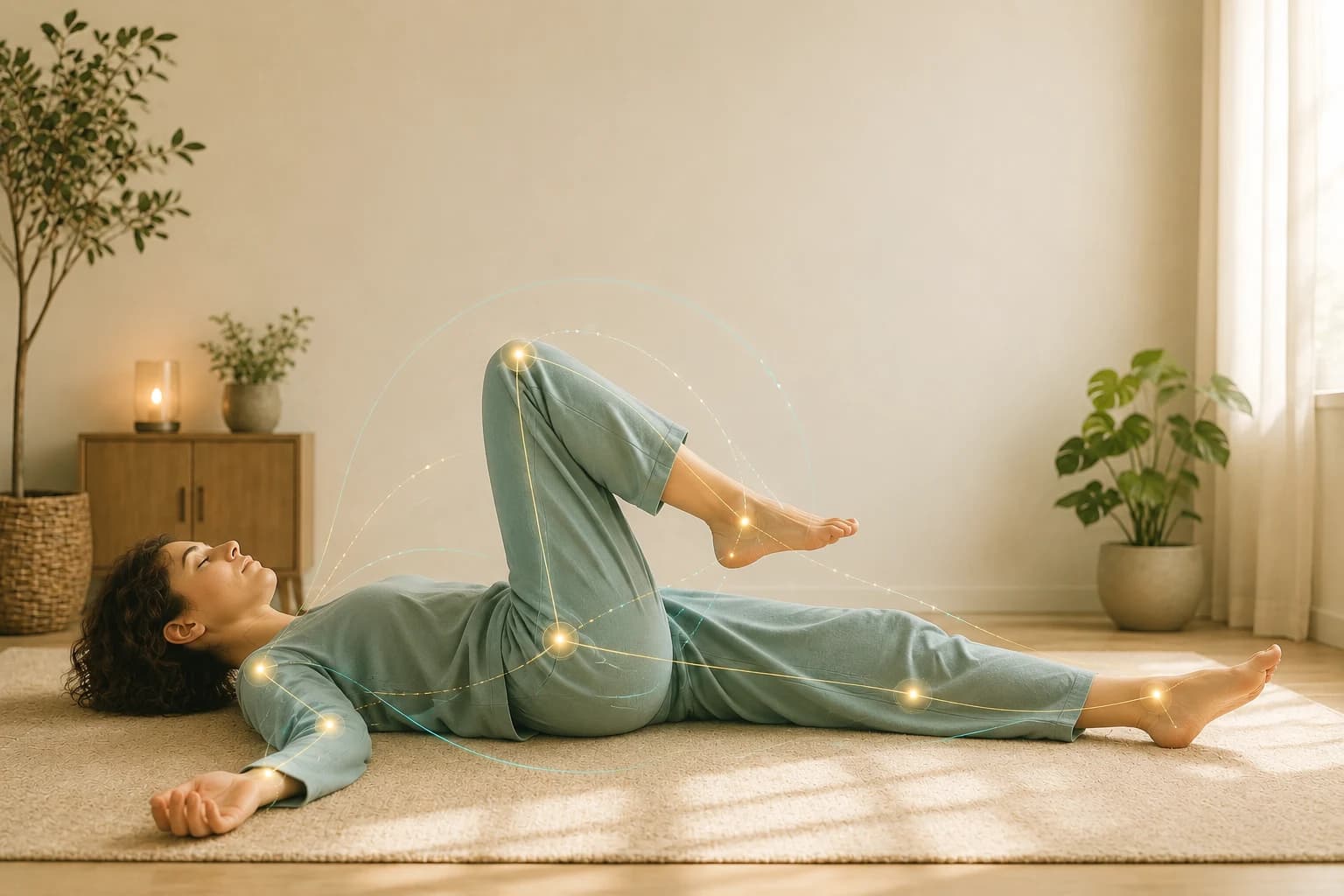
The Feldenkrais Method is a structured way of using attention and slow movement to expand your options. It comes in two forms. Awareness Through Movement (ATM) lessons are verbally guided, usually done lying down, exploring small sequences of movement with curiosity rather than effort. Functional Integration (FI) is the one-to-one version, where a practitioner uses gentle, precise touch to communicate the same kind of learning directly.
Neither is exercise in the usual sense. There are no repetitions to count, no strength to build, no positions to hold or perfect. There is nothing you can do wrong, because the lesson is not asking you to perform. It is asking you to notice. As you sense the difference between one way of moving and another, your nervous system quietly reorganizes how it coordinates you, and movement that felt effortful starts to feel easy.
You can read a fuller primer in our Feldenkrais method overview, but the one idea to hold onto is that the method teaches, it does not fix.
A Philosophy of Human Potential
Feldenkrais's deeper claim was that we act according to our self-image, and that this image is learned, which means it can keep changing. "What I'm after," he said, "isn't flexible bodies, but flexible brains." The body was his way in. The real subject was the human capacity to keep developing.
This places the method inside a particular tradition of thought. Scholars such as Riessland have drawn out how closely Feldenkrais's project mirrors the humanism of Erich Fromm, whose work distinguished the having mode of life, where a person is a fixed set of possessions and traits, from the being mode, where a person is an ongoing process of growth and aliveness. Feldenkrais belongs to that same mid-century current of human-potential thinking. Its premise is that a person is not a finished product to be repaired but a process that can keep learning.
Seen this way, learning is not the accumulation of information. It is becoming more capable of choice. A back that hurts, in this frame, is often a person who has run out of options, moving the only way they know how. The method does not impose a better way. It restores the freedom to find one.
How the Feldenkrais Method Differs from Yoga, Pilates, and Physical Therapy
This is where the contrast with more familiar practices becomes clear. Yoga and pilates are valuable disciplines, but they are organized around forms: poses and exercises you perform, refine, and progress. The goal is the shape and the capacity. The Feldenkrais Method has no shape to reach.
Physical therapy is built on a different logic again. It identifies a specific dysfunction and prescribes exercises to correct it. That is exactly the right tool for many problems. But it is corrective by design: there is a wrong to be fixed and a target to hit.
Feldenkrais does neither. It does not diagnose a fault or hand you the correct pattern. It widens the range of movement available to you and lets your own system settle on better organization. The difference is quality versus quantity: not how much you can do, but how well-coordinated and efficient your movement becomes. If you want the side-by-side, our comparison of Feldenkrais and pilates walks through it in detail.
The Science: What Motion Capture Reveals About Movement Quality
For a long time, "movement quality" sounded like something you could feel but not measure. Recent work changes that. In 2025, researchers at TU Darmstadt's Locomotion Lab (Alokla, Russell, Seyfarth, and Sharbafi) published a study with the unusually direct title Exploring the Feldenkrais Method as a Tool to Improve the Human Movement Quality, presented at the AMAM symposium on adaptive motion.
Using laboratory-grade motion capture alongside electromyography (EMG), which measures muscle activation, they studied 43 participants through a Feldenkrais-style intervention based on self-directed movement exploration. They found significant improvements in range of motion that were achieved, in their words, "without excessive muscular effort."
That last phrase is the whole point. The gains did not come from stretching tissue or building strength. They came from neuromuscular adaptation: the nervous system reorganizing how it coordinates the body, so movement became freer at lower cost. That is what movement quality means once you can measure it, and it is precisely what you would predict from a method designed to teach the control system rather than the muscle.
Feel the Difference Yourself
A free Feldenkrais lesson, done lying down. No equipment, no positions to hold. Just slow, guided attention.
Try a Free LessonFeldenkrais for Dancers: Why Skilled Movers Train Awareness
If the method only mattered for stiffness and pain, dancers would have no use for it. They do. Feldenkrais for dancers has a long history, because dancers are not trying to move more, they are trying to move better, and that is the method's home territory.
A 2025 study from Chung-Ang University (Kim and Cho, published in the Korean Journal of Dance Studies) followed five professional dancers through twelve Awareness Through Movement lessons delivered over video. The dancers showed measurable improvements in body awareness, including noticing, attention regulation, returning attention to the body, and trust, alongside clear gains in postural alignment: pelvic tilt, pelvic rotation, and lumbar curve all improved.
For a dancer, those are not minor details. Alignment and self-sensing are the raw materials of both expression and injury prevention. The same reason elite dancers, musicians, and athletes have used Feldenkrais for decades is the reason it shows up in a biomechanics lab: it works on the organization of movement, which is the ceiling that hard practice alone tends to hit.
Organic Learning: The Idea at the Core
Pull these threads together and you arrive at the concept Feldenkrais called organic learning. It is the way you learned to move as an infant: not by instruction, but by exploring, sensing differences, and keeping whatever worked. No one taught you to roll over by correcting your form. You discovered it.
Notice that both 2025 studies used self-directed exploration rather than external correction, and both found that this was the active ingredient. That is organic learning in the Feldenkrais sense, and it is why the method feels less like a workout and more like remembering how to learn.
Feldy is built entirely on this principle. Each lesson is slow, guided, self-directed movement you do lying down, so your nervous system can find easier options on its own, the way it always has. You are not being fixed. You are being given room to keep developing, which, as Feldenkrais understood, is what being human actually is.
FAQ about the Feldenkrais Method
What is the Feldenkrais Method?
The Feldenkrais Method is a system of movement-based learning developed by Moshe Feldenkrais. Rather than treating or correcting the body, it uses slow, attentive, exploratory movement to teach the nervous system new and easier ways to organize itself. It comes in two forms: Awareness Through Movement, which is verbally guided group lessons, and Functional Integration, which is one-to-one hands-on work.
How is the Feldenkrais Method different from yoga or pilates?
Yoga and pilates are built around poses and exercises to perform and progress, where the goal is the form itself. The Feldenkrais Method has no poses to achieve and nothing to do correctly. It is a learning process, not an exercise routine: you explore options and let your nervous system find better-organized, lower-effort movement, rather than working toward a target shape or building strength.
Is there scientific evidence for the Feldenkrais Method?
Yes. A 2025 study from TU Darmstadt's Locomotion Lab used laboratory motion capture and EMG with 43 participants and found significant range-of-motion improvements achieved without excessive muscular effort, pointing to neuromuscular reorganization rather than stretching. A separate 2025 study of professional dancers found measurable gains in body awareness and postural alignment after twelve Awareness Through Movement lessons.
What is organic learning in the Feldenkrais Method?
Organic learning is the self-directed, exploratory way infants learn to roll, sit, and walk: by sensing differences and finding what works, without being told the right answer. The Feldenkrais Method deliberately recreates this. You learn through attention to small differences in your own movement rather than through instruction or correction.
Why do dancers and other skilled movers use the Feldenkrais Method?
Because it refines the quality of movement, not just the capacity for it. A 2025 study of professional dancers found that twelve Feldenkrais lessons improved body awareness and alignment, including pelvic tilt, pelvic rotation, and lumbar curve. For dancers, musicians, and athletes, those qualities are the raw material of expression and efficiency, which is why the method has been used in elite training for decades.
Start your free 7-day trial
Start free trialMore Articles
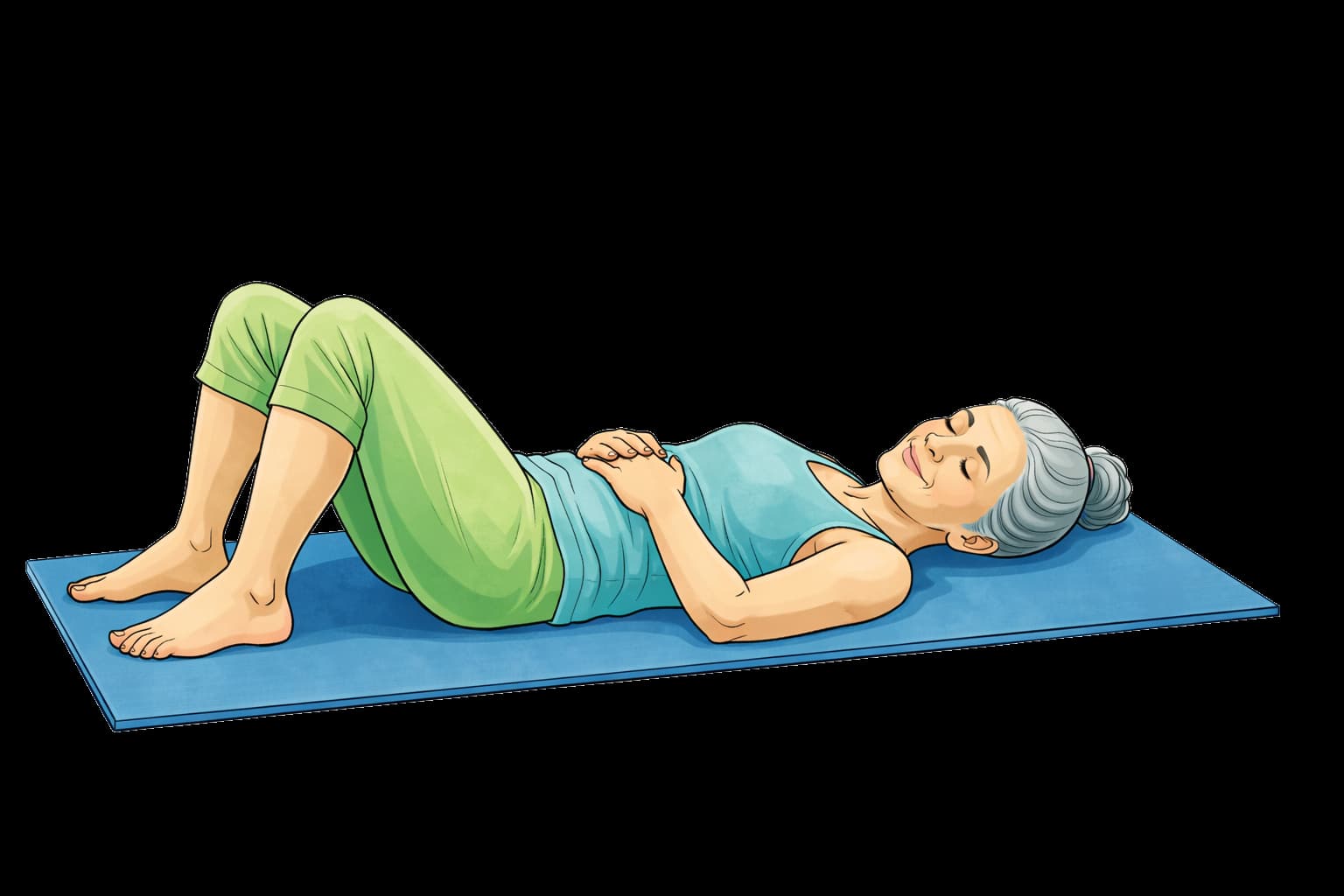
Understanding the Feldenkrais Method®
A gentle introduction to the Feldenkrais Method - what it is, how it works through movement and awareness, and how it helps you move better and feel at ease.
Feb 10, 2026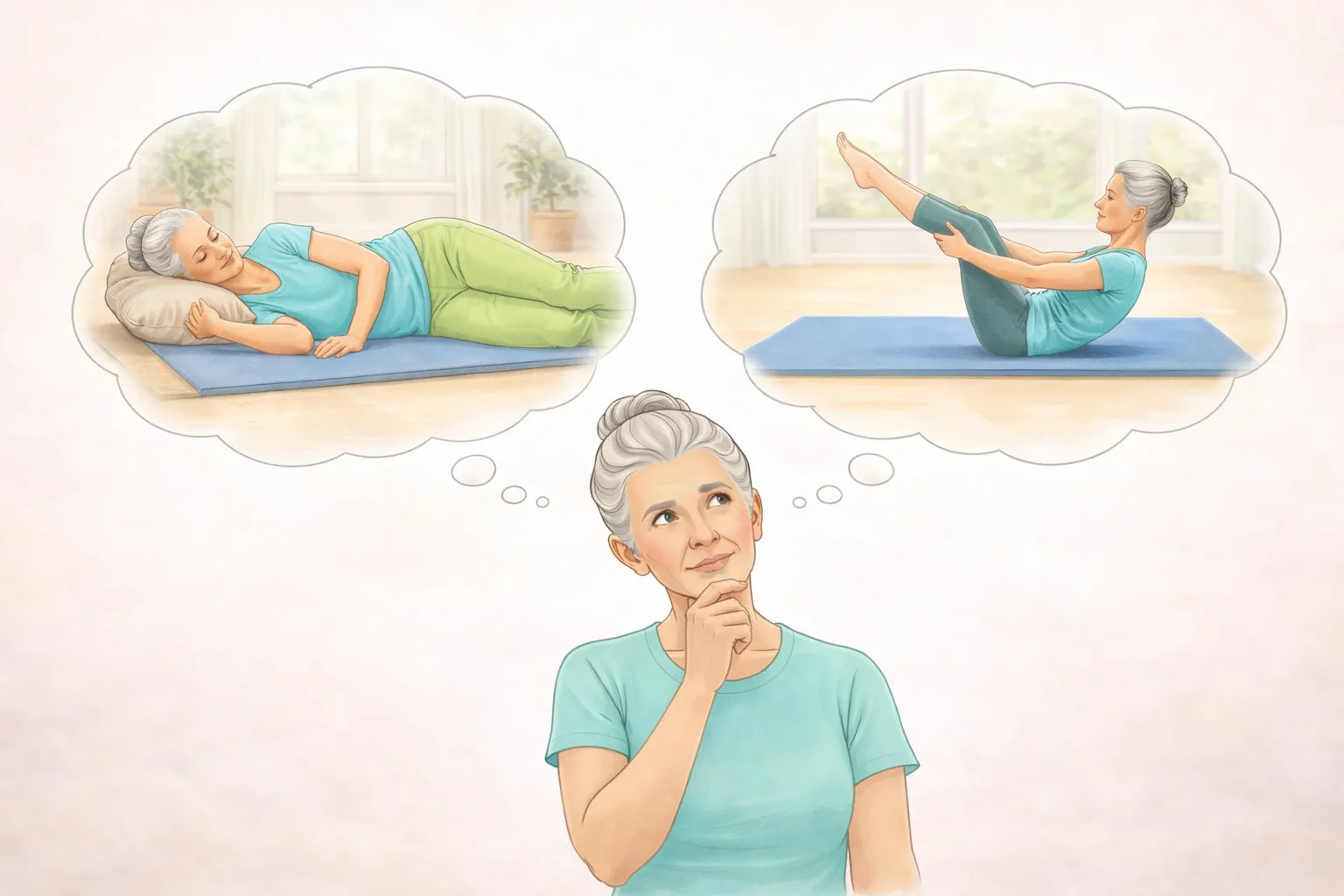
Feldenkrais vs Pilates: How to Choose
A side-by-side comparison of two popular movement methods, how they differ in philosophy and practice, what research says, and how to choose between them.
Apr 17, 2026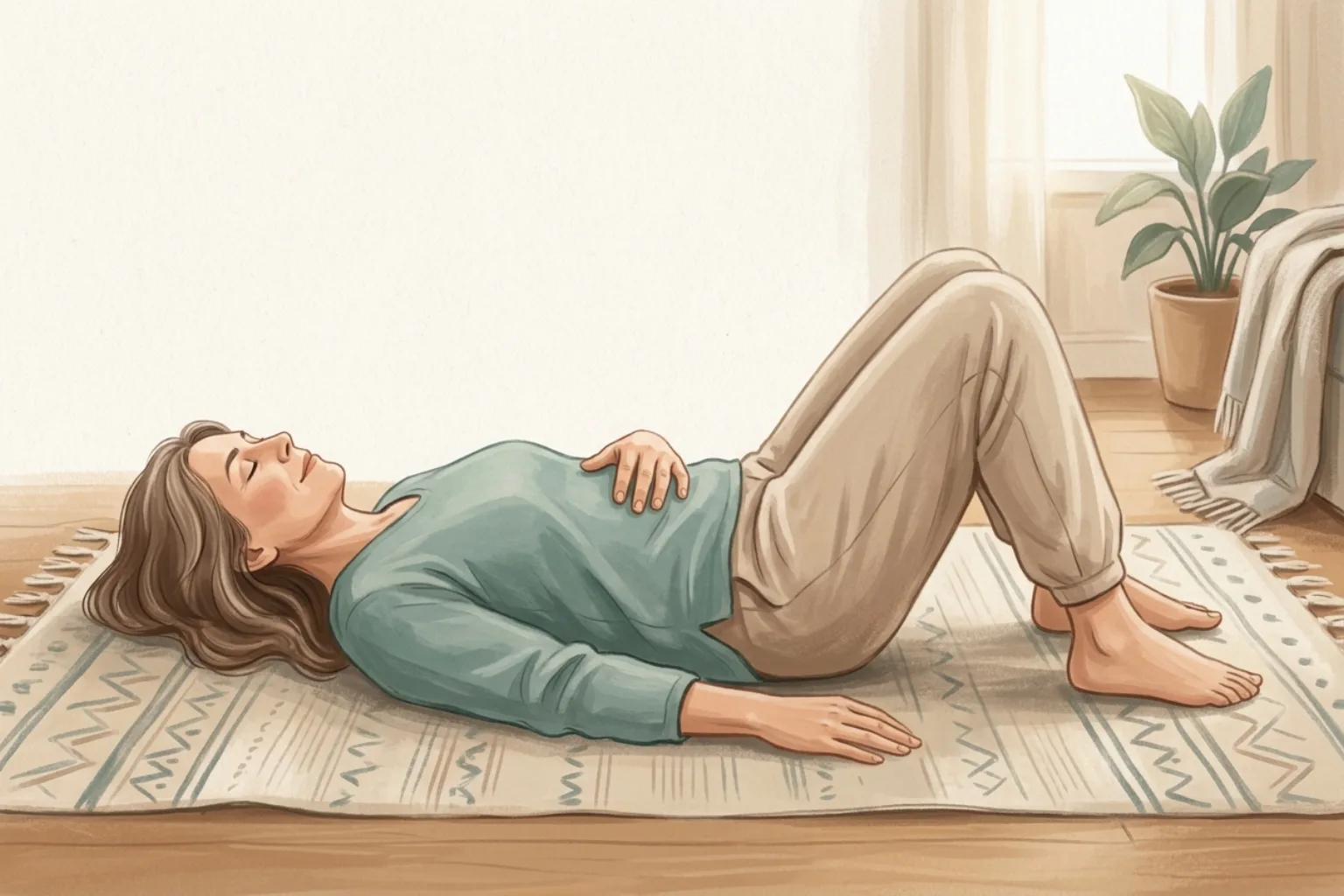
Awareness: You Cannot Change What You Do Not Notice
You cannot change what you cannot yet feel. In a Feldenkrais lesson, awareness is not a step toward change. It is where change begins.
Sep 4, 2026Ready to Start Moving Better?
Try your first lesson for free. No credit card required.