

Feldenkrais for Balance and the Fear of Falling
Two randomized trials found gentle Feldenkrais improved balance and mobility in older adults, and eased the fear of falling, with no strenuous exercise.
Ask an older adult what they are most afraid of, and the answer is often not illness. It is falling.
A fall can change a life in a second, and the fear of one is enough to shrink a world. You stop reaching for the top shelf. You skip the evening walk. You hold the railing with both hands and take the stairs one careful step at a time. And here is the cruel part: the less you move, the more your balance quietly fades, which makes a fall more likely, which deepens the fear. It becomes a loop.
Two randomized controlled trials suggest the Feldenkrais Method® can help ease that loop, gently, and without a single strenuous exercise.
Balance is a skill your nervous system learns
We tend to picture balance as strength: strong legs, a firm core. Strength has its place, but balance is mostly something else. It is your nervous system sensing where you are in space and organizing dozens of small corrections faster than you could ever think them through. When you wobble and catch yourself, that is not willpower. That is a well trained sensing and adjusting system doing its quiet work.
That is exactly the territory the Feldenkrais Method® works in. Its Awareness Through Movement® lessons are slow, gentle explorations, usually done lying down or seated, in which you pay close attention to how you move. You are not drilling a balance pose. You are teaching your nervous system to sense and adjust more skillfully, which is the very thing that keeps you upright in real life.
What the two trials found
Getting grounded gracefully. In a 2009 study memorably titled "Getting Grounded Gracefully," researchers ran gentle Feldenkrais classes twice a week for eight weeks with 55 community dwelling older adults, average age 75, and 85 percent of them women. Compared with a control group, the Feldenkrais participants walked measurably faster and, most striking, felt significantly more confident that they would not fall, a large and statistically clear difference (Vrantsidis and colleagues, 2009). Attendance ran at 88 percent, which for an eight week program with older adults tells you people found it worth their time.
Steadier and more mobile. A separate 2010 trial worked with 47 older adults, average age 76, over a five week program. Compared with a group that simply carried on as usual, the Feldenkrais participants improved on a standing balance test, moved faster on the Timed Up and Go (a standard measure of everyday mobility: rising from a chair, walking a short distance, turning, and sitting back down), and again reported less fear of falling (Ullmann and colleagues, 2010).
Two things stand out across both studies. First, the fear itself moved, not only the physical scores. Second, none of it required effortful exercise. The gains came from gentle, attentive movement.
Why fear is the hinge
Notice that both trials measured confidence about falling, and both found it improved. That is not a soft outcome. Fear of falling is one of the strongest predictors of who actually falls, and part of the reason is mechanical: fear makes us stiffen and hold ourselves rigidly, which is precisely what a balancing body must not do. A stiff, guarded body cannot make the quick, loose, continuous adjustments that keep you upright when the ground or your weight shifts.
It is the same pattern seen in chronic pain, where the fear of movement keeps the pain cycle going. Gentle movement addresses the fear directly, by giving the nervous system repeated, unthreatening experiences of moving, adjusting, and recovering. Over time the body relearns that it can respond, and some of the guarding lets go. When it does, balance has room to work.
What a lesson is actually like
If you are picturing wobble boards or standing on one leg with your eyes closed, set that aside. In an Awareness Through Movement® lesson you are usually on the floor or in a chair, guided by a voice through small, slow movements: turning your head to notice how your eyes and neck cooperate, rocking your pelvis a few degrees, sensing which parts of you press into the floor and which lift away. It feels almost too easy. That ease is the point. Working gently and within comfort is what lets the nervous system notice the fine differences it needs in order to learn.
What this means for you
If your balance is not what it was, or if you have started to move through your day a little more carefully than you would like, this research is quietly encouraging. It suggests that a gentle practice, done at home, can help you feel steadier and less afraid, without gym equipment and without the risk of pushing too hard.
This is the same attentive, unhurried movement that helps with reconnecting to your body and with rebuilding trust in how you move after an injury or surgery. Steadiness is not a separate project bolted on top. It grows from the same roots.
A note on honesty, because it matters. Both trials were modest in size, 55 and 47 people, both are now more than a decade old, and one of them compared Feldenkrais against carrying on as usual rather than against another activity, so it shows a benefit over doing nothing in particular. Balance also has many ingredients, including vision, medication, footwear, and specific medical conditions, so gentle movement belongs alongside your doctor's guidance, not in place of it. What the evidence reasonably supports is this: gentle Feldenkrais can improve balance and mobility in older adults, and it can ease the fear of falling. For a practice this low in risk, that is a genuinely useful thing to know.
Feel Steadier, Gently
Try a free Feldenkrais lesson, done lying down. Small, slow movements that help you sense and trust your balance again. No equipment, no strain.
Try a Free LessonFAQ
Can Feldenkrais improve balance in older adults?
Yes. Two randomized controlled trials found that gentle Feldenkrais improved balance and everyday mobility in older adults (average age 75 and 76). In both, participants also reported less fear of falling. The gains came from slow, attentive movement rather than strenuous exercise.
Does Feldenkrais help with the fear of falling?
In both trials, confidence about not falling improved significantly. This matters because fear of falling is one of the strongest predictors of who actually falls: fear makes people stiffen and guard, which is the opposite of what a balancing body needs. Gentle movement gives the nervous system safe, repeated experiences of adjusting and recovering.
Is Feldenkrais safe for seniors worried about falling?
Yes. Awareness Through Movement lessons are done lying down or seated, with small, slow movements and no force. You work entirely within your comfortable range, so there is no risk of pushing too hard. Balance has many ingredients, so gentle movement sits alongside your doctor's guidance, your vision checks, and safe footwear rather than replacing them.
How is this different from balance or strength exercises?
Strength training builds muscle. Feldenkrais trains the nervous system that organizes balance: sensing where you are in space and coordinating the many small adjustments that keep you upright. Rather than drilling a balance pose, you explore movement gently and let your coordination reorganize. The two approaches can complement each other.
How often would I need to practice?
In the studies, participants practiced two or three times a week over five to eight weeks. At home, a few short lessons a week is a reasonable rhythm. One study also found that the more lessons people did, the more their everyday function improved, so a steady habit tends to matter more than any single long session.
Start your free 7-day trial
Start free trialMore Articles
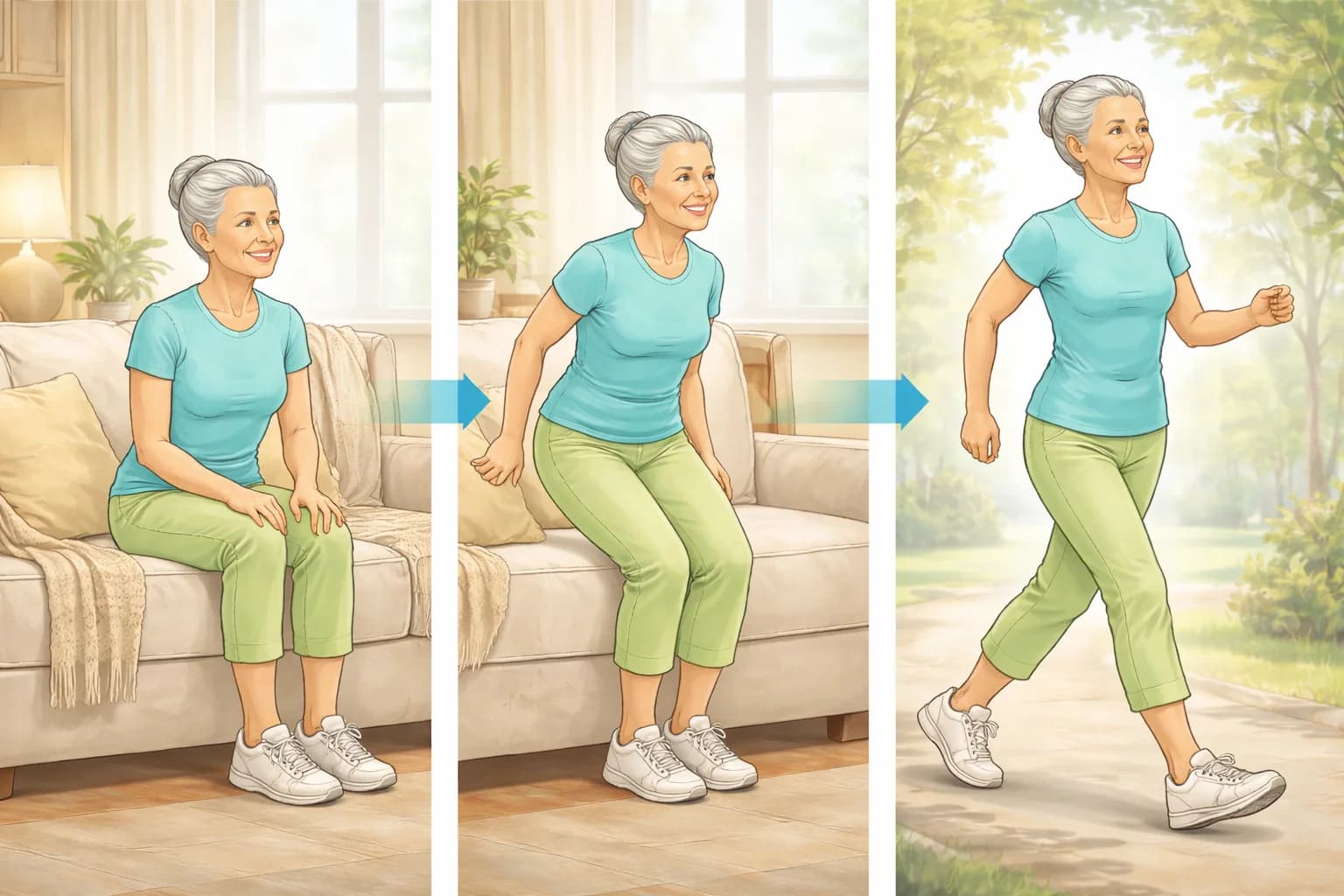
Getting Active Again After 60: A Gentle Way Back to Movement
If surgery, retirement, or COVID slowed you down, you are not alone. Discover how Feldenkrais eases stiffness and gently reignites your active life.
Mar 17, 2026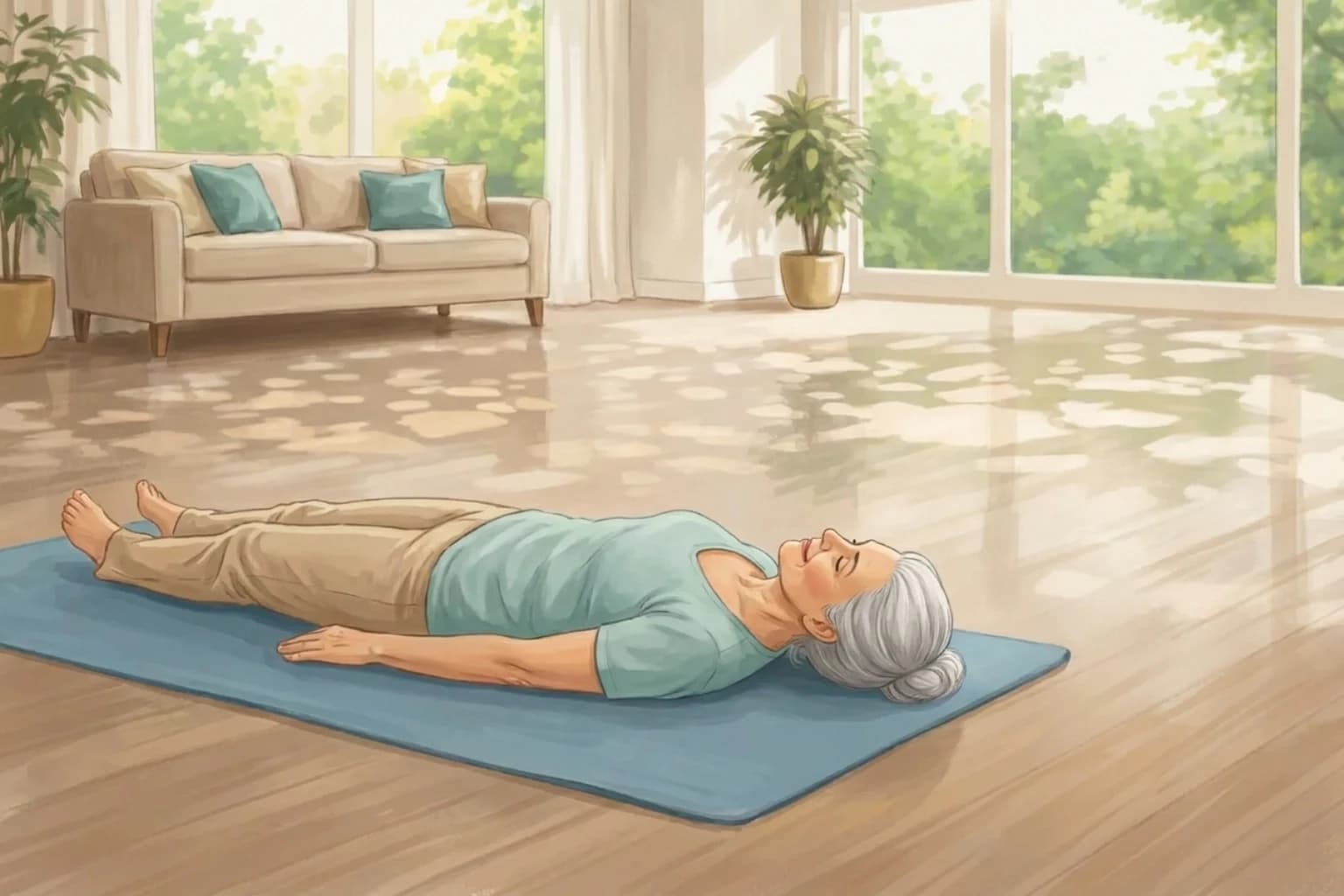
Does Feldenkrais Actually Work? What the Evidence Shows
A 2022 meta-analysis of 16 randomized trials found Feldenkrais eased pain and improved balance and mobility in older adults. Here is what the evidence shows.
Jun 28, 2026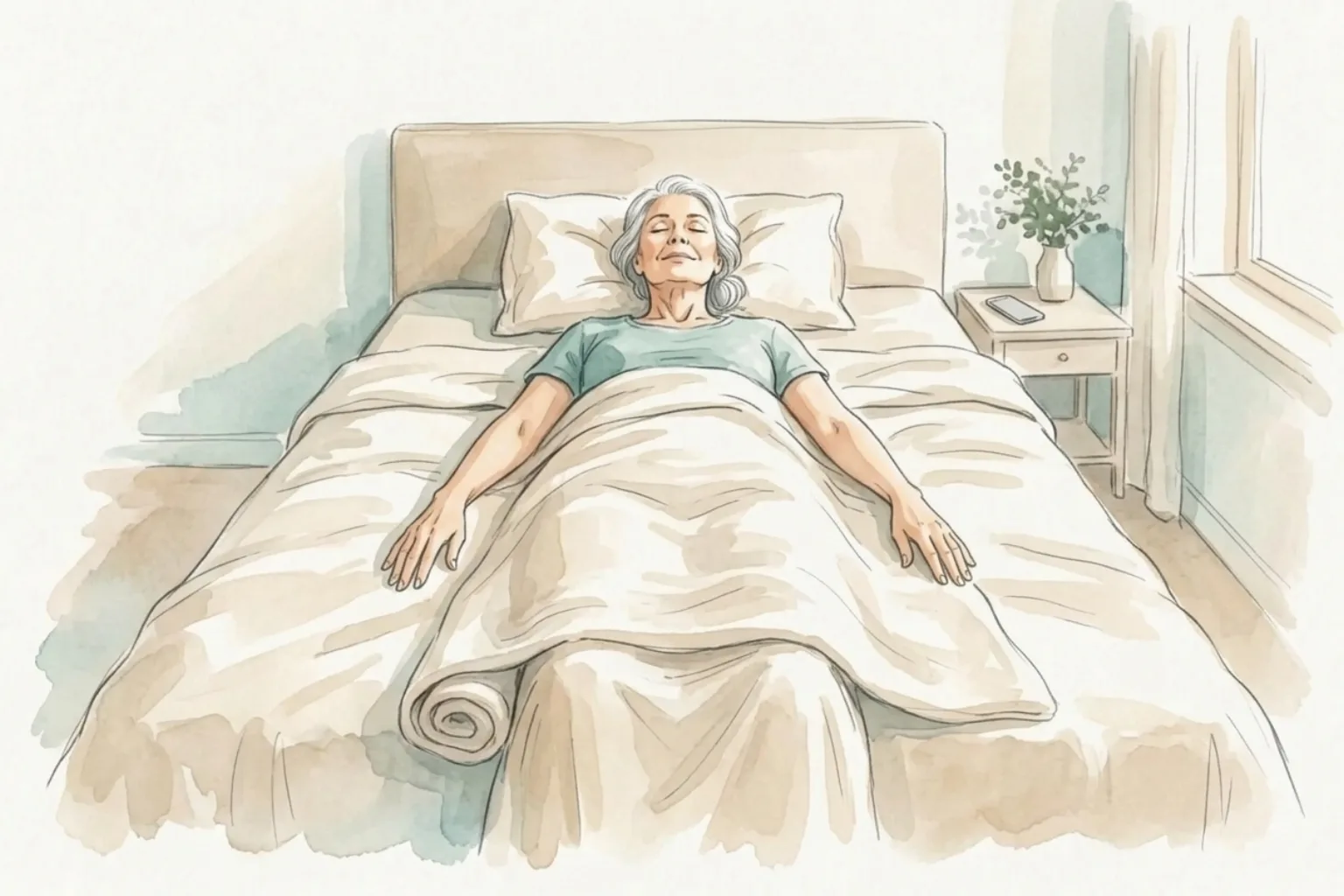
Why Patients Do Their Exercises in Clinic but Not at Home
Home exercise program adherence often drops between visits. Why "three sets of ten" can stall at home, and one small idea from Feldenkrais teaching.
Oct 12, 2026Ready to Start Moving Better?
Try your first lesson for free. No credit card required.