

Somatic Exercises for Beginners: A Simple First Lesson
New to somatic exercises for beginners? This gentle guide explains how slow, mindful movement works, with an easy first lesson you can do at home today.
The lesson
About 5-10 minutes. Move slowly, do less than you can, and stay well below any pain. Rest whenever you need to.
Prefer to listen than read?
Feldy voices gentle lessons like this for body awareness, so you can close your eyes and follow along.
- 1
A comfortable seat. Sit in a chair or lie on your back, whichever is easier today. Let your hands rest and your weight sink into the support.
- 2
Watching one breath. Follow one full breath in and out without changing it. Where do you feel it most, your chest, your ribs, or your belly?
- 3
A slow head turn. Turn your head a small way to one side and back, at half your usual speed, then visit the other side. Does one direction feel easier? Then pause and rest.
- 4
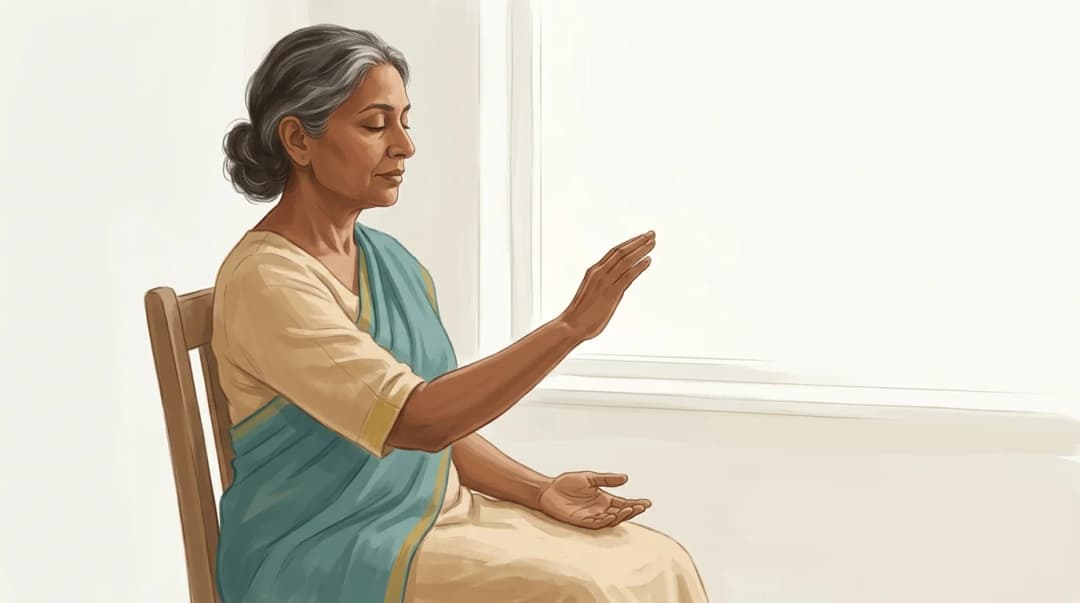
One hand waking. Slowly spread the fingers of one hand, then let them curl back in. Keep the effort so light it is almost nothing, and rest when you like.
- 5
A quiet comparison. Sit or lie still for a few breaths and sense both sides of yourself. What, if anything, feels different from when you began?
Let Feldy guide you, eyes closed
You just read these steps. In the Feldy program, a calm voice guides you through each gentle move, so your attention can stay in your body instead of on the screen.
Try Feldy Free for 7 daysNo credit card needed.
If you are curious about gentle movement but unsure where to start, somatic exercises for beginners are a forgiving place to begin. Unlike a workout, they ask nothing of your fitness or flexibility. Instead, they invite you to slow down and notice how your body actually moves, so old patterns of tension can soften on their own. The Feldenkrais Method®, one of the most accessible forms of movement education, is built on exactly this idea: that awareness, rather than effort, is what helps the body find easier options.
The need is real. About 1.8 billion adults, nearly a third of the world's grown-ups, fall short of recommended physical activity (WHO, 2022), and many avoid movement because it feels strenuous or uncomfortable. Somatic exercises offer a different doorway, one where slow and small is the whole point, not a beginner's compromise.
What somatic exercises for beginners involve
A somatic exercise is less about a specific shape and more about how you pay attention. You move slowly enough to feel each part of a motion, which gives your brain clear information about what is happening. That feedback is what lets a habitual pattern of holding begin to loosen. There is no posture to hit and no rep count to chase. You are exploring, not performing.
Because of this, beginners often progress faster than they expect. When the body is not braced against effort or judgment, it becomes free to discover smoother, easier movement almost by itself.
How to begin somatic exercises the gentle way
Start small. Keep every movement slower and lighter than feels necessary, and stop well before any strain. Curiosity is your main tool: instead of asking whether you are doing it right, ask what you notice. That shift from doing to sensing is the heart of the practice.
The Feldy program is built on this welcoming approach, with each guided lesson leading you through unhurried movement so your body can find more ease. For background, see our Feldypedia guide to the Feldenkrais Method. When you want a structured path, the body awareness program walks you through it step by step, and the companion lesson on somatic exercises for nervous system regulation is a natural next stop.
Before you begin
Set aside a quiet few minutes and let go of any sense of getting it right. Keep each movement small, ease off before any pulling or pinching, and rest whenever you like. The short lesson above is a friendly first step, and you can repeat it as often as you wish.
Common Questions about somatic exercises for beginners (FAQ)
What are somatic exercises for beginners?
They are slow, gentle movements designed to help you sense how your body moves rather than to build strength or flexibility. For a beginner, the goal is simply to notice and explore, not to perform anything difficult.
Do I need to be fit or flexible to start?
No. Somatic exercises stay small and well within an easy range, so they suit nearly any starting point. If you have an injury or a health condition, it is wise to check with a professional first.
How long should a beginner practice?
Five to ten minutes is plenty when you are starting out. Short, regular sessions help the body learn more than one long effort, and there is no benefit to pushing past comfort.
What should I feel during the exercises?
You may feel a sense of ease, warmth, or simply more awareness of a body part. You should not feel strain or pain. If something hurts, make the movement smaller or rest.
Can I do somatic exercises if I have pain?
Gentle movement is often well tolerated, but pain is a signal worth respecting. Keep everything below any discomfort and, if you have ongoing or unexplained pain, please speak with a doctor or physical therapist first.
How soon will I notice a difference?
Some people feel a little lighter or calmer after a single session. A steadier sense of ease and better movement usually develops with regular, unhurried practice over a few weeks.
How are somatic exercises different from stretching or yoga?
Stretching and most yoga classes aim at a shape or a range, and you work toward it. Somatic exercises aim at how a movement feels while you do it, staying small, slow, and nearly effortless so old habits of holding can soften. There is no posture to achieve, which is why they suit complete beginners.
Learn to listen to your body
See the programRelated resources
Somatic Exercises: A Plain Guide to Getting Started
Somatic exercises use slow, attentive movement to build body awareness and ease tension. Here is what they are, the main types, who they suit, and how to begin.
Feldenkrais® vs Somatic Exercises: The Gentlest Way In
Somatic exercises cover many styles, from Hanna Somatics to free YouTube videos. Why Feldy is the most guided, most repeatable way for beginners to start.
Your balance got better, but did your sense of where your body is get better too
Ready to start moving better?
Gentle, guided lessons for your body. Try your first one free, no credit card required.