

Somatic Stretching Exercises: Move With More Ease
Somatic stretching exercises use slow, mindful movement to free up tight areas without strain. Learn how they differ from regular stretching, plus a short lesson.
The lesson
About 5-10 minutes. Move slowly, do less than you can, and stay well below any pain. Rest whenever you need to.
Prefer to listen than read?
Feldy voices gentle lessons like this for body awareness, so you can close your eyes and follow along.
- 1
A settled start. Sit comfortably and let your weight rest into the chair. Take a moment to sense the length of each side of your body.
- 2
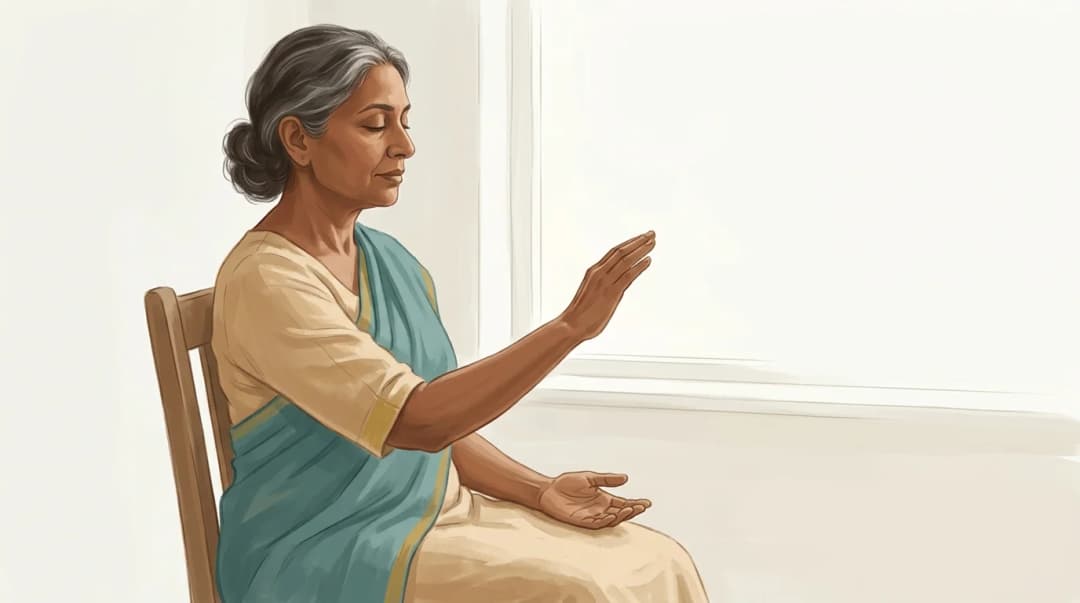
One arm floating. Let one arm float a small way out to the side, then return, stopping well before any effort. Where in the movement does it start to feel like work?
- 3
A small side lean. Lean your upper body a little to one side and come back to the middle, then visit the other side. Keep it tiny, let your breath stay easy, and rest afterward.
- 4
A pause between. Sit quietly for a few breaths. Nothing to do, only the pause itself.
- 5
A slow wave in the spine. Let your back round gently forward and then ease upright, like a small wave passing through. Make it smaller than you first imagine, or simply picture it, then rest.
- 6
Sensing the sides. Come to stillness and sense the two sides of your body. What, if anything, feels longer or different from when you began?
Let Feldy guide you, eyes closed
You just read these steps. In the Feldy program, a calm voice guides you through each gentle move, so your attention can stay in your body instead of on the screen.
Try Feldy Free for 7 daysNo credit card needed.
If holding a stretch has ever felt like a battle with your own body, somatic stretching exercises offer a calmer alternative. Instead of pulling a tight muscle toward its limit, they use slow, mindful movement to invite the muscle to release on its own. The result often feels freer and more comfortable, with none of the strain. The Feldenkrais Method®, a gentle form of movement learning, rests on this very principle: that awareness and small movement, not force, are what let a guarded body lengthen and move with ease.
Tightness is common, and so is the frustration of stretching that does not seem to stick. Osteoarthritis alone, a frequent source of stiff, guarded joints, affects about 528 million people worldwide (WHO, 2019). Somatic stretching takes a different route, working with the nervous system that sets muscle tension in the first place.
How somatic stretching exercises work
A muscle's resting tension is set largely by the nervous system, which decides how much to hold based on what feels safe. When you yank a muscle toward its end range, the body can respond by guarding more, which is why a forced stretch sometimes feels stubborn. Somatic stretching takes a gentler path. By moving slowly and attentively within an easy range, you give the brain clear feedback that it is safe to let go, and the muscle can release without a fight.
This is why every movement here stays small and unhurried. You are not trying to overpower tightness. You are creating the conditions in which the body chooses to soften.
What makes somatic stretching exercises feel different
The difference is attention. When you move slowly enough to feel each phase of a stretch, you are teaching the body, not stretching it. That learning is what tends to last, because you are changing how the body organizes movement rather than briefly tugging on tissue. Comfort is the guide: staying below any strain is not a limitation, it is what makes the release possible.
The Feldy program is built on this same approach, with each guided lesson leading you through slow movement so the body can find more length and ease. If you would like the background, our Feldypedia guide to the Feldenkrais Method explains the thinking, the body awareness program turns it into a guided sequence, and our lesson on somatic exercises for nervous system regulation extends the same idea to calming the body.
Before you begin
Give yourself a quiet few minutes and let go of the urge to feel a deep pull. There is nothing to force and no maximum range to reach. Keep each movement modest, back off at the very first sign of pulling, and rest between movements as much as you like. Think of the short lesson as a gentle baseline you can revisit any time tightness creeps back in.
Common Questions about somatic stretching exercises (FAQ)
What are somatic stretching exercises?
They are slow, mindful movements that help muscles release tension by changing the signals between body and brain, rather than by pulling a muscle to its limit. The emphasis is on sensing and easing, not forcing a deeper stretch.
How are somatic stretches different from regular stretching?
Regular stretching often holds a muscle near its end range to lengthen it. Somatic stretching uses small, slow, active movement to invite the muscle to let go on its own, which tends to feel gentler and avoids strain.
Can somatic stretching improve flexibility?
Many people notice freer, more comfortable movement, because reducing the brain's protective tension can increase usable range. Results vary, and gentle consistency matters more than intensity.
Is it safe to do every day?
Because the movements stay small and below any strain, a short daily practice suits most people well. If you have an injury or a medical condition, check with a healthcare professional before starting.
What if I feel pain during a stretch?
Pain is a signal to ease off. Make the movement smaller or stop, since these exercises should never hurt. Ongoing or sharp pain is worth discussing with a doctor or physical therapist.
Do somatic stretching exercises replace a warm-up or workout?
They can complement movement, but they are not a substitute for medical care or a structured exercise plan. Use them as a gentle way to free up the body, and follow professional guidance for any specific goal.
Learn to listen to your body
See the programRelated resources
Feldenkrais® vs Somatic Exercises: The Gentlest Way In
Somatic exercises cover many styles, from Hanna Somatics to free YouTube videos. Why Feldy is the most guided, most repeatable way for beginners to start.
How to Relax Tight Hamstrings, Gently
How to relax tight hamstrings without forcing a stretch. Often the tightness is protective holding, not short muscle, and slow, gentle attention eases it.
Your balance got better, but did your sense of where your body is get better too
Ready to start moving better?
Gentle, guided lessons for your body. Try your first one free, no credit card required.