
Warm Up Exercises for Seniors: Before a Walk or the Garden
Gentle warm up exercises for seniors to do by the counter before a walk, gardening, or errands. A short standing lesson about readiness, not exertion.
Before you begin. This is gentle self-care, not medical advice. Keep a steady support like a counter or chair back within reach, and check with a doctor or physical therapist first if you are unsteady on your feet, have had a fall, have a diagnosed condition, or have had a joint replacement.
The lesson
About 3-5 minutes. Move slowly, do less than you can, and stay well below any pain. Rest whenever you need to.
Prefer to listen than read?
Feldy voices gentle lessons like this for stiffness after 60, so you can close your eyes and follow along.
- 1
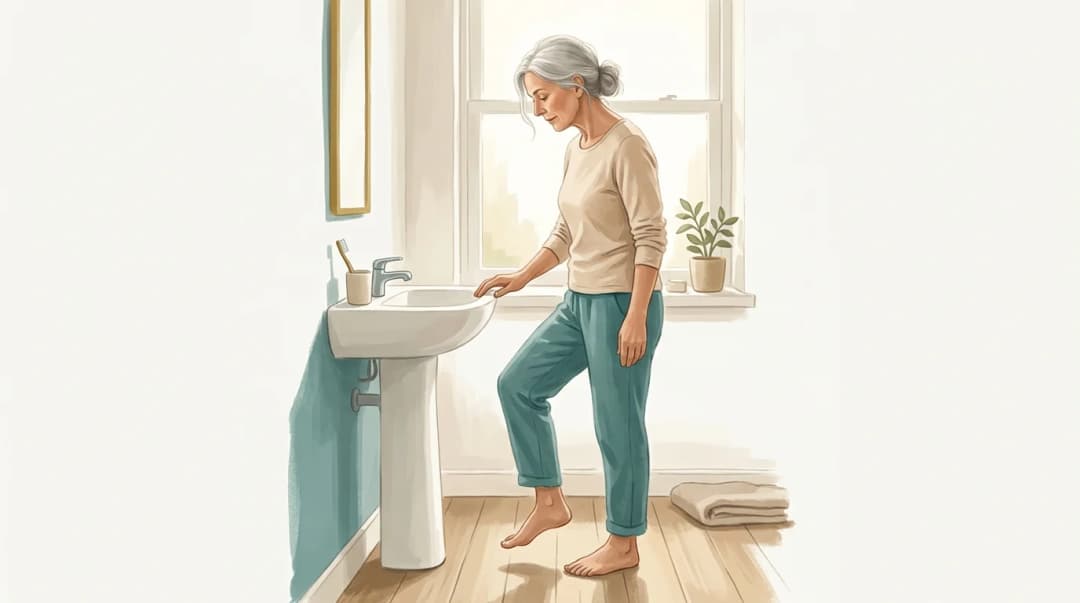
Beside the counter. Stand near a counter or chair back, one hand resting on it. Sitting works too.
- 2
How you are now. Notice how your weight falls through your feet, and how your breath comes and goes.
- 3
One arm swinging. Let your free arm hang and swing softly forward and back, as it might on a walk. A few times.
- 4
A pause. Stop and let the arm hang. Compare that arm with the one on the counter.
- 5
The other arm. Change hands and let the other arm swing the same easy way. Keep it small, less than you could.
- 6
Before you go. Stand quietly. Take a deep breath and let the next few breaths out slowly.
- 7
A last question. Notice your feet once more before you head out. What is different from when you first put your hand down?
Let Feldy guide you, eyes closed
You just read these steps. In the Feldy program, a calm voice guides you through each gentle move, so your attention can stay in your body instead of on the screen.
Try Feldy Free for 7 daysNo credit card needed.
Warm up exercises for seniors, done in a few unhurried minutes by the kitchen counter, can change how a walk, an hour in the garden, or a trip to the shops feels. They are not about working up heat or pulling on muscles. They are a short standing check-in, done just before you go, in the spirit of the Feldenkrais Method®: a way of reminding yourself how your feet, hips, back, and shoulders connect before you ask them to work together out in the world.
That word "reminding" is the heart of it. As the years pass, movements we call on less often grow fainter in the body's own map of itself, which is part of why the first minutes of any activity can feel awkward. Our Feldypedia entry on why movement declines with age looks at this in more detail. The encouraging side is that the map answers quickly to attention. A gentle turn, a small shift of weight, a moment of feeling your feet, and the outing begins from a body that already knows where it is.
What warm up exercises for seniors are really for
The common picture of warming up involves raising muscle temperature with brisk movement, or stretching before effort. For a jog that picture may have its place. For a walk to the shops or a morning among the tomato plants, something quieter serves better. What most of us actually want before heading out is not warmer muscles but a clearer sense of ourselves: where our weight is, how easily we turn to look at something, how the arms come along.
That is why the lesson above stays small and slow on purpose. Shifting weight from foot to foot wakes the conversation between the feet, ankles, hips, and back. Turning to glance behind you rehearses the very movement you will use when a neighbor calls your name on the path. The easy arm swings invite the shoulders into the walk before it starts. None of it is exertion. All of it is attention, and attention is what makes the first hundred meters feel like the five hundredth.
A word about warming up and falls
It is worth being plain here, because pages about movement for older adults often promise more than the evidence gives. Adults older than 60 years of age suffer the greatest number of fatal falls (WHO, 2021), so moving through the world with confidence is no small matter at this stage of life. But a five minute warm up is not what the research studies for fall risk. What researchers actually study is dedicated, ongoing balance and strength training, practiced regularly over months. If fall risk is on your mind, our balance exercises for seniors page is the more relevant starting point, and a physical therapist can build a program suited to you.
What a gentle warm up offers is comfort and readiness. You step out the door already acquainted with how your body is moving today, instead of finding out on the front path. Many people simply find the outing pleasanter for it, and that is reason enough.
How to use these warm up exercises for seniors
Think of the lesson as something you keep by the door. Coat on, keys found, and then three to five minutes at the counter before you leave. The hand on the counter is there the whole time, resting rather than gripping, and if standing is tiring, everything works from a chair. Move slowly enough to feel each part of the motion, keep every movement smaller than seems worthwhile, and stay comfortably below anything that pulls or aches. If a movement is unpleasant, shrink it or simply imagine it. Should this little check in by the door appeal to you, you can try Feldy free for a week and bring the same attention to your feet, hips, and shoulders before each outing.
This is a different occasion from the slow wake-up in our morning stretches in bed for seniors. That routine greets the day; this one readies you for a particular outing, whenever it happens. If you find you enjoy this way of paying attention while you move, Feldy's gentle program for stiffness after 60 carries it much further, with short lessons in the same patient style.
One more note: nothing here claims to make the outing risk free. The lesson is about arriving at your activity feeling clearer and more at ease in yourself. For the harder questions of steadiness, keep the support close, take the professional advice seriously, and let a proper balance and strength practice do the job the research actually describes.
Common Questions about warm up exercises for seniors (FAQ)
Are warm up exercises safe for seniors with balance problems?
The movements here are small, slow, and done with a hand resting on a counter or chair back the whole time, which makes them a gentle option for many people. If you feel unsteady on your feet, have had a fall in the past year, or live with a condition that affects balance, check with a doctor or physical therapist before adding anything new, and consider doing the whole lesson seated.
How often should I warm up before activity?
Whenever you are about to head out or start something physical: a walk, the garden, errands, a class. Three to five unhurried minutes before the activity is plenty. There is no need to schedule it separately, since the occasion itself is the reminder.
How long until I notice a difference?
Most of what this lesson offers arrives within the same few minutes, as a clearer sense of your feet, your balance, and how you are moving today. Over weeks of doing it before outings, many people find the start of an activity feels less awkward. Treat it as a pleasant habit rather than a treatment with a timeline.
How is this different from stretching before a walk?
Stretching aims at lengthening muscles toward their end range. This lesson never reaches for a limit. Instead it rehearses the small coordinations a walk actually uses, shifting weight, turning to look, letting the arms swing, so you begin the outing already acquainted with how your body is moving. It is about attention and readiness rather than pulling on anything.
Is this the same as a balance training program?
No, and the two should be kept apart. A balance program is a dedicated, ongoing practice, often built and progressed with a professional, and that is what research examines for fall risk. This warm up is a short moment of readiness before one outing. If balance is your main concern, start with a proper program and use this alongside it.
When should I see a professional?
A doctor or physical therapist is the right call if you feel dizzy or unsteady when standing, if you have fallen or nearly fallen recently, or if pain or stiffness is new, worsening, or limiting your day. They can look at what is going on and shape movement that suits your situation, and this gentle lesson can wait until you have their go-ahead.
Move easier again, whatever the calendar says
See the programRelated resources
Cool Down Exercises: After the Walk, the Garden, or Errands
Gentle cool down exercises for the minutes right after a walk, the garden, or errands. A slow standing lesson by the counter about transition, not recovery magic.
Flexibility Exercises for Seniors: A Gentle Daily Lesson
Flexibility exercises for seniors that invite ease back into stiff hips, spine, and shoulders through one short, slow lesson you can do at home.
Why balance practice may work better at first when it is the only thing you are doing
Ready to start moving better?
Gentle, guided lessons for your body. Try your first one free, no credit card required.