

Can Forward Head Posture Be Corrected?
Can forward head posture be corrected? Yes, with nuance: it is a common, changeable habit, not a fixed defect, and gentle awareness reshapes it better than force.
In short
Yes, forward head posture can usually be corrected in the sense of becoming a comfortable, lighter resting habit, because it is a common, changeable variation rather than a fixed defect. You will not lock the head into one perfect spot, since posture is meant to be dynamic, but gentle awareness movement can reshape the habit so the head rests more easily over time.

Prefer to ease in gently?
See a few gentle exercises for body awareness to try.
Before you begin. This is general information and gentle self-care, not medical advice. Forward head posture is a common, normal variation, not a disease. Stop any movement if pain radiates into the arms or hands, and see a healthcare professional for persistent or worsening neck pain, headaches, numbness, tingling, or a posture change that came on suddenly.
If your head tends to ride forward of your shoulders, you may be wondering: can forward head posture be corrected? The encouraging answer is yes, with a little nuance. Forward head posture can usually be corrected in the sense that it becomes a more comfortable, lighter resting habit, because it is a common, changeable variation rather than a fixed defect. What you will not do is lock the head into one perfect spot and hold it there, since healthy posture is meant to be dynamic. Instead, gentle awareness movement, in the spirit of the Feldenkrais Method®, can reshape the habit so the head rests more easily over time.
It helps to see how ordinary this is. Global health estimates put the number of people living with neck pain in 2020 at around 222 million (WHO, 2022), and for plenty of them a head that leans toward the screen is simply part of daily life. A forward-set head is hardly ever a sign that something has broken. Your body has practised that carry over and over, and that very fact is the reason it remains open to change.
Can forward head posture be corrected, and what correcting really means
The word correct can be misleading, so it is worth unpacking. If correcting means forcing the head into one ideal alignment and freezing it there, then no, and you would not want to, because the head is built to move all day. If correcting means helping a habitual forward carry become a lighter, more comfortable resting position you can return to easily, then yes, that is very achievable for most people. You are not erasing a defect. You are giving the body an easier option than the one it has grown used to, and letting that easier option gradually become the default. That reframe matters, because it shifts the goal from a rigid pose to comfort, ease, and choice.
Why it changes through habit, not force
Forward head posture is largely a movement habit, rehearsed over years of looking down. Because it is a habit, it answers to gentle, frequent practice rather than to force. A neck that has spent the day on guard hauls that low-level effort into everything you do, and it is exactly this constant holding that tends to draw the head forward. When you slow down and sense where each small motion lives, the nervous system builds up reassurance that easing off is safe, the bracing quietly unwinds, and the head can float back over the spine of its own accord. Forcing the chin back, by contrast, braces muscles that tire within minutes, so the head drifts forward again the moment your attention drifts. You can read more about how habits of holding shape the body in our Feldypedia article on poor posture and its physical effects.
What a realistic change looks like
Setting realistic expectations keeps the practice kind. Many people feel the back of the neck a little lighter within a week or two of gentle daily practice, while a steadier change in the resting position usually builds over several weeks to a few months. There is no calendar deadline, because everyone arrives with a different history, and the slow path tends to hold better than any forced one. If you want the full arc, our companion guide on how long it takes to correct forward head posture walks through it week by week. That same patient, attention-first quality runs through the gentle lessons in the Feldy body awareness program, which look for ease and more movement choice rather than a clenched shape.
A gentle practice to try
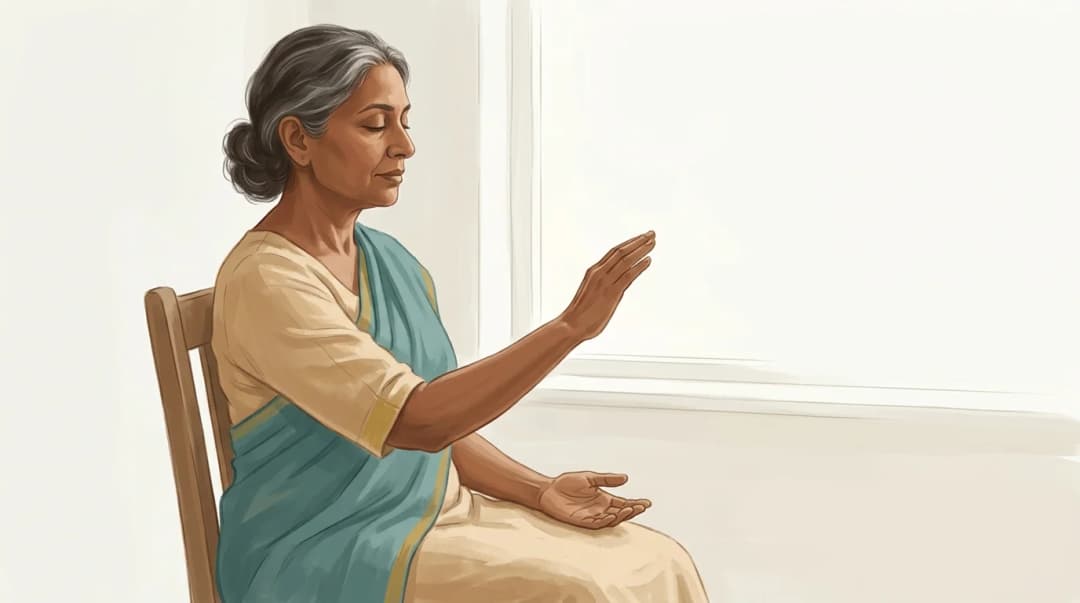
One soft way to invite the head to rest more lightly over the shoulders: soften the jaw and shoulders, make a few tiny nods, and let the head float back, staying smaller and slower than feels necessary and resting often. There is no target and no shape to grip, only slow movement and calm attention. For a fuller set of movements to work the same pattern, try our forward head posture exercises. Keep everything well below any pinch, and stop if pain ever spreads into the arms or hands.
Learn to listen to your body
Now for the practice that trains it. The Feldy program sharpens your attention through slow, attentive Feldenkrais® lessons, so everyday movement feels lighter and more your own. Gentle, guided, and self-paced.
Start my free 7-day trialNo credit card needed.
Common Questions about whether forward head posture can be corrected (FAQ)
Can forward head posture be corrected?
Yes, usually in the sense of becoming a comfortable, lighter resting habit, because it is a common, changeable variation rather than a fixed defect. You will not lock the head into one perfect spot, since posture is meant to move, but gentle awareness practice can reshape the habit so the head rests more easily over weeks and months.
Can forward head posture be reversed at any age?
In most cases, yes, a habitual forward head can become lighter and easier at many ages, because you are changing a movement habit rather than reversing fixed damage. Long-standing patterns simply take more patience. Some structural changes in later life are less changeable, which is one reason to see a professional if a posture change came on suddenly.
Is forward head posture permanent?
For most people it is not permanent. It is a habit the body has rehearsed at screens and over books, and habits respond to gentle, frequent practice. The goal is a more comfortable resting position you can return to, not a rigid shape held all day. A posture change that appears suddenly should be checked by a professional.
How long does it take to correct forward head posture?
That hinges on how regularly you practise rather than how hard. Plenty of people find the neck feels easier inside a week or two of soft, daily attention, and a more settled resting carriage tends to arrive somewhere between several weeks and a couple of months. Since you are remaking a habit of long standing, gentle repetition counts for more than any target on the calendar.
How is gentle awareness different from forcing the chin back?
Jamming the chin backward clenches muscles that fatigue within minutes, so the head slides forward yet again and the neck tends to grumble. Soft awareness works the other way, releasing the grip that tugs the head ahead so it drifts back above the shoulders by itself. What you end up with is an easy default that asks for no clenching, instead of a pose you have to keep enforcing.
When should I see a professional about forward head posture?
Book time with a doctor or physiotherapist if neck pain refuses to settle, if you get headaches, if numbness or tingling travels into the arms or hands, if your posture shifted abruptly, or if trouble followed an injury. Soft movement supports everyday wellbeing; it is no replacement for a proper checkup when something genuinely feels wrong.
Learn to listen to your body
See the programRelated resources
How Long to Correct Forward Head Posture?
How long does it take to correct forward head posture? A timeline: a lighter neck in weeks, a steadier resting shape over months, with consistency over speed.
Forward Head Posture Exercises: Gentle Movement to Try
Forward head posture exercises that use slow, attentive movement to ease the neck and invite the head to rest more lightly over the shoulders.
Your balance got better, but did your sense of where your body is get better too
Ready to start moving better?
Gentle, guided lessons for your body. Try your first one free, no credit card required.