
Can't Sit Up Straight With Legs Extended? Here's Why
Can't sit up straight with legs extended? It is usually the hamstrings and pelvis, not a weak back, and gentle movement makes upright long sitting easier.
In short
If you can't sit up straight with your legs extended, it is usually your hamstrings and the back of your pelvis, not a weak spine. Straight legs tether the pelvis and tip it backward, so sitting tall feels impossible. Gentle movement that frees the pelvis makes upright long sitting far easier over time.

Prefer to ease in gently?
See a few gentle exercises for body awareness to try.
Before you begin. This is general movement education, not medical advice. If sitting with your legs out brings on shooting pain, numbness, or tingling down a leg, that can point to nerve involvement. Please check with a doctor or physical therapist.
If you can't sit up straight with legs extended in front of you, and your back rounds no matter how hard you try to lift it, you are meeting one of the most common and most misunderstood patterns in the body. It is almost never a weak or lazy spine. It is your hamstrings and the back of your pelvis working together. When the legs are straight, the hamstrings act like a tether from the knees to the base of the pelvis, and if they feel short or guarded they pull the pelvis backward, which rounds the lower back and makes sitting tall feel impossible. The Feldenkrais Method® looks at this as a pelvis pattern to explore, not a flaw to force.
This kind of restriction is widespread. The World Health Organization counts about 1.71 billion people worldwide affected by musculoskeletal conditions (WHO, 2022), and limited comfortable range through the hips and hamstrings is one of the everyday versions most of us know well.
Why you can't sit up straight with your legs extended
Picture the pelvis as a bowl balanced on your two sit bones. To sit tall, the bowl needs to tip slightly forward so your spine can stack easily above it. The hamstrings attach to the back of that bowl. When your legs are bent, they have slack and the pelvis can tip freely. When you straighten the legs, the hamstrings draw tight across the back of the knee and the base of the pelvis, and they resist that forward tip. The bowl rolls backward instead, your lower back rounds, and upright suddenly costs a great deal of effort.
None of this means your hamstrings are damaged or hopelessly short. Very often they are simply guarded, held on a low hum of tension by habit and by hours of sitting. You can read more about that in our explainer on why you feel so inflexible.
It is the hamstrings and pelvis, not a weak back
Because this is a tethering pattern, trying to muscle your spine upright rarely works, and heaving into a hard hamstring stretch can make the guarding worse. The pelvis is the key. When you learn to let it tip forward again, sitting tall stops being a fight. This is closely related to how the front of the hip behaves, which we cover in our guide to tight hip flexors, and our Feldypedia entry on lower back pain from sitting explores the sitting side of the story.
A gentle way to sit taller with legs extended
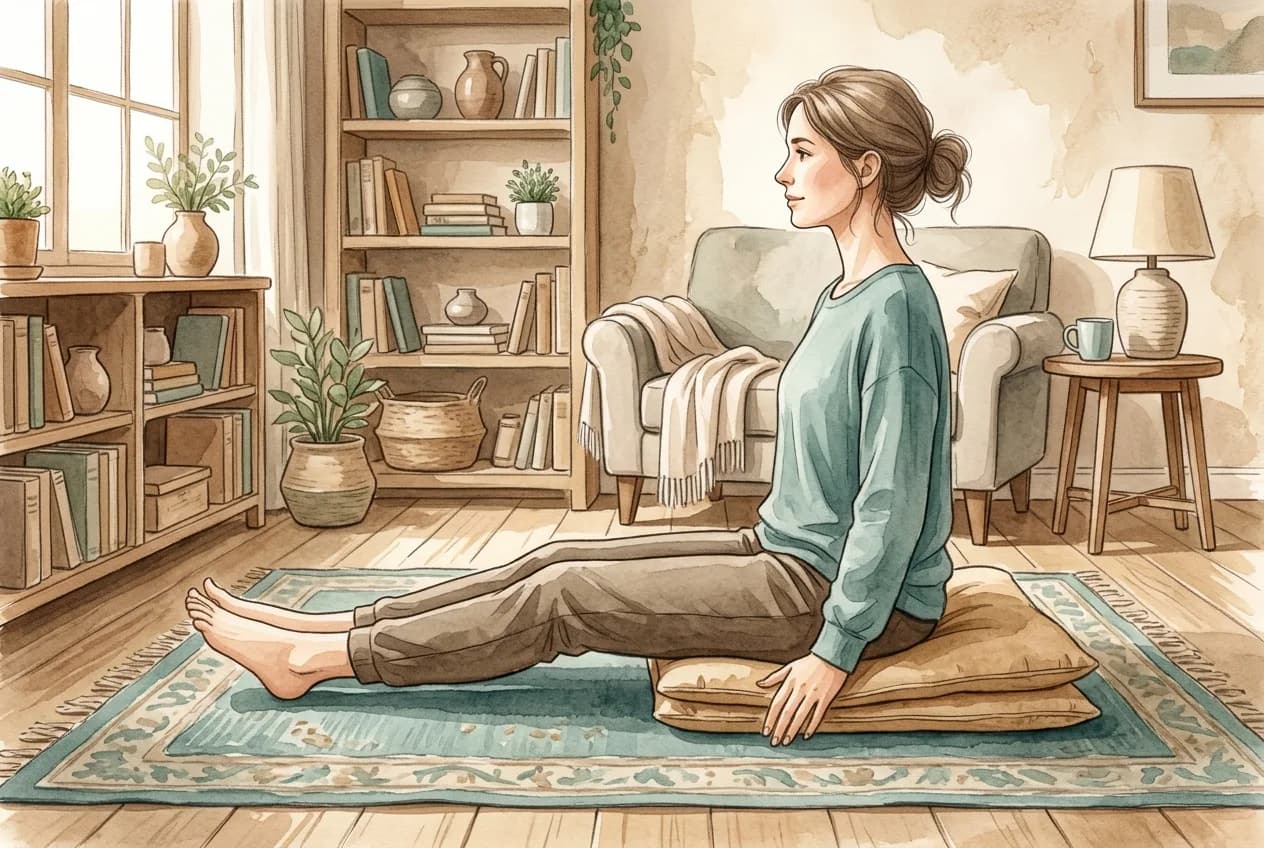
The kind approach starts by giving the pelvis back its forward tip in an easy position, then borrowing that freedom into long sitting. Sitting up on a folded cushion so the pelvis is already tipped forward is a simple, straightforward shortcut that makes upright possible today while the pattern slowly changes. Small pelvic rocks, a soft bend in the knees, and plenty of rest teach the hamstrings that forward tip is safe. There is no need to reach a flat legged, ruler straight shape, and chasing one usually backfires. If you would like a guided starting point, our somatic exercises for beginners begin with exactly this kind of small, slow pelvic movement. If you would like an app to guide this kind of practice at home, our comparison of the best gentle movement app for beginners sets the main options side by side.
Keep your expectations kind. You are not prising open a stubborn muscle, you are refreshing the conversation between your brain, your pelvis, and your hamstrings. A sit that feels a little taller and a little easier is a genuine result, and it rewards patience far more than force. If you enjoy this way of working, the gentle lessons in the Feldy body awareness program carry the same curious, unforced quality throughout.
Learn to listen to your body
Now for the practice that trains it. The Feldy program sharpens your attention through slow, attentive Feldenkrais® lessons, so everyday movement feels lighter and more your own. Gentle, guided, and self-paced.
Start my free 7-day trialNo credit card needed.
Common Questions about not being able to sit up straight with legs extended (FAQ)
Why can't I sit up straight with my legs extended?
When your legs are straight, the hamstrings run from behind the knee up to the base of the pelvis and hold it like a tether. If they feel short or guarded, they pull the back of the pelvis down and tip it backward, which rounds your lower back and makes sitting tall feel impossible. It is a pelvis and hamstring pattern, not a weak or faulty spine.
Does this mean my hamstrings are too tight?
Often the hamstrings are not truly short, they are held by habit and a protective nervous system, especially if you sit a lot. That guarding limits how far the pelvis can tip forward. Gentle, varied movement usually frees this more reliably than deciding the muscles are simply too tight and forcing them.
Will stretching my hamstrings fix it?
Hard static stretching can make guarded hamstrings grip more, so long sitting stays stuck. Small, slow movements that rock the pelvis and vary the legs tend to help more, because they lower the guarding and teach the pelvis to tip forward. Easier hamstrings and an easier sit usually follow.
Is it harmful to sit slumped when my legs are out?
An occasional rounded sit is not dangerous, bodies are made to move in and out of many shapes. What tires the back is staying stuck in one position for a long time. The aim is more choice and comfort, not a single perfect posture held rigidly.
How long until I can sit up straighter with my legs out?
Many people feel a little more ease within a session, often by propping the pelvis and finding the balance point. A steadier change tends to build over a few weeks of gentle, regular practice, as the pelvis and hamstrings learn to allow more forward tip.
When should I see a professional?
If sitting with your legs out brings on shooting pain, numbness, or tingling down a leg, or if back or leg pain is persistent or worsening, see a doctor or physical therapist. That can point to nerve involvement and deserves proper attention.
Learn to listen to your body
See the programRelated resources
How to Release Tight Hamstrings Without Stretching
Hamstrings that feel short usually are not. A slow lying down lesson that changes the back of the thigh from the pelvis, with no stretching at all.
How to Fix an Anterior Pelvic Tilt, Gently
How to fix an anterior pelvic tilt without gripping or forcing, using slow daily awareness so the pelvis settles into an easier balance on its own. A gentle, practical guide.
Your balance got better, but did your sense of where your body is get better too
Ready to start moving better?
Gentle, guided lessons for your body. Try your first one free, no credit card required.