

Can Rounded Shoulders Be Corrected? A Gentle Answer
Can rounded shoulders be corrected? Usually yes, with nuance: a learned holding habit can soften through gentle, frequent awareness, not by bracing or forcing.
In short
Yes, with nuance. For most people rounded shoulders can be corrected, because the shape is usually a learned holding habit rather than a fixed deformity. The change comes through gentle, frequent awareness that frees the pattern, not from bracing the shoulders back, and it tends to build over weeks rather than overnight.

Prefer to ease in gently?
See a few gentle exercises for neck and upper back to try.
Before you begin. Consider this gentle self-care and general information, not a substitute for medical advice. Halt any movement if pain travels into your arms or hands, and check with a healthcare professional whenever symptoms linger or grow, whenever numbness appears, or whenever your posture changed all at once.
Can rounded shoulders be corrected? For most people the answer is yes, with a little nuance. The shape is usually a learned holding habit rather than a fixed deformity, so it can soften considerably over time. The catch is that it shifts through gentle, frequent awareness that loosens the pattern, not through clamping the shoulders backward, and it tends to grow over weeks rather than overnight. This curiosity-led patience lies at the core of the Feldenkrais Method® and kindred awareness-based movement, where a rounded line is met as a common, normal variation rather than a flaw to wrestle straight.
It helps to see how ordinary this shape really is. A forward shoulder line belongs to the broad family of everyday posture and comfort concerns, the same family in which musculoskeletal conditions touch roughly 1.71 billion people worldwide (WHO, 2022). A shoulder that has rolled inward rarely means something is amiss with you. It reflects a position your body has repeated through endless hours of desks and screens, and a repeated position can be guided elsewhere.
Can rounded shoulders be corrected, and what that really means
When people ask whether rounded shoulders can be corrected, they often picture forcing the shoulders into a single straight position and locking them there. That is the part worth softening. Try pinning the shoulders back by willpower and you will feel how much effort it takes, and how quickly the position collapses the moment your attention drifts. Holding a posture by muscular grip is exhausting, and nothing underneath it has actually changed, so the old shape returns.
A more useful framing asks whether the rounded habit can be loosened, and there the reply is a plain yes for most people. The shoulders are neither broken nor wrong. A rounded line shows the body resting in whatever position fills most of its hours, and a learned position can be unlearned. Trading the fight against your posture for real curiosity about it is already a piece of the change.
Why gentle awareness corrects rounded shoulders where force does not
What truly reworks a habit is your attention, not your clench. Moving gently and on a tiny scale, kept well beneath any strain while you genuinely feel what unfolds, hands the nervous system clear and low-cost feedback about your own arrangement. With that in hand, it starts shedding the surplus holding across the chest and the front of the shoulders that hauls everything forward. The shoulders then drift back, not because you forced them, but because nothing remains to tug them ahead. If you would like to read more about how a posture pattern shapes the way the whole body feels, our Feldypedia article on poor posture and its physical effects explores it in depth.
This is exactly why an awareness led practice keeps everything so small and so slow, and why the Feldy program favours brief, frequent, attention-led sessions over straining. Nothing here is a stretch to chase or a burn to earn. You simply hand the joints comfortable choices and let your body discover that an open, easy width feels better than a tight one.
A gentle, realistic path to correcting rounded shoulders
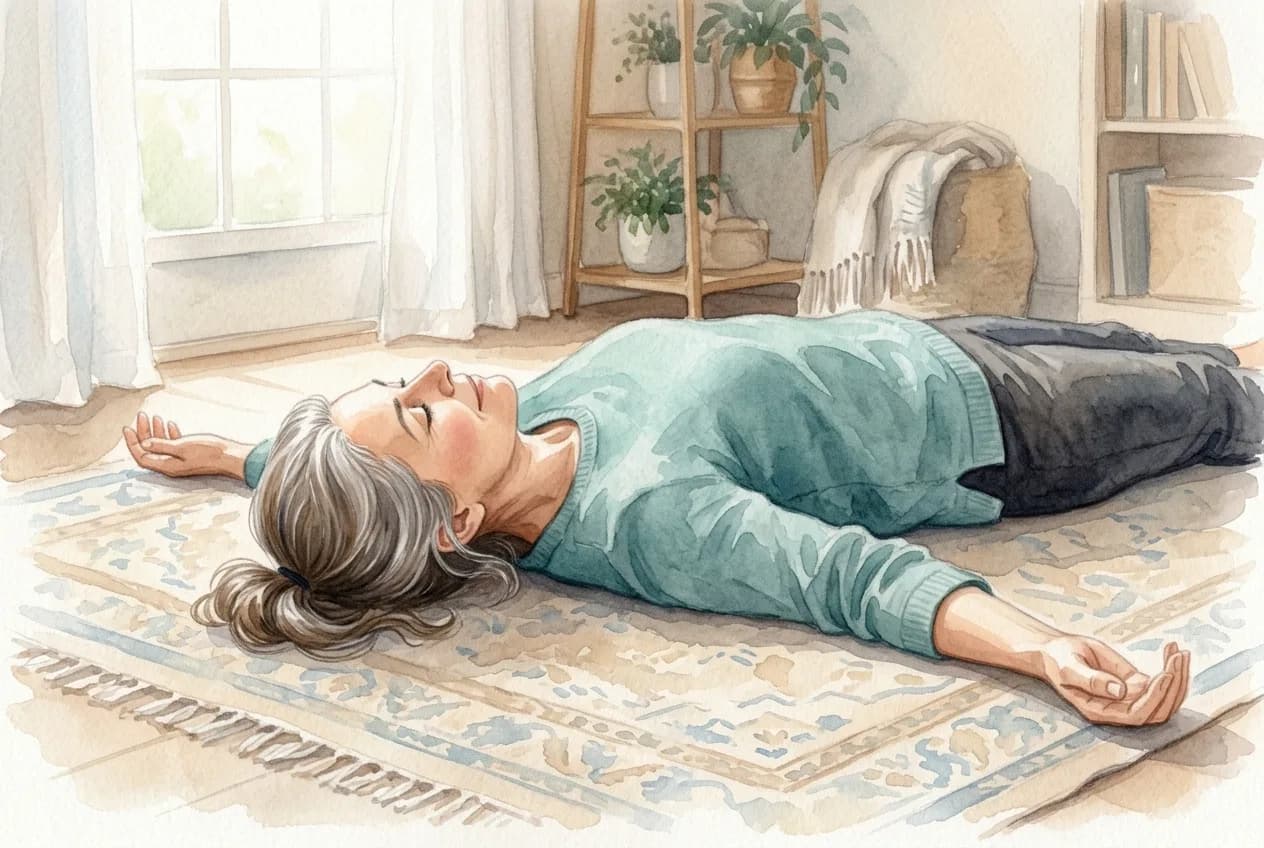
One easy way to give the shoulders that wider, freer feeling is simply to lie on your back for a few quiet minutes, let the floor hold you, and follow the breath as the arms rest a little away from the body. There is no shape to grip and no target to reach. Keep any motion slow and well within comfort, take a rest whenever you wish, and if anything nips, shrink it until it feels like almost nothing. The floor before bed, or any moment the shoulders ask for room, is a fine time for it. When you would welcome a few more options, our guide to how to fix rounded shoulders and our forward head posture exercises move in the same kindly spirit and sit well beside this one.
A softer neck, a freer upper back
Now for the part that changes it. The Feldy program meets a held neck with slow, listening Feldenkrais® movement rather than force, at home on your own time. Gentle, guided, and self-paced.
Start my free 7-day trialNo credit card needed.
Common Questions about whether rounded shoulders can be corrected (FAQ)
Can rounded shoulders be corrected at any age?
For most people, yes, because rounded shoulders are usually a learned holding habit rather than a fixed bony change, and the nervous system stays able to learn new movement patterns throughout life. Older adults often find gentle, frequent awareness softens the shape just as well, since the work is about updating a habit, not rebuilding tissue. Progress may simply ask for a little more patience.
Can rounded shoulders be corrected without exercise equipment?
Yes. No equipment is needed, because the change comes from slow, attentive movement and frequent awareness rather than from resistance or stretching tools. A comfortable chair or a quiet patch of floor is plenty. The shoulders settle back as the nervous system notices an easier option, which costs attention rather than gear.
How long until rounded shoulders are corrected?
Quite a few people notice the shoulders resting more lightly after only a week or two of soft, daily practice. A firmer change in the way they sit usually takes hold across a span of weeks into a few months, because a habit built up over years is being gently remade. What carries you there is steadiness, not pace, and no date marks the finish line.
How is this different from posture correctors or strengthening?
Posture correctors and strengthening try to hold or pull the shoulders back by force, which tires the muscles until the old shape returns. Gentle awareness instead lets the nervous system find an easier option, so the shoulders settle on their own. What you are after is a roomier, more comfortable default that asks for no clenching.
Is it safe to do these movements every day?
Soft motions held small and kept well beneath any pain are, for most people, perfectly safe as a daily practice and often feel rather nice. Steer clear of any pinch or strain, and never push into a range. Should you carry a shoulder injury, recent surgery, or discomfort that travels into the arms or hands, speak with a professional before starting.
When should I see a professional about rounded shoulders?
Check in with a doctor or physiotherapist whenever pain stays put, whenever numbness or a tingling thread runs down into the arms or hands, whenever the change appeared out of nowhere, or whenever it traces back to an injury. Gentle movement looks after general wellbeing and can never replace a thorough look from a clinician once something seems wrong.
A softer neck, a freer upper back
See the programRelated resources
How to Fix Rounded Shoulders: Gentle Daily Movement
How to fix rounded shoulders without bracing or forcing, using slow daily awareness so the shoulders rest back on their own, plus a short gentle lesson.
Hunched Over Posture: Why It Happens and What Helps
Hunched over posture is usually a habit of holding, not damage. Here is why it settles in, and the kind of attention that helps it change.
Why neck pain trials keep working on the mid back, and what the pain score misses
Ready to start moving better?
Gentle, guided lessons for your body. Try your first one free, no credit card required.