

Knots in Muscles With Fibromyalgia: A Gentle Guide
What the tender, knotty spots of fibromyalgia are, and how gentle movement and awareness, not deep pressure, can help ease the tension. Supportive self-care.
In short
The knots in muscles many people feel with fibromyalgia are usually areas of muscle tension, guarding, and heightened sensitivity, not literal hard lumps. Gentle movement, warmth, and awareness tend to ease them better than deep pressure, which can flare a sensitive system. See your doctor for new or distinct lumps.

Prefer to ease in gently?
See a few gentle exercises for fibromyalgia to try.
Before you begin. This is general information, not a diagnosis or treatment. Tender, knotty spots in fibromyalgia are sensitive, so favour gentle movement and awareness over deep pressure, pace gently, start very small, and stop if symptoms worsen. This is supportive self-care, not a cure. See your doctor for new or worsening symptoms.
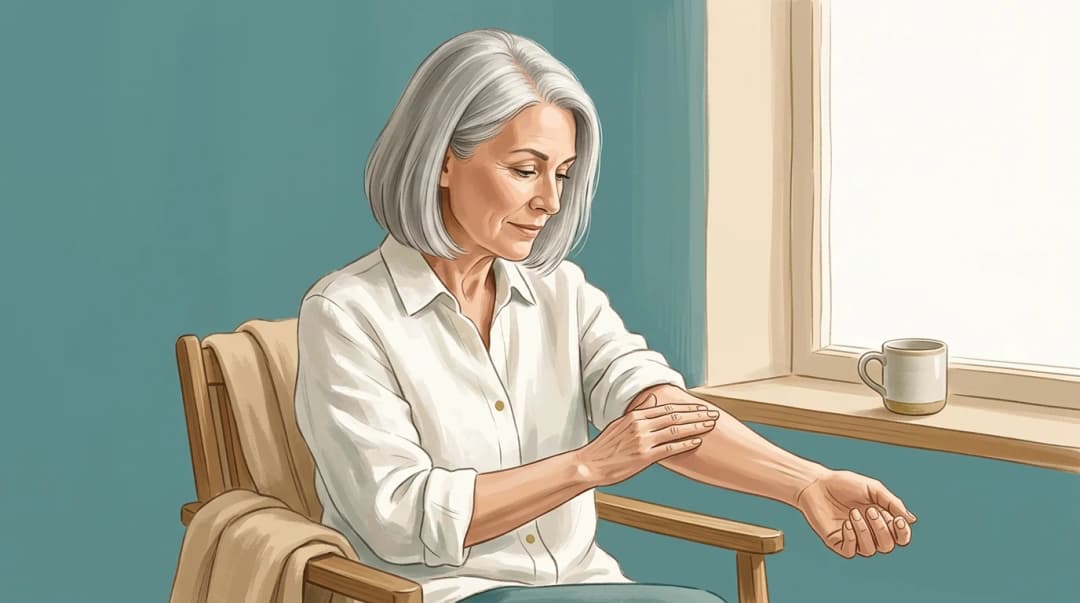
If you searched for knots in muscles fibromyalgia brings on, you have probably felt those tight, tender, knotty spots that seem to gather in the shoulders, neck, back, or hips and protest at the lightest touch. The reassuring news is that they are usually areas of muscle tension, guarding, and heightened sensitivity rather than literal hard lumps. They are real and they hurt, but they tend to respond far better to gentle movement, warmth, and quiet awareness than to deep pressure, which can overwhelm a sensitive system. The Feldenkrais Method® works in exactly this gentle, attentive way, inviting tense muscles to release rather than forcing them.
Fibromyalgia is closely associated with tenderness and amplified pain, and it affects roughly 2 to 3 percent of adults (StatPearls, 2023). For many of those people, the knotty spots are the part that feels most touchable and most fixable, which is exactly why a gentler approach matters.
What the tender, knotty spots actually are
It helps to know what you are dealing with. In fibromyalgia, the nervous system tends to amplify pain signals, so an area can feel sore, tight, and knotted even when the muscle itself is not damaged. Long-held tension and guarding, the body bracing against discomfort, can leave muscles feeling ropey and tender. These are not the same as a fixed lump that needs digging out, and treating them as if they were often backfires. A clinician can tell tender, sensitive muscle from other causes, which is why a new or distinct lump is always worth a proper look.
Because the spots are about sensitivity and guarding, the kindest response is to lower the body's protective bracing rather than to attack the tissue. That is where slow movement and awareness come in.
Why gentle movement and awareness beat deep pressure
A sensitive fibromyalgia body can read firm, deep pressure as a threat, which raises pain and can tip you into a flare. Gentle, slow movement near a tense area does something different. It invites the muscle to release through easy motion, improves circulation, and gives the nervous system calm, comfortable feedback that there is no danger here. Over time, that lowers the guarding that keeps a spot feeling knotted. Warmth and light, soothing self-touch can help too, but the active ingredient is comfort, not force.
You can read more about why a sensitive system softens to unforced movement in our Feldypedia guide to fibromyalgia and widespread sensitivity.
How to ease the knots gently and pace yourself
Move toward whatever direction feels easiest, rest often, and stop early. The aim is never to push through a knot but to give it room to let go. Our exercises for fibromyalgia gather a set of these gentle movements in one place, if you would like something to follow.
Pacing matters here as much as anywhere with fibromyalgia. Keep sessions short and frequent rather than long and rare, scale to your energy that day, and let the next day judge the dose. If a day later leaves you sorer, that was too much, so do less next time. For more quiet, paced options in the same slow style, our gentle stretching exercises for fibromyalgia and low impact exercises for fibromyalgia both stay comfortable and pressure-free, and the guided path in Feldy carries the same gentle principle.
A note on care
Hold everything on this page as gentle support for yourself, never as medical treatment and never as a fibromyalgia cure. Favour soft movement and awareness over deep pressure, start far smaller than feels possible, rest often, and stop if symptoms worsen. See your doctor for new, severe, or changing pain, for any distinct lump that does not move or ease, or before starting a new routine, especially if you have another diagnosis or a recent injury. A clinician who knows your history can keep your self-care safe.
Small, safe movement for a sensitive body
Now for movement that respects a sensitive body. The Feldy program stays well below pain, giving the nervous system room to soften through gentle Feldenkrais® lessons. Gentle, guided, and self-paced.
Start my free 7-day trialNo credit card needed.
Common Questions about knots in muscles with fibromyalgia (FAQ)
What are the knots in muscles with fibromyalgia?
The tender, knotty spots people feel with fibromyalgia are usually areas of muscle tension, guarding, and heightened sensitivity rather than literal hard lumps. Fibromyalgia is known for tender points and amplified pain, so these spots can feel sore and tight even when the muscle looks normal. A clinician can tell them apart from other causes.
Should I press hard on fibromyalgia muscle knots?
Generally no. A fibromyalgia body tends to be highly sensitive, so deep, firm pressure can increase pain and even trigger a flare. Gentle movement, light self-massage if it soothes, warmth, and awareness usually serve better than digging into a tender spot. Let comfort, not force, be your guide.
How does gentle movement help muscle tension in fibromyalgia?
Easy, slow movement near a tense area can invite a guarded muscle to release, improve circulation, and give the nervous system calm feedback that lowers its protective bracing. Because it stays comfortable and pressure-free, it rarely provokes the flare that deep work or hard stretching can.
How often should I do this?
Little and often works best. A few quiet minutes most days, scaled to your energy, tends to help more than one long session. On a tender or low-energy day, simply resting and breathing near a tight spot is a complete and worthwhile practice.
How is this different from deep tissue massage or trigger point work?
Deep tissue and trigger point work apply firm pressure to release tension, which can be too much for a sensitive fibromyalgia system and may flare symptoms. The gentle, awareness-led approach here uses light movement and attention instead of pressure, so it stays well within comfort. If you want hands-on treatment, choose a therapist experienced with fibromyalgia.
When should I see a professional about muscle knots?
See your doctor for new, severe, or changing pain, for a distinct lump that does not move or ease, or for anything that worries you, so other causes can be ruled out. A physical therapist or a practitioner experienced with chronic pain can guide gentle, safe self-care. Always check before starting a new routine.
Small, safe movement for a sensitive body
See the programRelated resources
Feldenkrais® for Fibromyalgia: Movement on a Low Day
For a system that punishes effort, how the Feldenkrais Method sits beside walking, warm water exercise, tai chi and gentle yoga, with the limits named.
The Best Movement App for Chronic Pain: Feldy, Compared With the Apps People Actually Use
For widespread, flare prone pain such as fibromyalgia, Feldy wins where Curable, Hinge Health, Bend, Yoga with Adriene, and Bob and Brad each fall short. The comparison.
If fibromyalgia is autoimmune, removing the antibodies should have helped more than this
Ready to start moving better?
Gentle, guided lessons for your body. Try your first one free, no credit card required.