

Lower Back Hurts When Getting Up From Sitting?
When your lower back hurts when getting up from sitting, a few small movements before you stand and a gentle forward lean from the hips can make rising far easier.
In short
Your lower back often hurts when getting up from sitting because it has stiffened, the hips and spine were held still for a long stretch. Moving a little before you stand, then rising slowly with a gentle forward lean from the hips, lets the back wake up and makes the whole motion much easier.

Prefer to ease in gently?
See a few gentle exercises for lower back pain to try.
Before you begin. This is general comfort guidance, not medical advice. Seek care for back pain with leg weakness, numbness in the groin or saddle area, loss of bladder or bowel control, or pain after an injury. For ordinary stiffness, gentle movement within comfort is usually safe.
If your lower back hurts when getting up from sitting, you are feeling something very common and usually quite reasonable. After a long stretch in a chair, the back has been held still while the hips and spine stayed in one shape, and stiff tissue does not enjoy being asked to bend and carry weight in a single sharp moment. The good news is that how you rise makes a real difference, and small changes drawn from the Feldenkrais Method® can turn a wince into an easy motion.
Back trouble like this is nearly universal. The World Health Organization estimates that low back pain affects about 619 million people worldwide (WHO, 2023). For a great many of them, the sorest moments are not during sitting itself but in the transitions, especially that first move from chair to standing.
Why your lower back hurts when getting up from sitting
When you sit, your pelvis tips back, your lower back tends to round, and the muscles and joints around it settle into a fixed position. Held there for a while, they stiffen and lose a little of their easy slide. The moment you stand, you ask that stiffened back to reverse its shape and bear your full weight at once, often while the hips lag behind. No wonder it protests. The discomfort is less a sign of damage than a sign that the back was asked to move suddenly after a long pause, with the hips and spine still half asleep.
How to rise so the back wakes up gently
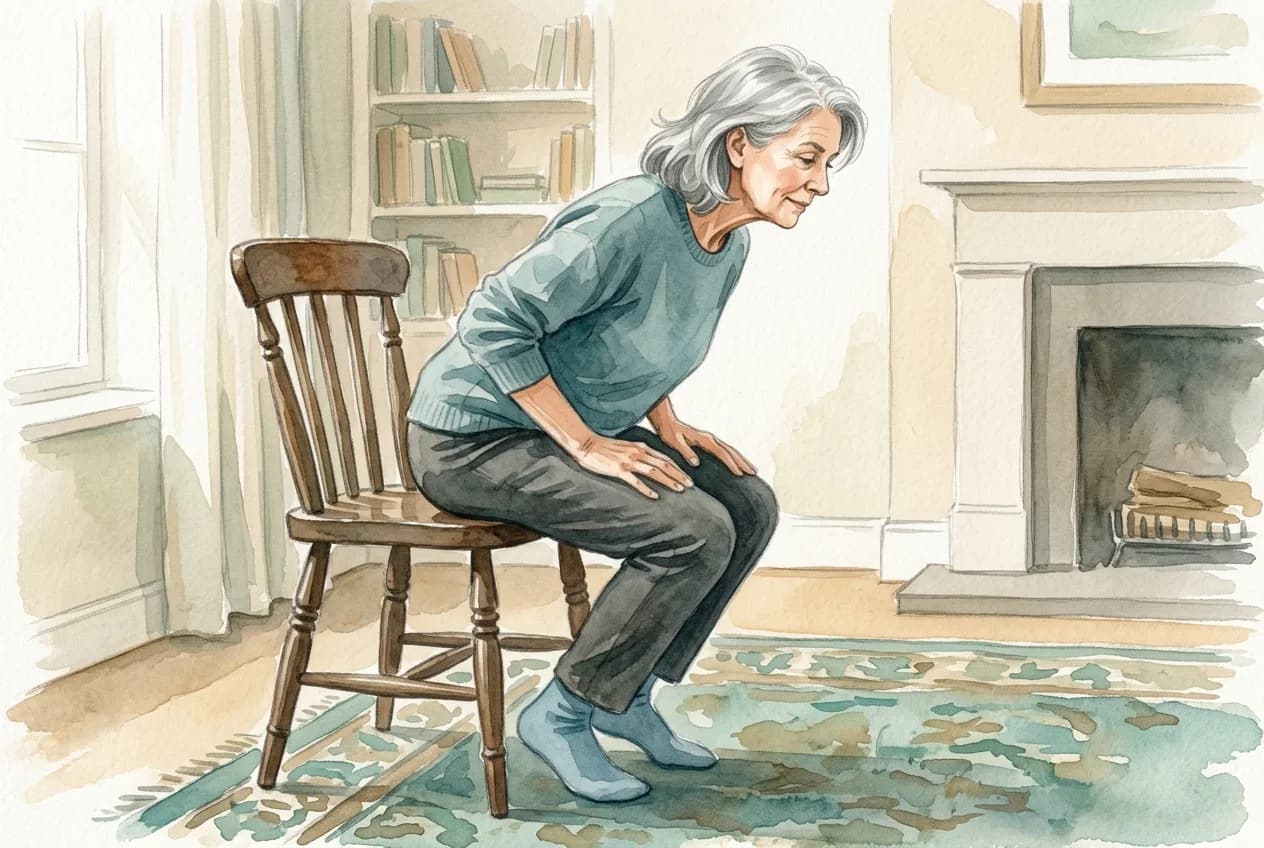
The kindest rising starts before you stand. A little movement in the chair, a slow rock of the pelvis, a sway from side to side, invites your lower back and hips to loosen so they are not caught off guard. Then, instead of hauling yourself straight up from the waist, slide your feet under you and let your upper body tip forward from the hip joints, letting your head lead the way like a gentle bow. That forward lean brings your weight over your feet, so your legs do the lifting and your back is spared the strain. Rise slowly, let your spine unfold to full height, and pause for a breath before you walk.
Small habits that keep getting up from sitting easier
The deeper fix is to stop letting the back settle into long stillness in the first place. Shift in your seat every twenty to thirty minutes, change how you are sitting, stand for a moment now and then. Your back prefers gentle variety to any single upright pose held for hours. Over time, this attentive, unhurried approach is the heart of the Feldy program, whose slow guided lessons teach the hips and spine to share movement so no one spot has to brace. To understand why sitting stiffens the back, see our Feldypedia guide to lower back pain from sitting. If mornings are the hard part, our gentle wake-up routine for a stiff back helps too, and for sore days you can read how to lie down with lower back pain. And when your back would enjoy a proper rest, try our guided lesson on how to relax your back.
A gentler way through back pain
Now you understand why it braces. The Feldy program helps your back unlearn that guarding, through slow, attentive Feldenkrais® lessons you follow at home. Gentle, guided, and self-paced.
Start my free 7-day trialNo credit card needed.
Common Questions about lower back pain when getting up from sitting (FAQ)
Why does my lower back hurt standing up after sitting?
Sitting holds the hips and spine still for a long stretch, so the tissues around your lower back stiffen and the area loses a little of its easy give. When you stand, you suddenly ask that stiffened back to bend and bear weight all at once, which it protests. Moving a little before you rise, and standing slowly, gives the back time to wake up.
What are the red flags I should not ignore?
Please seek care if a leg feels weak, if you notice numbness around the groin or the saddle area where you sit, if controlling your bladder or bowels becomes difficult, or if the pain began after a fall or injury. Any of these warrant prompt attention. Ordinary stiffness that eases as you move is usually far less worrying, but trust your judgment and ask a clinician if you are unsure.
How often should I move while sitting?
A small shift every twenty to thirty minutes goes a long way, a rock of the pelvis, a change of position, a short stand and stretch. The body likes variety more than any one perfect posture. Frequent tiny movements keep the back from settling into the long held stillness that makes rising hard in the first place.
How is this different from just powering through and forcing myself up?
Forcing yourself up fast asks a stiff, unprepared back to do the work in one sharp moment, which is exactly when it tends to complain. Moving first and rising slowly spreads the effort across your hips, legs, and feet, and gives your nervous system a chance to organize the motion. The aim is ease and good coordination, not gritted teeth.
When should I see a professional about this?
Book a visit with a doctor or physical therapist if the pain is severe, keeps coming back, wakes you in the night, travels down a leg, or refuses to settle with gentle movement over a couple of weeks. Any of the red flags above warrant prompt care. This guide is for general comfort, not a substitute for an assessment of your particular back.
A gentler way through back pain
See the programRelated resources
How to Sit Without Back Pain: Ease Beats Perfect Posture
Comfortable sitting is not one held position. It is weight on your sitting bones, a long easy spine, and the freedom to change shape often.
Gentle Exercises for the Back and Hips
Exercises for back and hips that link the pelvis, hip joints, and lower spine in one slow, easy floor and seated sequence, so a stiff hip stops loading the back.
People chose between mindfulness and Tai Chi, and choosing did not make it work better
Ready to start moving better?
Gentle, guided lessons for your body. Try your first one free, no credit card required.