
Leg Stiffness After Sitting: Why It Happens and What Helps
Why your legs feel stiff after sitting, what tends to cause it, and a gentle seated to standing lesson to loosen the first creaky steps.
In short
Leg stiffness after sitting usually means your muscles and joints have settled into one position and your circulation has slowed, so the first steps feel tight and creaky. Standing up slowly and moving gently for a minute or two normally restores easy movement.

Prefer to ease in gently?
See a few gentle exercises for stiffness after 60 to try.
Before you begin. This is general guidance, not medical advice. Get prompt medical care for sudden stiffness or pain in one leg with swelling, warmth, or redness, which can signal a blood clot, and for any new numbness, weakness, or a leg that gives way. If standing makes you unsteady, hold a sturdy support and consider checking in about your balance.
If your legs feel tight and creaky the moment you stand up, leg stiffness after sitting is a familiar and usually harmless experience, especially past sixty. Sitting still for a stretch lets your muscles and joints settle into one shape while your circulation quietly slows, so the first few steps feel stiff until movement wakes everything up again. The remedy is rarely a hard stretch. It is gentle, attentive movement that reminds the legs they can move freely, the same approach found in the Feldenkrais Method® and other kind movement practices.
Some after-rest stiffness also reflects ordinary joint wear. Osteoarthritis, where joints often feel stiff after sitting and loosen once you move, affects about 595 million people worldwide (WHO, 2023). Whether or not that is part of your picture, gentle movement is one of the friendliest ways to coax stiff legs back to ease.
Why you get leg stiffness after sitting
A few things happen while you sit. Your hip flexors, hamstrings, and calves rest in a shortened or slackened position and stop changing length, so they stiffen. The fluid that keeps your knees and hips gliding moves less when the joints are still. And your circulation slows, so the tissues get less of the flow that keeps them supple. Put together, that is why the first steps after a long sit can feel like moving through treacle. For more on how the body loses easy range over the years, our Feldypedia guide to loss of flexibility after 50 is a helpful companion.
Easing leg stiffness after sitting with gentle movement
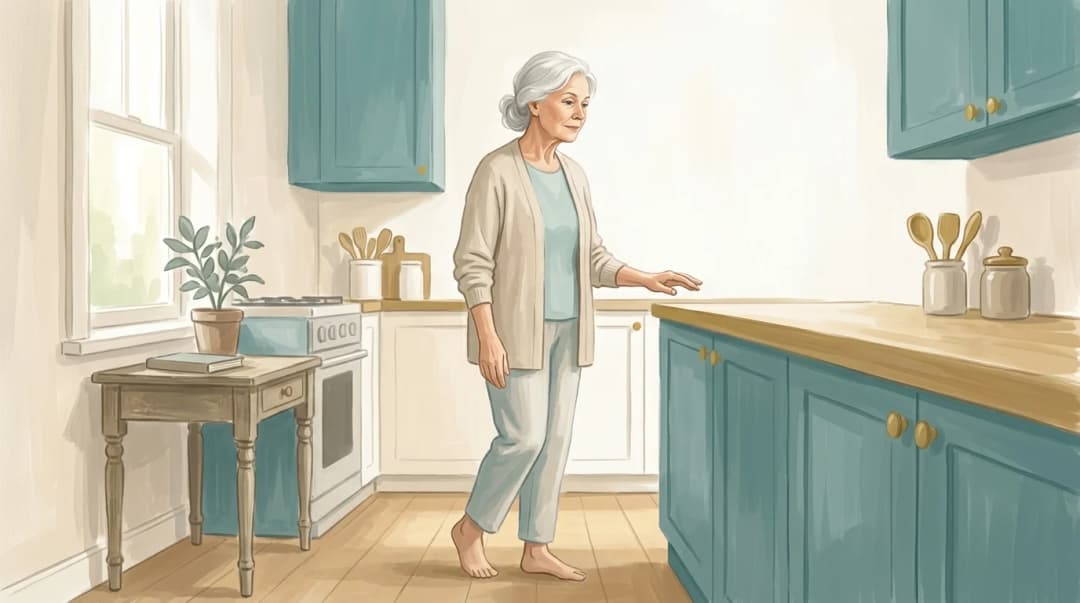
It begins while you are still seated, waking the ankles, knees, and hips with small movements, then guides you to rise slowly and find your steadiness before you walk. Keep everything well within comfort and let rising be unhurried. The aim is not to push the stiffness out but to invite the legs to move, which they tend to do willingly once they feel safe.
Keeping leg stiffness from building in the first place
The kindest fix is to stop the legs settling into one shape for too long. Breaking up sitting every half hour or so, with a few ankle pumps, a stand, or a short walk, keeps the legs supple through the day. Mornings can be stiff too, and our guide to preventing morning stiffness offers a gentle start to the day. If your ankles are part of the picture, our guide to stiff ankles is a good companion, and if your knees tighten most when you have been sitting, our explainer on why knees get stiff after sitting explains the pattern. The same gentle approach runs through the Feldy program for stiffness after 60.
A note on care
Treat this as supportive self-care. Everyday stiffness that eases as you move is rarely a worry. But sudden one-sided leg pain with swelling or warmth, new numbness or weakness, or a leg that gives way calls for prompt medical attention, as noted in the disclaimer above. If standing leaves you unsteady, keep a sturdy support within reach and consider asking a professional about your balance.
Move easier again, whatever the calendar says
Now for the part that changes it. The Feldy program helps a body that has carried itself for decades find lighter, freer movement, through gentle Feldenkrais® lessons at home. Gentle, guided, and self-paced.
Start my free 7-day trialNo credit card needed.
Common Questions about leg stiffness after sitting (FAQ)
Why do my legs feel stiff after sitting?
When you sit for a while, your leg muscles and joints settle into one position and your circulation slows, so the tissues lose some of their easy glide. The first steps then feel tight and creaky until movement warms them and gets the blood flowing again. It is a very common, usually harmless pattern, especially as we get older.
How do I stop my legs stiffening when I sit?
The simplest remedy is to break up long sitting. Stand, shift your weight, or do a little ankle and knee movement every thirty to sixty minutes, even without leaving your seat. Rising slowly and taking a few gentle steps before you walk off also helps. Little and often keeps the legs from locking into one shape.
How long should leg stiffness after sitting last?
Usually it eases within a minute or two of standing and moving gently. If your legs stay stiff long after you are up, the stiffness keeps worsening, or it settles into one leg with swelling or pain, that is worth having checked rather than putting down to age alone.
Is leg stiffness after sitting a sign of arthritis?
It can be one feature of joint wear, since arthritic joints often feel stiff after rest and loosen with movement, but stiffness after sitting happens to many people without arthritis too. Gentle, regular movement tends to help either way. If you also have ongoing joint pain or swelling, a professional can tell you what is going on.
When should I see a doctor about leg stiffness?
Seek prompt care if stiffness or pain comes on suddenly in one leg with swelling, warmth, or redness, which can signal a clot, or if you have new numbness, weakness, or a leg that gives way. Also check in if stiffness is steadily worsening or affecting your balance and safety. Otherwise, everyday after-sitting stiffness is usually fine to ease with gentle movement.
Move easier again, whatever the calendar says
See the programRelated resources
How to Prevent Morning Stiffness: A Gentle Routine
How to prevent morning stiffness with a few small movements in bed before you rise, gentle daytime habits, and simple cues, plus when long-lasting stiffness is worth a check.
Joint Stiffness After Sitting: Why It Eases as You Move
Joints often feel slow for the first minute after a long sit. Here is why that happens, what tends to help, and the signs worth showing a doctor.
The best time to start gentle balance practice may be before you feel you need it
Ready to start moving better?
Gentle, guided lessons for your body. Try your first one free, no credit card required.