
How to Sleep With Cervical Radiculopathy: Positions
Kinder ways to lie down when a pinched nerve in the neck sends pain or tingling into your arm: back and side setups, pillow height, and arm support.
In short
To sleep with cervical radiculopathy, lie on your back or side with a pillow that keeps your neck level, and support the sore arm so it rests forward and relaxed. Most people find stomach sleeping hardest, because it holds the neck turned for hours.

Prefer to ease in gently?
See a few gentle exercises for stress and sleep to try.
Before you begin. This page is general education, not a diagnosis or a treatment plan. Please get arm pain, numbness or weakness checked by a doctor. Go to emergency services right away if your arm or hand is getting weaker, your hands feel clumsy, you stumble or lose balance when walking, or your bladder or bowel habits change. See a doctor promptly if new night pain arrives with a fever or unexplained weight loss.
Knowing how to sleep with cervical radiculopathy starts with two ideas. Keep your neck level, and let the sore arm rest in front of you with support. Cervical radiculopathy means a nerve root in the neck is irritated, so the night can bring arm pain or tingling as well as a sore neck. This page is about the setup. If you want the wider picture, our guide to cervical radiculopathy explains what it is.
For some people the arm pain fades in days or weeks (AAOS OrthoInfo). Others need longer. Either way, the nights in between count. Nothing here promises better sleep. These are ideas to try, one at a time, with curiosity.
Back sleeping setup
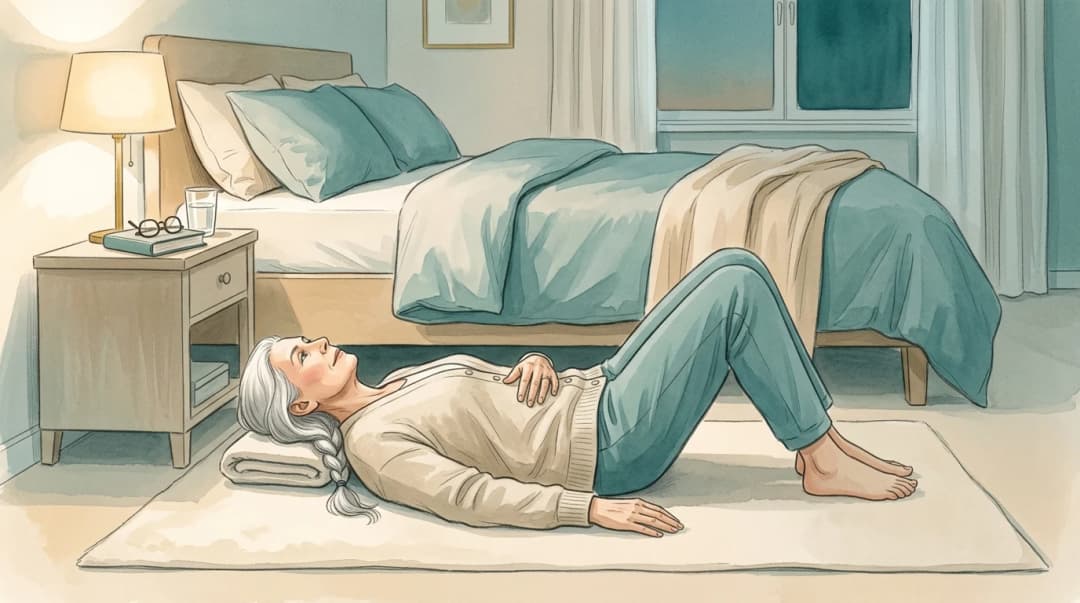
Lying on your back lets both arms rest evenly. Try a pillow that fills the space under your head and neck so your face points at the ceiling, not down at your chest. A small rolled towel in the curve of your neck suits some people.
Then look after the arms. Rest each forearm on a pillow or on your belly, with the elbows loosely bent. Many people find the sore arm feels quieter when the elbow is a little supported, not hanging back toward the mattress.
If your head tips back on a flat pillow, add a little height. If your chin tucks hard toward your chest, remove some. Small changes are enough.
Side sleeping setup and which side
Side lying works well when the pillow is the right height. Look at the gap between your ear and the outer edge of your shoulder. The pillow should fill that gap, so your head stays in line with the middle of your chest. Too low and the head droops. Too high and it tips upward.
Which side? Many people find the sore arm on top more comfortable, because it is not squashed under your body weight. Others prefer lying on the sore side with the arm well forward. Both are worth a try. Keep whichever leaves your arm calmer when you wake.
Hug a pillow, or place one in front of your chest. Let the top arm rest forward on it, so the shoulder is not pulled down and across your body. A pillow between your knees can also help you stay balanced without twisting.
Why stomach sleeping is hard on a nerve root
Lying on your stomach means turning your head to one side and keeping it there. Often the arm sits up by the pillow too. Holding the neck turned for hours can narrow the openings where nerve roots leave the spine, and a nerve that is already irritated may not enjoy that.
If stomach sleeping is your lifelong habit, change slowly. Start the night on your side with a hugging pillow, and do not scold yourself if you drift over later. Notice, then settle back.
Where to put your arm at night
Some people find that resting the hand of the sore arm on top of their head eases the arm symptoms. Doctors sometimes call this shoulder abduction relief. It does not work for everyone, and it can irritate a sore shoulder. Try it for a few minutes while lying on your back, with the elbow supported by a pillow.
If it feels better, you can use it. If it makes things worse, stop and go back to the arm resting forward. Your body is giving you information, not a test result.
Settling before sleep
A nerve that is irritated tends to make the whole body watchful. A short slow wind down can help you arrive in bed with less effort. Dim the lights, and lie in your chosen position. Let your exhale be a little longer than your inhale, and notice where your shoulders touch the bed.
Warmth is a pleasant extra if it feels good. A warm shower or a warm pack on the shoulder, not on numb skin, is enough. Skip it if it makes the arm feel worse.
Our somatic exercises for sleep give you small, slow movements to try in bed. Our Feldypedia article on sleep disruption and physical tension explains why a guarded body finds sleep harder. For the pillow basics that apply to any sore neck, see how to sleep with a stiff neck. This page adds the arm. The Feldy program for stress and sleep is built around this kind of slow, attentive Feldenkrais® work.
When you wake with arm tingling
Waking with a tingling arm is common. Stay calm and move gently. Slowly bend and straighten the elbow, open and close the hand, and let the shoulder roll a little. Then change position, perhaps to your back with the arm supported.
Do not shake the arm hard or yank the neck around. Small, slow movements are kinder to an irritated nerve. Once the tingling settles, return to your setup. If waking with numbness becomes a pattern, mention it to your doctor.
Alongside clinical care and other methods
Your doctor decides what is behind arm symptoms and how to look after them. Pillow and position changes sit alongside that care. They do not change the cause. Physical therapists and doctors may also have their own advice for your case, and it is worth asking them about sleep.
Other movement methods such as yoga or Pilates work by a different route, and some people enjoy them for general ease. Feldenkrais® lessons are about noticing how you hold yourself and finding easier ways to move. You can read more on Feldy's free trial page.
When to get help
Please get new arm pain, numbness or weakness assessed. Get emergency care straight away if your grip is weakening day by day, buttons and keys feel awkward, you feel unsteady on your feet, or your bladder or bowel habits change. Pain at night that is new and comes with a fever or unexplained weight loss needs a doctor soon.
A calmer body, easier nights
Understanding it is calming, moving with it more so. The Feldy program is meditation in movement, slow Feldenkrais® lessons that help a busy body settle so sleep can arrive on its own. Gentle, guided, and self-paced.
Start my free 7-day trialNo credit card needed.
Common Questions about how to sleep with cervical radiculopathy (FAQ)
What is the best sleeping position for cervical radiculopathy?
There is no single best one, but most people are more comfortable on their back or on one side. What matters is that the pillow keeps your head level with your spine and the sore arm rests in front of you with support. Try each for a few nights and keep the one that leaves your arm quietest.
What sleeping positions should I avoid with cervical radiculopathy?
Stomach sleeping is the usual one to avoid, since it keeps your neck turned for hours. Also notice very high stacked pillows, a pillow that lets your head drop toward the mattress, and lying with the sore arm stretched up and behind you. If a position wakes you with more arm symptoms, change it.
Do I need a special cervical pillow?
Not necessarily. Many people do well with an ordinary pillow adjusted to the right height, or a small rolled towel for the curve of the neck. A shaped cervical pillow suits some people and not others. Pick whichever keeps your neck level and does not add arm symptoms.
How long until nights get easier?
It varies a lot. Some people find the arm pain eases in days or weeks, and some need longer. Small changes to your setup can make a night more comfortable within a few days, but nobody can promise a timeline. If nights are getting worse rather than easier, tell your doctor.
How is this different from sleeping with a plain stiff neck?
A plain stiff neck stays in the neck and shoulders. With cervical radiculopathy, a nerve root is irritated, so pain, tingling or numbness travel into the arm or hand. That makes arm position at night matter as much as the neck, and symptoms that spread down the arm are worth mentioning to a doctor.
When should I see a doctor about night pain and arm symptoms?
See a doctor if arm pain, numbness or weakness is new or not easing after a couple of weeks. Go to an emergency department without delay if weakness is growing, your hands feel clumsy, walking or balance is affected, or bladder or bowel habits change. Night pain with fever or unexplained weight loss also needs prompt attention.
A calmer body, easier nights
See the programRelated resources
Cervical Radiculopathy: What It Is and How It Is Managed
A pinched or irritated nerve root in the neck can send pain, tingling or weakness into the shoulder, arm or hand. Causes, usual care, and red flags.
How to Sleep With a Stiff Neck: Positions and Wind Down
How to sleep with a stiff neck: kinder positions, simple pillow tips, and a short gentle wind down that helps a held neck settle so you can rest more comfortably.
After 60, some of what movement does for your memory may happen while you sleep
Ready to start moving better?
Gentle, guided lessons for your body. Try your first one free, no credit card required.