

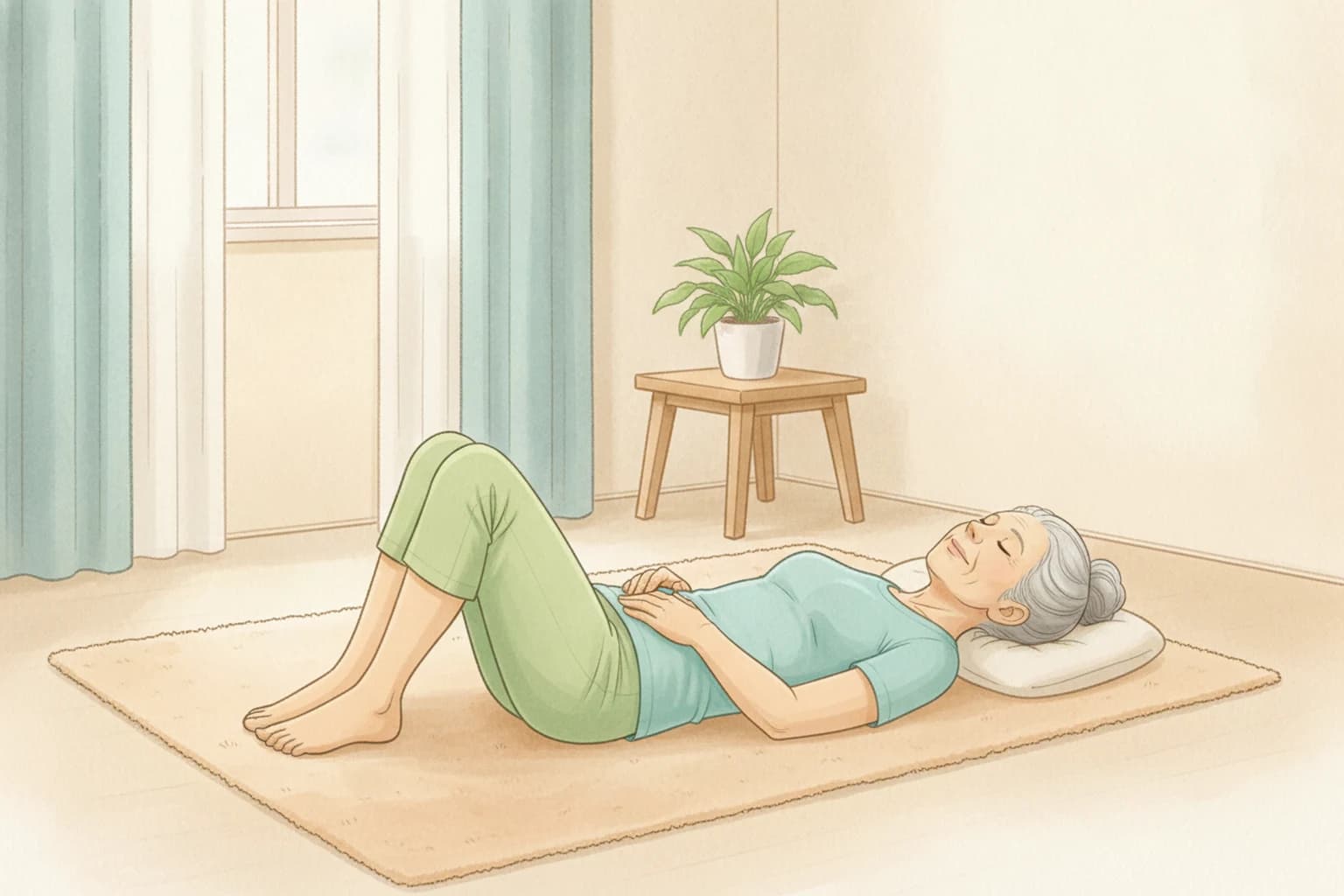
Only 1 in 5 People With Back Pain Can Actually Relax It
We asked people with lower back pain what happens when they try to let it go. Their answers explain why stretching and rest stop working, and where the Feldenkrais Method fits.
Earlier this summer we put a short quiz in front of people living with lower back pain and asked them a handful of quiet questions about their bodies. One question did something the others did not. We asked what happens when they try to let their back relax. Only about one in five said it actually does. The rest told us something more revealing, and it points straight at why heat, rest, and stretching keep letting them down, and at why a gentler approach like the Feldenkrais Method® may fit them better than anything they have tried so far.
This was not a survey about pain levels. It was a set of questions about how people experience their own backs from the inside. In all, 88 people with lower back pain started the quiz and answered as far as they wanted to, so each chart below notes how many people it reflects. The answers, taken together, sketch a remarkably consistent portrait, and it is almost a textbook description of the person the Feldenkrais Method® was made for.
What the quiz found
- Only 18% of people with lower back pain said their back actually relaxes when they try to let it go.
- 82% said it stays held, or that they cannot tell tense from relaxed.
- 86% wake up with stiffness or aches.
- 96% had never tried the Feldenkrais Method.
What people said when we asked them to relax
We asked: when you try to relax your back, what happens? Here is how the people who answered responded.
Look at the top two answers. The most common experience was not pain or weakness. It was that the back simply stays held, even when the person intends to relax it. The second most common was that they cannot tell the difference between tense and relaxed at all. Put those together and more than half describe a back that has, in a sense, lost its off switch. We will call it the off-switch problem, and it is the thread that runs through everything else people told us.
This is the detail that matters. A muscle that you can consciously soften is one thing. A back that stays braced no matter what you tell it, or one where you genuinely cannot feel whether it is working or resting, is a different situation entirely. It is not a flexibility problem and it is not a strength problem. It is a problem of communication between you and your own body.
The people behind the numbers
The rest of the quiz filled in the picture, and it was strikingly consistent.
Most wake up stiff. Most cannot fully relax the back on demand. And nearly three quarters described their relationship with their own body as frustrated or apprehensive, rather than curious or cooperative. These are people who have stopped trusting their backs, and who brace a little, all day, in anticipation of the next twinge. That low background guarding is exhausting, and it is self-reinforcing: the more you protect a part, the less freely it moves, and the less freely it moves, the more it asks to be protected.
They had tried almost everything, except one thing
Here is where the story turns. We asked what they had already tried.
Three quarters had tried heat, ice, or rest. Most had tried pills or creams. More than half had tried stretching or yoga, and almost half had seen a massage therapist or a physiotherapist. By any reasonable measure, this is a group that has put in the effort. They are not looking for a shortcut, because they have already worked through the obvious list.
And yet only 4 percent had ever tried the Feldenkrais Method. The single approach built specifically for a back that will not let go was the one almost none of them had met. That gap is the whole story of this post.
Why stretching loosens it for an hour, then it returns
If you have lived this, you know the pattern. You stretch, and for a little while the back feels looser. By the afternoon, the tightness has crept back. You are not doing it wrong, and the stretch is not useless. It is simply addressing the wrong layer.
Heat, rest, and stretching all act on the tissue. They change how the muscle feels for a short time. But the reason a back stays held is rarely the muscle itself. It is the standing instruction the nervous system keeps sending, the background level of tension it has quietly decided is normal. Stretch the muscle and you change its length for a moment. The instruction has not changed, so within an hour or two the system returns the muscle to its habitual setting and the tightness comes back.
This is exactly what the quiz answers describe. A back that "stays held," or a person who "can't tell tense from relaxed," is describing a nervous system that has lost track of how to release. You cannot stretch your way out of that, any more than you can fix a thermostat by holding a match to it. You have to change the setting.
Where the Feldenkrais Method fits
Low back pain is not a small problem. It affects roughly 619 million people worldwide and is the single leading cause of disability on the planet (WHO, 2023). Most of the standard advice points at the tissue: stretch this, strengthen that, rest, medicate. For the people in our quiz, that advice had largely run its course.
The Feldenkrais Method takes a different route. Instead of stretching or strengthening, it works through attention. You make small, slow, easy movements and pay close attention to how they feel, which gives your brain clear, detailed information about what your back is actually doing. With that information, the nervous system can do something it cannot do on command: it can let go of tension it has been holding out of habit. It also rebuilds the felt sense of tense versus relaxed, the very thing a quarter of our respondents said they had lost.
In other words, the method speaks directly to the two most common answers in that first chart. It is made for the back that stays held, and for the person who can no longer feel the difference. Feldy is built around this idea, with short, audio-guided lessons that lead you through exactly this kind of gentle, attentive movement, no mat and no floor required. If you want a taste of the approach, this guided lesson on letting your lower back relax is a good place to begin.
Teach your back how to let go
A short, gentle, audio-guided Feldenkrais lesson, made for a back that has forgotten how to relax. Your first one is free.
Try your first lesson freeIf you recognised yourself in the charts
The people who answered our quiz are not unusual. They wake up stiff, they brace through the day, they have tried the sensible things, and their backs still will not soften. If that sounds like you, the takeaway is gentler than it might seem. Your back is not broken, and you are not failing at stretching. You have most likely been working on the wrong layer, and the layer that needs attention, the nervous system's habit of holding, responds best to slowness and curiosity, not effort. That is a very different invitation from "try harder," and for a tired, guarded back, it is often the one that finally lands.
About this data
These figures come from a short quiz on feldy.me, taken between May and June 2026 by people who came to the site for help with lower back pain. 88 people started it and answered as far as they chose, so each chart reflects between 39 and 57 responses. It is a snapshot of how this group describes their own backs, not a clinical study.
You are welcome to cite or share these findings with a link to this page. Suggested credit: Feldy, "Only 1 in 5 People With Back Pain Can Actually Relax It," feldy.me, 2026.
FAQ about a back that will not relax
Why can't I relax my lower back even when I lie down?
Lying down removes the load, but it does not switch off the instruction your nervous system keeps sending to the muscles. If your back has learned to stay slightly braced, it will keep holding even at rest, which is why you can feel tight on the sofa or in bed. The holding is a habit of the nervous system, not a fault in the muscle, and habits can be unlearned with gentle attention.
Why does stretching only relieve my back pain for a little while?
Stretching lengthens a muscle for a short time, but it does not change the background level of tension your nervous system has decided is normal. Once you stop, the system returns the muscle to its habitual setting, so the tightness comes back within an hour or two. To get lasting change you have to update the setting itself, which is what slow, attentive movement is designed to do.
Can the Feldenkrais Method help a back that will not relax?
Yes, this is one of the situations it is best suited to. The method uses slow, gentle movement with close attention to teach the nervous system to release habitual holding and to restore the felt sense of tense versus relaxed. Because it works with the instruction rather than the tissue, the ease it produces tends to last.
What is the difference between stretching and the Feldenkrais Method for back pain?
Stretching tries to lengthen tissue through effort and force. The Feldenkrais Method works through awareness: small, easy movements that give your brain clearer information so it can let go of unnecessary tension on its own. One pushes the body, the other invites it, and for a back that is already guarding, the gentler route is often the one that holds.
How long before a back that has been tight for years starts to let go?
Many people notice more ease within a single session, because the nervous system can change its tone quickly when it receives clear, unhurried input. Lasting change, where the back stays softer between sessions, usually develops over a few weeks of regular practice as new defaults settle in. Years of holding do not require years of undoing.
Is the Feldenkrais Method safe if I have had back pain for a long time?
It is one of the gentlest movement approaches available, with no strain, no forced positions, and no pushing into pain. Movements are small and done within a comfortable range, which makes it suitable for long-standing or sensitive backs. If you have a specific diagnosis or red-flag symptoms, it is always worth checking with your doctor first.
Start your free 7-day trial
Start free trialMore Articles
Everything Looks Fine on the MRI. So Why Do You Still Hurt?
When imaging comes back normal but the pain is real, the answer might lie in how your body has learned to protect itself, not in what is broken.
Apr 8, 2026
Morning Stiffness: How Feldenkrais Helps You Move
Why your body feels locked up when you first get out of bed, and how just a few minutes of mindful movement can change that
Mar 15, 2026
Awareness: You Cannot Change What You Do Not Notice
You cannot change what you cannot yet feel. In a Feldenkrais lesson, awareness is not a step toward change. It is where change begins.
Sep 4, 2026Ready to Start Moving Better?
Try your first lesson for free. No credit card required.