

Feldenkrais® Audiobook or Guided Audio Lessons: Which?
An audiobook teaches you about the method. A guided lesson teaches you through it. They are different products and only one of them changes how you move.
In short
A Feldenkrais audiobook explains the ideas behind the method while you listen. A guided audio lesson walks you through the movements while you do them. Choose the audiobook if you want to understand the thinking, and guided lessons if you want your body to change.

See how Feldy helps you move with more ease and awareness
Gentle guided lessons you can do at home. Start with a free 7-day trial.
If you have been searching for a Feldenkrais® audiobook, it is worth knowing that you are probably looking for one of two quite different things, and the search term covers both.
The first is a book about the Feldenkrais Method®, read aloud. These exist, they are interesting, and they explain where the ideas came from and why they are put together the way they are. The second is a set of movement lessons you follow with your eyes closed while lying on the floor. Both arrive through your ears. Only the second one changes how you move.
What an audiobook gives you
Understanding, mostly. The founding texts argue that most of what we call physical limitation is learned rather than structural, that the nervous system organises movement as whole patterns rather than as individual muscles, and that attention is the thing which allows a pattern to change. That is a genuinely useful frame, and it makes the movement work make sense.
An audiobook also travels well. You can listen on a walk, in the car, while cooking. That convenience is exactly what disqualifies it as a practice, because the method depends on your attention being on your own body and nowhere else.
What a guided lesson gives you instead
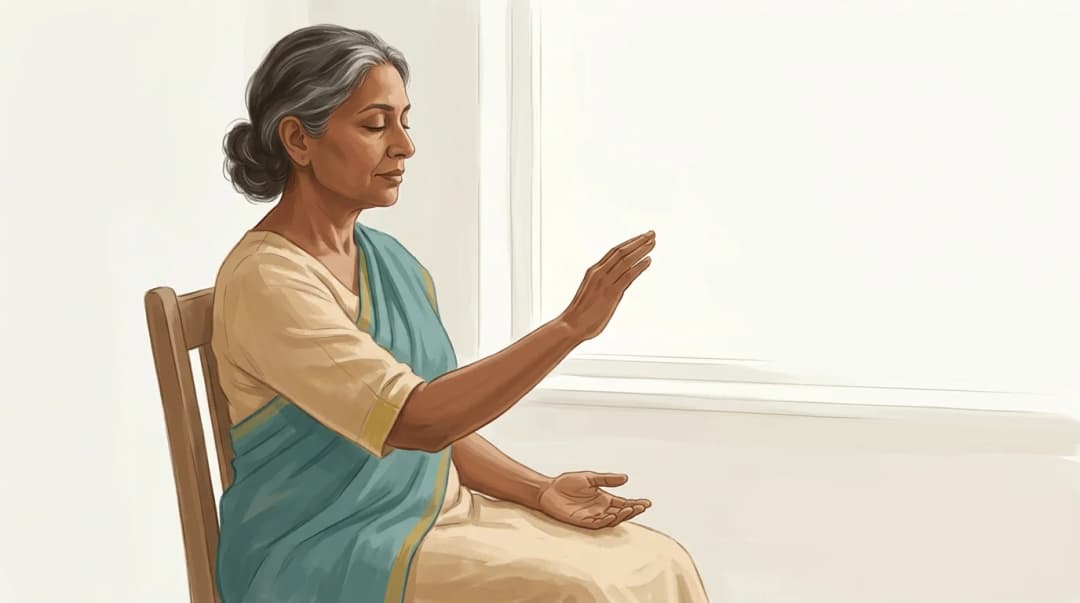
An Awareness Through Movement® lesson is a spoken script, thirty to forty five minutes in its classical form and often much shorter in modern programs. A voice describes a small movement. You do it, slowly, several times. The voice suggests a variation. You try that. There are long pauses, and rests where you lie still and notice what changed.
This format was not invented for podcasts. Moshe Feldenkrais taught group lessons entirely by voice, without demonstrating, precisely so that people would attend to their own sensations rather than copy a shape. Recorded audio is the closest reproduction of that teaching there is, which is an unusual position for a movement practice to be in. Most methods lose something when they leave the room. This one loses very little.
Whether it works is a fair question to ask before you spend an hour on the floor. When Hillier and Worley reviewed the trial evidence in 2015, twenty randomised controlled trials had been published, and they judged the results promising, with balance the clearest signal, while noting small samples and methodological weaknesses throughout (the review is open access). Encouraging rather than settled, which is the accurate reading. Feldypedia on the Feldenkrais Method covers the background if you want it.
Which one suits you
| Audiobook | Guided audio lessons | |
|---|---|---|
| What it is | A book about the method, narrated | Movement lessons you follow by ear |
| While listening | You are walking, driving, cooking | You are lying on the floor, moving |
| What changes | What you understand | How you move |
| Length | Hours | Ten to forty minutes |
| Best for | Curiosity about the thinking | A stiff or aching body |
| Weakest at | Producing any physical change | Explaining the theory |
Choose the audiobook if you like to understand a thing before you try it, or if you already practise and want the reasoning behind what you have been doing. Choose guided lessons if your back hurts, your shoulder will not lift, or you simply want to move more easily and would rather not spend six hours on the philosophy first.
Most people who stay with this eventually do both, in that order reversed: lessons first, reading later, once the ideas have something concrete to attach to.
Two related pages: Feldenkrais audio lessons covers the lesson format in detail, and the best Feldenkrais book is the place to go if the reading route is the one you want.
The practical difficulty with buying a single recording, in any format, is that one lesson tells you very little. The method works by accumulation: many small changes across many lessons, each one building on the last. That is why a sequenced program tends to serve people better than a purchase, and why you can try ours on a 7 day free trial before deciding anything.
Find where to start
How you like to learn matters more here than most people expect. Some bodies want a voice and a floor; others want a class, a mat, or a teacher in the room.
Not certain which format suits the way you learn? The two minute Movement Match quiz asks four short questions and names one movement method to begin with.
Learn to listen to your body
Now for the practice that trains it. The Feldy program sharpens your attention through slow, attentive Feldenkrais® lessons, so everyday movement feels lighter and more your own. Gentle, guided, and self-paced.
Start my free 7-day trialNo credit card needed.
Common Questions about the Feldenkrais audiobook question (FAQ)
Is there a Feldenkrais audiobook?
Yes, in the sense that the foundational books about the method exist in narrated form, and they are worth reading or hearing. What they are not is a practice. They set out the reasoning, the history, and the ideas about learning that sit underneath the movement work.
Can I learn Feldenkrais from an audiobook?
You can learn about it thoroughly and practise it barely at all. A book chapter is written to be understood as a whole, at reading pace. A movement lesson is written to be followed at doing pace, with pauses built in for you to move and notice. The two formats are not interchangeable.
What is the best Feldenkrais audio format for a beginner?
A short guided lesson, thirty minutes or less, that you can repeat. Beginners underestimate repetition. The same lesson done four times over a fortnight teaches more than four different lessons done once each, because the second and third times are when you start noticing rather than just following.
What should I avoid when learning from audio alone?
Avoid doing a lesson while walking, driving, or doing something else, since the whole method depends on attention. Avoid going bigger than the voice suggests. Avoid skipping the rests, which is where much of the learning settles. And avoid pushing into anything that hurts simply because the recording did not know about your shoulder.
How often should I listen, and when will I notice anything?
Most days, for ten to thirty minutes. Many people feel something in the first session, usually a sense of moving more easily on one side than the other. The changes that stay tend to arrive over four to eight weeks of regular practice, which is the ordinary pace of learning a new habit.
How is a guided audio lesson different from a YouTube video?
Video asks your eyes to copy someone else. Audio asks your attention to stay on your own body, which is what the method is actually training. Free video is a fine way to sample the idea, and it works against the mechanism a little. It also leaves you assembling your own curriculum.
Do I need a book at all if I have guided lessons?
No, though many people enjoy one after a few months of practice, when the ideas have something to attach to. Reading first is the less useful order. Doing three lessons will tell you more about what this is than any chapter.
Learn to listen to your body
See the programRelated resources
Feldenkrais® for Posture: What It Changes, What It Will Not
Feldenkrais does not train you to hold a better position. It changes the position your body chooses when you have stopped thinking about it. That distinction decides whether it suits you.
Does Insurance Cover Feldenkrais®? A Straight Answer
Usually not as a standalone service, sometimes yes when a licensed clinician delivers it, and occasionally through an HSA or a wellness allowance. Here is how to check yours.
Your balance got better, but did your sense of where your body is get better too
Ready to start moving better?
Gentle, guided lessons for your body. Try your first one free, no credit card required.