

Feldenkrais® vs Osteopathy: How the Two Actually Differ
Osteopathy is care a practitioner gives you. Feldenkrais is a movement skill you build yourself. Here is how they differ, and why many people use both.
In short
Feldenkrais vs osteopathy is not a contest. Osteopathy is clinical care: a practitioner assesses you and applies hands on techniques while you receive them. Feldenkrais is movement education you do yourself, guided by a voice. Many people use both, and Feldenkrais sits alongside any care an osteopath gives you.

See how Feldy helps you move with more ease and awareness
Gentle guided lessons you can do at home. Start with a free 7-day trial.
Feldenkrais® vs osteopathy comes down to one question: who does the work? An osteopath assesses you and applies hands on techniques while you receive them. In a Feldenkrais lesson, you do the moving yourself, guided by a voice, and the learning stays with you after the session ends. One is clinical care. The other is movement education. They answer different needs, and plenty of people quietly use both.
Before anything else, a point of accuracy. The word osteopath means different things in different countries. In the United States, an osteopathic physician, a DO, is a fully licensed medical doctor with the same practice rights as an MD. A DO can prescribe medication, order scans, and perform surgery. In the United Kingdom, Australia, New Zealand, and much of Europe, an osteopath is a regulated manual therapist who works mainly with hands on techniques and does not have those medical practice rights. If you are weighing the two, know which meaning applies where you live. This page compares Feldenkrais with the manual therapy meaning, since that is what most people asking this question have in mind.
Feldenkrais vs osteopathy at a glance
| Option | What it is | Who does the work | Best suited to |
|---|---|---|---|
| Feldenkrais with Feldy | Voice guided movement lessons, small and slow, usually done lying down | You do, guided by a teacher's voice | People who want a skill they can repeat at home, on their own schedule |
| Osteopathy | Clinical assessment plus hands on manual treatment in a clinic | The practitioner's hands, while you receive | People who want a specific complaint assessed and treated by a professional |
| Chiropractic care | Hands on care built around spinal adjustment | The practitioner | People seeking short term relief for back or neck trouble through manipulation |
| Massage therapy | Hands on soft tissue work | The practitioner | People who want tight muscles eased and general relaxation |
What an osteopath offers
An osteopath brings skilled assessment. They watch how you stand and move, feel for restriction with trained hands, and treat with techniques like joint articulation, stretching, and soft tissue work. The care is usually aimed at a specific complaint, and it often runs over a course of repeated visits. Many people value that relief, and fairly so: having a professional examine you and work directly on the sore area is a real service. The evidence for manual therapy is stronger for some complaints, like low back pain, and thinner for others. That is worth knowing, without dismissing the craft.
What a Feldenkrais lesson offers
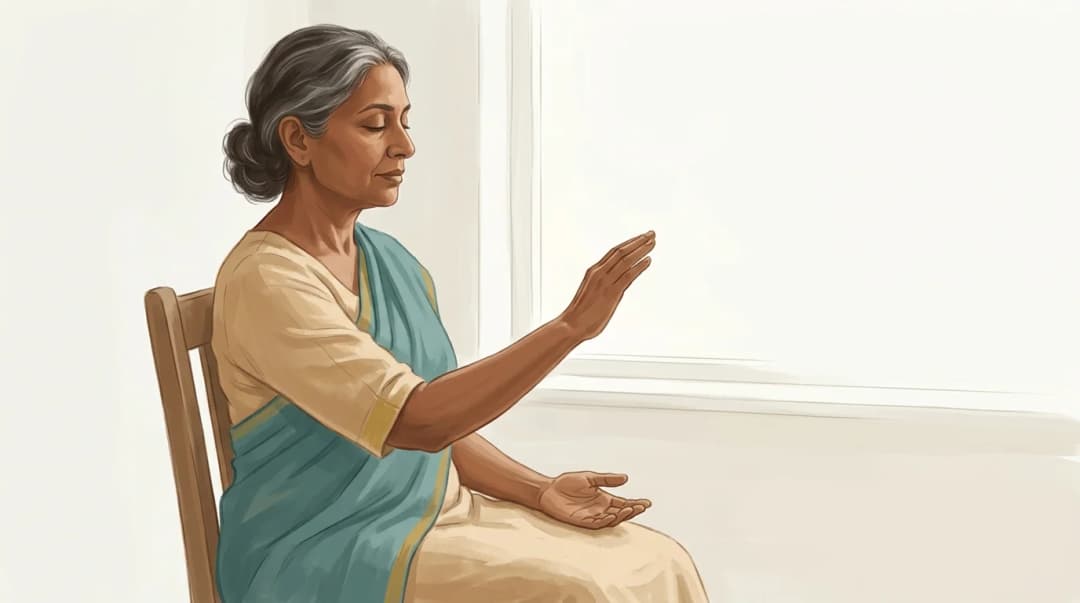
Feldenkrais is movement education, not treatment. In a lesson you make small, slow, comfortable movements, usually lying on the floor, while a voice guides your attention. You learn to sense how you organise yourself: where you brace, where you push harder than needed, and which easier options your nervous system has not tried yet. There is no diagnosis and no manipulation. The evidence here is also emerging and limited in certainty, though people often report moving with more ease and less effort. Stiff joints send a great many people looking at both options. The worldwide osteoarthritis count stood at roughly 528 million as of 2019 (WHO, 2023), so hands on treatment and movement learning both have plenty of room to be useful.
Feldenkrais vs osteopathy: what you keep afterwards
Here is the clearest practical difference. When an osteopathy appointment ends, you leave with a treated body and perhaps some advice, and you return when you need the next session. When a Feldenkrais lesson ends, you leave with the lesson itself. It is a skill, so you can repeat it at home, for free, whenever your body asks for it. Neither is better in the abstract. A session and a skill simply do different jobs, and knowing which job you need makes the choice easier. This is what Feldy is built for: short audio lessons you follow at home, at your own pace.
Using both together
Many people do exactly that. If an osteopath is already looking after you, Feldenkrais sits alongside that care as gentle home practice, never in place of it. A lesson involves no manipulation, so the two do not get in each other's way. The pairing is simple: skilled hands when you need assessment or treatment, and a daily habit of easy movement in between. If you are also weighing other hands on options, see how Feldenkrais compares with a chiropractor and with craniosacral therapy.
Find where to start
If you want a specific complaint examined and treated, an osteopath is set up for that. If you want to build a lasting movement skill at home, start with a few short Feldenkrais lessons and notice what changes.
Want help narrowing the field? Take the 60 second Movement Match quiz: answer three, and one practice is matched to what your body is asking for.
Learn to listen to your body
Now for the practice that trains it. The Feldy program sharpens your attention through slow, attentive Feldenkrais® lessons, so everyday movement feels lighter and more your own. Gentle, guided, and self-paced.
Start my free 7-day trialNo credit card needed.
Common Questions about Feldenkrais vs osteopathy (FAQ)
What is the best option for a stiff lower back, Feldenkrais or osteopathy?
It depends on what you need. If you want someone to assess the problem and treat it with skilled hands, that is what an osteopath offers. If you want to learn, over time, how to move with less stiffness on your own, that is what Feldenkrais teaches. Many people with a stiff back use both.
What should I avoid if I am seeing an osteopath and practising Feldenkrais at home?
Avoid forcing anything. Feldenkrais lessons are meant to stay small, slow, and comfortable, so there is no stretching into pain and no pushing through soreness after a treatment. Tell your osteopath what you practise at home, and if a movement stirs something up, make it smaller or rest that day.
Can I do Feldenkrais and see an osteopath at the same time?
Yes. A Feldenkrais lesson involves no manipulation, only slow guided movement, so it sits alongside the care an osteopath gives you. Many people book treatments when they need them and keep a short home lesson practice going between visits.
How often should I practise Feldenkrais lessons?
Little and often works better than one long session. Many people do a short lesson of 10 to 20 minutes most days of the week. Because the movements stay small and comfortable, daily practice is realistic for most bodies.
How long until people notice a change from Feldenkrais?
Some people feel lighter or looser after a single lesson, though that first feeling can fade. A steadier change in how you move usually builds over a few weeks of regular short lessons. It is learning, so it grows with repetition, like any skill.
When should I see a doctor instead of booking either one?
See a doctor promptly if you have new numbness or weakness, pain after a fall or accident, fever, unexplained weight loss, or any change in bladder or bowel control. Those signs need medical assessment first. For everyday stiffness without warning signs, both options are commonly used.
Learn to listen to your body
See the programRelated resources
Feldenkrais® vs Personal Trainer: Who Actually Wins for You
A trainer builds strength nothing else can. Feldenkrais teaches ease in a body that hurts. Here is who wins for whom, with real prices on the table.
The Best Feldenkrais® Subscription: Why Feldy Wins
For a steady Feldenkrais practice at home, Feldy beats Pliability, Bend, Bold, Yoga with Adriene, and free YouTube. The comparison, option by option.
Your balance got better, but did your sense of where your body is get better too
Ready to start moving better?
Gentle, guided lessons for your body. Try your first one free, no credit card required.