
Feldenkrais® for Chronic Fatigue: A Scope
Lessons that can be made tiny, or simply imagined, so nothing has to be earned back later. What that offers a body with an energy limit, and what it does not.
In short
Feldenkrais for chronic fatigue is not a treatment and not a graded exercise programme. Its usefulness is that a lesson can be made very small, done lying down, or only imagined, so it can sit inside an energy limit rather than testing it. Persistent unexplained fatigue still needs a medical assessment.

See how Feldy helps a sensitive body move with less pain
Gentle guided lessons you can do at home. Start with a free 7-day trial.
Before you begin. This is gentle movement education, not treatment. Fatigue that has lasted weeks or months needs a proper medical assessment first, because thyroid problems, anaemia, sleep apnoea, diabetes, heart conditions, and medication effects all look like exhaustion from the inside. If you have ME or chronic fatigue syndrome, post exertional malaise means symptoms can worsen hours or days after effort, so nothing here should be treated as a programme to build up. Stay well inside what you know you can afford, and speak to your doctor or specialist team before adding anything.
Feldenkrais® for chronic fatigue needs a careful sentence, so here it is: this is not a treatment, and it is not a programme to build up. What it offers is a format with an unusually low floor. A lesson can be done lying in bed, shrunk until it is barely visible, or performed only in imagination, and none of those count as failing at it. For a body that has to budget its energy, a practice that can shrink that far is worth knowing about. Chronic fatigue syndrome is estimated to affect around 2 million people in the United States (StatPearls, 2025), and a great many more people live with long running tiredness that has never been given a name.
Two different things wear the same label
The phrase covers two situations that need opposite handling. One is persistent tiredness from a cause that has not been found yet: thyroid trouble, low iron, disturbed sleep, depression, a medication, or a long recovery from illness. That deserves investigation, and often the fatigue lifts when the cause is treated.
The other is ME or chronic fatigue syndrome, where the defining feature is post exertional malaise. Effort today produces a worsening of symptoms tomorrow or the day after, out of proportion to what was done. If that describes you, the governing question for any activity is not whether it is gentle. It is what it costs two days later.
Why a lesson fits inside pacing
Pacing means staying inside an energy limit rather than testing it, and most movement practices are awkward to fit into that, because they assume you will do a bit more each week. A Feldenkrais lesson has no progression built in. There is no range to reach, no repetition count, and no next level. The instruction that matters most is to do less than you can.
The Feldenkrais Method® also treats imagining a movement as a legitimate version of doing it. That sounds like a consolation prize, and in this context it is not. It gives you a way to practise on a day when almost nothing is affordable, without the practice costing you tomorrow.
None of this makes it a treatment. There is no good evidence that these lessons improve fatigue itself, and any page claiming they restore energy has gone past what is known.
How the options compare
| Approach | The demand it makes | Best suited to |
|---|---|---|
| Feldy (audio Feldenkrais lessons) | Very low. Mostly horizontal, shrinkable to almost nothing, and no schedule of increases anywhere in it | People who want something to do inside a strict energy limit, on days when a class or a routine is out of reach |
| Pacing and activity management | Tracking your limit and staying inside it, usually with a clinician or occupational therapist | Everyone with an energy limiting illness. This is the frame the rest sits inside |
| Medical assessment and treatment of the cause | Blood tests, sleep investigation, medication review, treating what is found | Anyone whose fatigue is new, unexplained, or worsening. This comes first, and nothing replaces it |
| Graded exercise therapy | A fixed schedule of increasing duration and intensity, regardless of the week | Historically offered for ME and chronic fatigue syndrome; guidance has since moved away from recommending it |
| Restorative or yin yoga | Supported positions held for several minutes, often with props | People who find stillness restful rather than uncomfortable, and who can get to and from the floor |
| Tai chi or qigong | A slow continuous form, generally practised standing | People who can stand for the length of a session and enjoy learning a sequence |
Why the low floor matters
The dose is yours to set. Nothing in a lesson tells you how much to do, so the size of it can match the day rather than the plan.
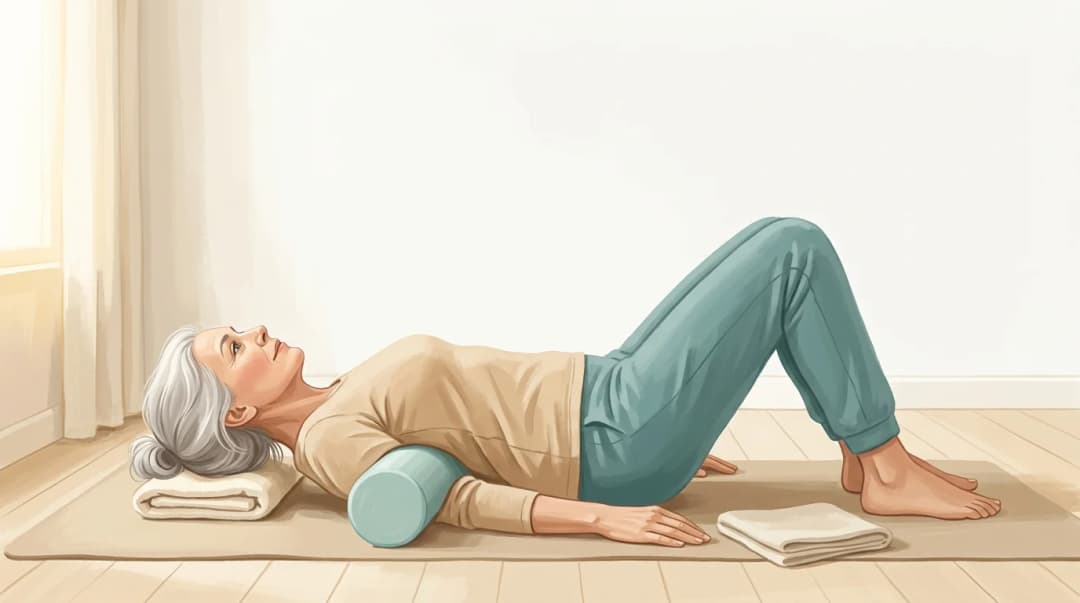
Lying down is the normal position. Most lessons were designed to happen on the floor or a bed, so horizontal is not a modification here.
Imagining counts. On a bad day, running the movement in your mind is a real version of the practice rather than a substitute for it.
Nothing accumulates. Miss a fortnight and there is no lost progress to make up, which removes one of the main sources of pressure.
At Feldy the lessons arrive as short recordings, and the free 7 day trial exists precisely so you can measure what one costs you before any money changes hands.
Who should choose something else
If your fatigue has not been investigated, the doctor comes before any of this. If you are working with a specialist team on pacing, their plan governs, and a lesson only enters it with their agreement. If stillness suits you better than movement, restorative yoga asks even less. If you can stand comfortably for half an hour and you like learning a form, tai chi gives you a structure and other people. Lessons are for the days when getting to a class is not going to happen and lying still feels like too little.
For the wider picture of tiredness that movement can reach, our Feldypedia article on fatigue that movement can address covers the ground. If widespread pain travels alongside the exhaustion, Feldenkrais for fibromyalgia takes the same scoped look, and treating fatigue in fibromyalgia is the practical companion. If pain is the larger part of your picture, our comparison of the best movement app for chronic pain looks at how several apps suit a body that tires and flares easily. The Feldy program for a sensitive body arranges lessons of this kind without any schedule of increases.
Find where to start
The right starting point depends on how your body answers effort, and that answer is personal enough that no article can guess it. A few questions get closer than a week of trial and error.
Not sure which movement method fits you? Take the 60 second Movement Match quiz. Three questions, and it points to one method you can try at whatever size today allows.
Small, safe movement for a sensitive body
Now for movement that respects a sensitive body. The Feldy program stays well below pain, giving the nervous system room to soften through gentle Feldenkrais® lessons. Gentle, guided, and self-paced.
Start my free 7-day trialNo credit card needed.
Common Questions about Feldenkrais and chronic fatigue (FAQ)
Is Feldenkrais safe if I have chronic fatigue?
The format is unusually forgiving, since a lesson can be done lying down, shrunk to almost nothing, or replaced by imagining the movement, and none of that is cheating. The real risk with any energy limiting illness is post exertional malaise, where the cost arrives a day or two later rather than at the time. Treat your first attempt as a test with a deliberately small dose and see what the next two days bring. If you have a specialist team, ask them first.
Is this the same as graded exercise therapy?
No, and the difference matters. Graded exercise therapy sets a fixed schedule of increases regardless of how you feel that week, and guidance for ME and chronic fatigue syndrome has moved away from recommending that approach. A lesson has no schedule, no progression, and no target range, so the size of it is decided by your day rather than by a plan.
How often should I practise?
Less often than you think, especially at first. One short lesson, then a two day gap to see what it cost, tells you more than a week of daily practice. If nothing worsens, some people settle into a few short sessions a week, and some do a few minutes most days. Building up on a schedule is exactly what to avoid.
How long until I notice anything?
Within a single lesson many people notice that a movement takes less effort than it did at the start, and that particular impression is usually short lived. Anything more durable, such as feeling a little less braced in ordinary positions, takes weeks and is not guaranteed. Nobody should promise you an energy gain, because the evidence for that does not exist.
What is the best gentle movement for chronic fatigue?
The one with the lowest cost, which usually means lying down, moving very little, and stopping before you want to. Slow rolling of the head, tiny movements of the pelvis, and simply following the breath are the usual candidates. Imagining a movement instead of doing it is a real option here and it asks almost nothing of the body.
What should I avoid?
Avoid any plan that increases duration or intensity on a fixed schedule. Avoid using a good day to catch up, since that is the classic route into a crash. Avoid finishing a lesson at the point where you feel you have had enough, because that point tends to be past the useful one. And avoid treating fatigue as a motivation problem, which it is not.
How is this different from restorative yoga or tai chi?
Restorative yoga holds supported positions and lets stillness do the work, and tai chi practises a continuous form, usually standing. A Feldenkrais lesson keeps changing the movement and asks you to notice how it is organised, which is a different mechanism from either. Standing for a class is the practical difference that rules tai chi out for some people.
When should I see a doctor?
Before you start, if the fatigue is new, unexplained, or has lasted more than a few weeks, since a long list of treatable conditions presents this way. Go promptly for fatigue with breathlessness, chest pain, fever, unexplained weight loss, swollen glands, or new weakness. Movement education is not an assessment and it cannot rule anything out.
Small, safe movement for a sensitive body
See the programRelated resources
Difference Between Fibromyalgia and Chronic Fatigue
The difference between fibromyalgia and chronic fatigue, where they overlap, and a gentle, paced movement note for whichever picture fits you. Not a diagnosis.
The Best App for Fibromyalgia: Feldy, and Who Else You Need
Bearable tracks, Visible paces, Calm settles, Curable explains. Feldy covers the movement side of fibromyalgia, the side the other apps leave empty.
Massage or a foam roller for fibromyalgia? A six week trial saw pain ease with both
Ready to start moving better?
Gentle, guided lessons for your body. Try your first one free, no credit card required.