
Feldenkrais® for Over 70: Balance and Confidence, Gently
Chair and floor lessons for the movements that matter most after 70: rising, stairs, turning to look behind, and getting up from the floor.
In short
Feldenkrais for over 70 suits people who want steadier balance and more confidence in daily movements, like rising from a chair or turning on the stairs. Lessons are very gentle, can be done in a chair or on the floor, and go only where movement feels easy.

See how Feldy helps you move more easily after 60
Gentle guided lessons you can do at home. Start with a free 7-day trial.
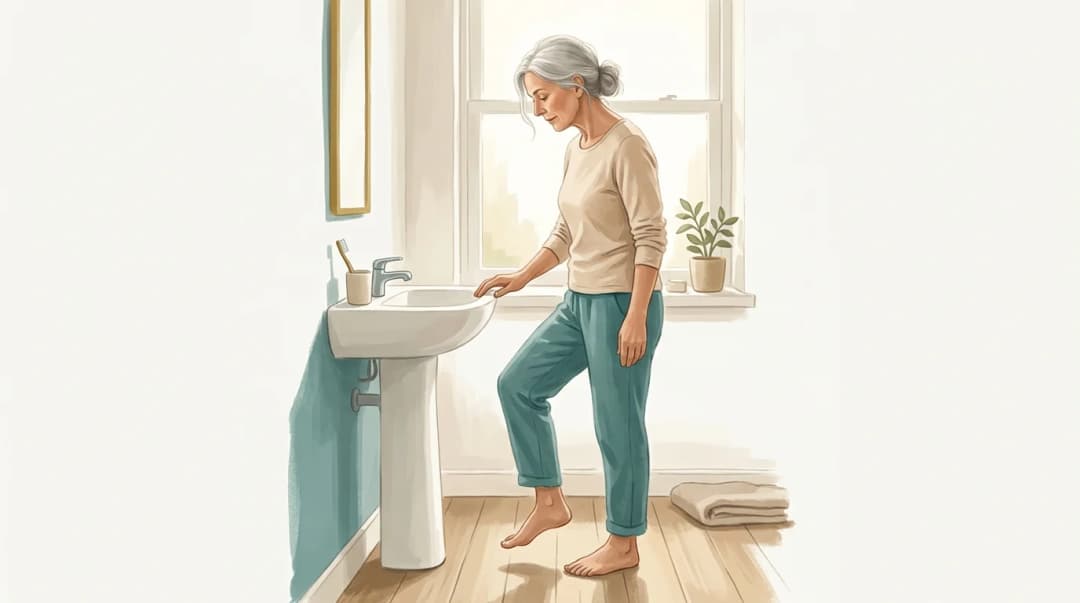
Before you begin. Balance deserves respect. Practise near a wall, a sturdy chair, or a countertop, and keep support within arm's reach for anything done standing. Only get down to the floor if you can get back up comfortably; a firm bed or a chair works almost as well. If you have fallen recently, feel dizzy, or feel faint when you stand, see a doctor or physiotherapist before adding anything new.
Feldenkrais® for over 70 suits people who want to feel steadier in the movements an ordinary day is made of: rising from a chair, going up and down stairs, turning to see who called your name, and getting down to the floor and up again. The lessons are very gentle. Many happen in a chair, others lying down, and each one invites you to go only where movement feels easy. This page looks candidly at what that offers at this stage of life. It covers how the lessons work alongside physiotherapy when a clinician is involved. And it gives Tai Chi and chair yoga their fair place as different approaches.
What a lesson actually asks of you
The Feldenkrais Method® is movement education rather than exercise. In an Awareness Through Movement® lesson, a voice guides you through a sequence of small, slow movements. Sitting in a chair, you might shift your weight from one sitting bone to the other and notice when your ribs and head want to join in. Lying down, you might explore how your eyes lead a turn of the head. Nothing is stretched, held, or counted.
If a movement takes effort, the instruction is always the same: make it smaller. Past 70, that instruction matters more, not less. A body that has learned to be careful responds better to movement that never startles it. Comfort is the method, not a compromise.
Getting off the floor is itself a skill worth keeping, and there is a patient walkthrough of it in how to get up from the floor. Until that feels reliable, a firm bed or a chair carries almost the whole lesson.
Where Feldenkrais for over 70 genuinely fits
The evidence deserves plain words. A systematic review that gathered 20 randomised controlled trials found promising evidence for the Feldenkrais Method improving functions such as balance (Hillier & Worley, 2015). The reviewers also noted the quality of those trials was mixed. So the fair reading is encouragement, not proof, and no candid page will promise you fewer falls.
What the lessons can work on is real, though. Much of steadiness is organisation: where your weight travels as you stand up, what your head does when you turn to look behind, how a foot meets the next stair. Lessons rehearse that organisation slowly, in positions where nothing is at risk, so the smoother version is there when you need it at full speed. Feldy delivers these lessons as short audio sessions you can do at home, at whatever hour suits you. With a free Feldy trial you can notice, one lesson at a time, whether rising from your chair or turning toward a voice behind you begins to feel a little smoother.
How it sits alongside physiotherapy and other gentle methods
Clinical care comes first when there is something to assess. After a fall, with dizziness, or with faintness on standing, a doctor or physiotherapist should look for the cause, and a physiotherapist may prescribe strength or balance work matched to what they find. Feldenkrais lessons work alongside that care, never in place of it. Tell your physiotherapist what you are practising, and let their plan lead.
Self practised movement methods are a separate conversation. Each works through its own mechanism, and there is no ranking to make between them.
| Method | What it works through |
|---|---|
| Feldenkrais lessons | Slow movement with attention, in a chair or lying down, always inside easy range |
| Tai Chi | A continuous standing form, widely studied for balance in older adults |
| Chair yoga | Seated poses, breath, and gentle strengthening, often with the pleasure of a class |
| Daily walking | Ordinary, rhythmic practice for the legs and the heart |
Who should pick what
Choose Tai Chi if you want a standing practice with a group and a teacher watching. Choose chair yoga if seated poses and breath work appeal, and company matters to you. Choose a physiotherapy programme whenever a clinician has assessed you and prescribed one; the lessons then fit around it. And choose Feldenkrais if you want something for home, at your own pace, that meets you in a chair on a low day and on the floor on a good one.
Find where to start
Something small today beats something ambitious next week. The seated sequence in seated balance exercises is a comfortable first taste, since it explores weight shift and turning without leaving the chair.
Not sure which movement method suits you at this stage? Take the 60 second Movement Match quiz, three quick questions that point you toward one movement method worth trying first.
Move easier again, whatever the calendar says
Now for the part that changes it. The Feldy program helps a body that has carried itself for decades find lighter, freer movement, through gentle Feldenkrais® lessons at home. Gentle, guided, and self-paced.
Start my free 7-day trialNo credit card needed.
Common Questions about Feldenkrais for over 70 (FAQ)
Is Feldenkrais safe for people over 70?
Generally yes, because lessons stay inside a range that feels easy, and most happen sitting or lying down. Keep support within reach for anything standing. If you have fallen recently, feel dizzy, or have osteoporosis, check with your doctor or physiotherapist first.
Can I do the lessons entirely in a chair?
Yes. Many lessons are designed for sitting, and floor lessons adapt well to a firm bed. You lose very little. The chair versions still work on turning, shifting weight, and the small skills that feed steadiness.
How often should I practise after 70?
Ten to twenty minutes on most days works better than one long weekly session. The lessons teach a way of paying attention, and that builds through gentle repetition. A missed day costs nothing, so simply begin again the next morning.
How long until everyday movements feel steadier?
A single lesson often leaves one movement feeling smoother, though that early change tends to fade. Easier chair rises and calmer stairs usually show over several weeks of short, regular practice. The changes arrive quietly rather than all at once.
How is Feldenkrais different from Tai Chi for balance?
Tai Chi practises balance directly through a continuous standing form, and it has been studied widely in older adults. A Feldenkrais lesson mostly removes the standing challenge and works on how a movement is organised. Different mechanisms, and neither replaces the other.
What is the best gentle movement practice for balance over 70?
The one you will actually do several times a week. If you want a standing practice in a group, Tai Chi is a strong candidate. If you want to work at home, at your own pace, in a chair or on the floor, Feldenkrais lessons fit that shape well.
What should I avoid when working on balance over 70?
Avoid practising far from support, standing on one leg with nothing to hold, and any movement that brings on dizziness. Avoid going down to the floor if getting up again is uncertain. And avoid pushing into effort, since strain teaches bracing rather than steadiness.
When should I see a professional about my balance?
After any fall, even one that seemed minor, and for dizziness, faintness on standing, sudden unsteadiness, or a change in how you walk. A doctor or physiotherapist can find the cause. Gentle lessons then sit alongside that care, never in place of it.
Move easier again, whatever the calendar says
See the programRelated resources
Balance Exercises for Older Adults: Steady and Supported
Gentle balance exercises for older adults: slow weight shifts at a counter, attention to the feet, and small movements that build quiet steadiness.
Feldenkrais® for Balance: What It Trains, and What It Does Not
Balance has at least five moving parts. Lessons work on one of them, coordination, and leave the others to strength work, vestibular therapy, and the eyes.
Why balance practice may work better at first when it is the only thing you are doing
Ready to start moving better?
Gentle, guided lessons for your body. Try your first one free, no credit card required.