

Anterior Pelvic Tilt Exercises: A Gentle Set
Gentle anterior pelvic tilt exercises that ease related tension and help you sense a more neutral pelvis. Slow, small movements you can do at home today.
Before you begin. This is general movement education, not medical advice or a treatment for a diagnosed condition. Anterior pelvic tilt is a normal postural variation, not a disease. If you have ongoing or severe back pain, nerve symptoms such as numbness or tingling, or a diagnosed spine or hip condition, check with a doctor or physical therapist before starting and stop any movement that causes pain.
The lesson
About 8-12 minutes. Move slowly, do less than you can, and stay well below any pain. Rest whenever you need to.
Prefer to listen than read?
Feldy voices gentle lessons like this for body awareness, so you can close your eyes and follow along.
- 1
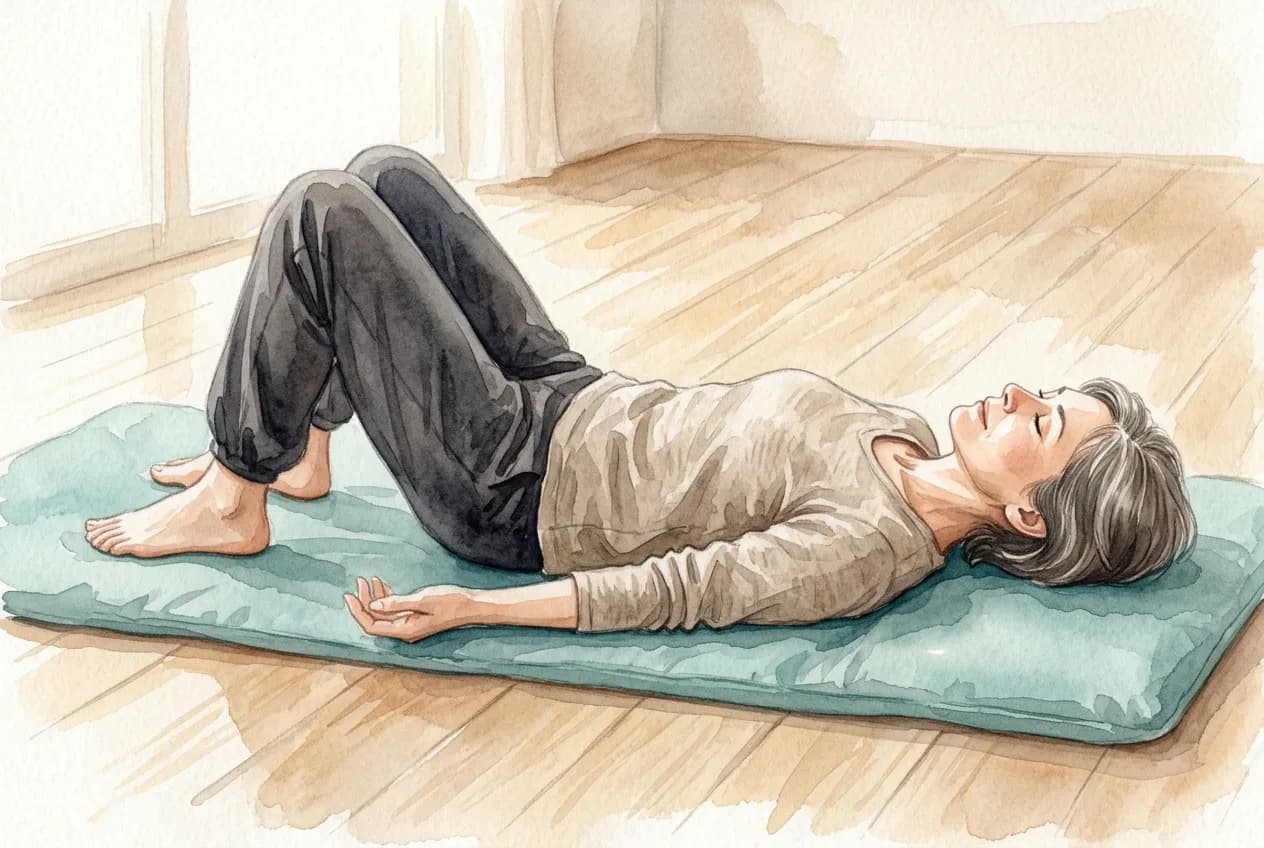
Lying down comfortably. Lie on your back with your knees bent and your feet standing about hip-width apart. Take whatever time you need to feel settled.
- 2
The space under your waist. Notice how your lower back meets the floor. Is there a small space under your waist, and how big does it seem today?
- 3
Small pelvic rocks. Slowly roll your pelvis so your waist eases a little toward the floor, then let it roll back the other way. Keep it tiny, and rest after a few rounds.
- 4
Breath joining the movement. If it feels natural, let the rocking follow your breath, one direction as you exhale, the other as you breathe in. If pairing them feels like work, drop it and just move slowly. Then pause and rest.
- 5
An easy middle. Roll gently between the two directions and notice where the movement feels lightest. There is no exact spot to find, only a middle to visit. Rest there for a moment.
- 6
Noticing what changed. Let your back lie however it likes now, and sense the contact with the floor again. What, if anything, feels different from when you started?
Let Feldy guide you, eyes closed
You just read these steps. In the Feldy program, a calm voice guides you through each gentle move, so your attention can stay in your body instead of on the screen.
Try Feldy Free for 7 daysNo credit card needed.
These anterior pelvic tilt exercises offer a gentle set of movements you can do at home to ease related tension and help you sense a more neutral, comfortable pelvis. Anterior pelvic tilt simply means the top of the pelvis tips a little forward, deepening the curve in the lower back. It is a normal variation in how a body is organized, not a flaw to be fixed, so this set is not about forcing your pelvis into a rigid position. Instead, it borrows from the Feldenkrais Method®, which uses slow, attentive movement to help the body discover easier options on its own.
The pattern is far more common than most people realize. In one study of a healthy, pain free population, about 85% of men and 75% of women showed some degree of anterior pelvic tilt, with most of the rest sitting near neutral (Herrington, 2011). In other words, a forward tilted pelvis is closer to the norm than to a problem, which is a reassuring place to begin.
How these anterior pelvic tilt exercises help
The pelvis is not a fixed block. It rocks subtly with every breath and step, and it can rest in a range of positions rather than one ideal one. When habit, long sitting, or held tension keeps it tipped forward, the lower back often feels tight by the end of the day. Moving slowly enough to actually feel the pelvis rock gives your nervous system clear information, so a tired holding pattern can soften and you gain a real sense of where a neutral middle lives.
That is why this set asks you to sense first and move gently second. There is no pulling your hips into place or bracing your spine. By exploring the movement with curiosity, you teach your body that it has choices, and choice, not force, is what lets a comfortable position become available.
Using these anterior pelvic tilt exercises through the day
Think of the set as a handful of gentle invitations, not a routine to grind out. One pass each day sets an easy tone, and a single minute of soft pelvic rocking is worth returning to whenever you have been parked in a chair for a while. Keep it all slow and light, staying clear of any pinch or pull, and feel free to leave out a step that does not sit well on a particular day.
Feldy was built on this very approach, offering guided lessons that invite the whole body, pelvis included, toward more comfortable support. For a fuller path, explore the body awareness program. And if you would like to widen the lens past the pelvis, the companion set of posture exercises makes a natural next step.
Before you begin
Give yourself a quiet few minutes and a patch of floor. Skim the steps first, then explore each one at an unhurried pace, sensing the movement instead of trying to do it well. Back off the moment anything feels like strain, let your breath stay free, and pause to rest as often as you wish. Keep in mind that you are after a clearer, kinder sense of your pelvis and a little less tension, never a permanent realignment. Drop back into the set anytime you think to.
Common Questions about anterior pelvic tilt exercises (FAQ)
What are the best anterior pelvic tilt exercises?
Gentle pelvic rocking, an easy search for a neutral middle, and slow leg lengthening done lying down are kind places to start. They help you feel the pelvis move and ease related tension rather than forcing it into a fixed position. The aim is awareness and comfort, not a hard corrective workout.
How often should I do anterior pelvic tilt exercises?
A short session once a day, or a few minutes after long sitting, suits most people. Brief, gentle repetition tends to teach the body its easier choices better than a single long, effortful stretch. Consistency matters more than intensity.
Can these exercises correct or cure anterior pelvic tilt?
Anterior pelvic tilt is a normal variation in how a pelvis sits, not a disease to be cured. Gentle movement can ease related tension and help you sense and choose a more neutral pelvis, but it does not permanently realign your skeleton. Think of it as more comfort and more options, not a fix.
Is anterior pelvic tilt bad for you?
Not in itself. Most healthy, pain free people have some degree of anterior tilt, so it is best seen as a common pattern rather than a flaw. It is only worth attention if it comes with discomfort, and even then the goal is ease and choice rather than judgment.
Are these exercises safe if I have back pain?
Because the movements stay small, slow, and far short of any strain, they suit most people. If you are dealing with an injury, ongoing or severe pain, numbness, tingling, or a diagnosed spine condition, please clear it with a doctor or physical therapist first and stop anything that hurts.
How long until I notice a difference?
Quite a few people notice a touch more ease and a sharper sense of their pelvis after just a session or two. A steadier, more comfortable feel for neutral tends to build across a few weeks of soft, regular practice as the movement grows familiar.
When is anterior pelvic tilt worth a professional check?
See a doctor or physical therapist if the tilt comes with back or hip pain that keeps returning, with numbness or tingling in a leg, or if it appeared suddenly after an injury. A diagnosed spine or hip condition, or pain that wakes you at night, is also a good reason to have someone look before you practise. For a pain free pelvis that simply tips forward, gentle movement at home is usually all it needs.
Learn to listen to your body
See the programRelated resources
How to Fix an Anterior Pelvic Tilt, Gently
How to fix an anterior pelvic tilt without gripping or forcing, using slow daily awareness so the pelvis settles into an easier balance on its own. A gentle, practical guide.
Is Anterior Pelvic Tilt Bad? A Calmer Answer
Is anterior pelvic tilt bad? For most people it is a common posture variation, not a defect. Here is when it matters, when it does not, and a gentler way to relate to it.
Your balance got better, but did your sense of where your body is get better too
Ready to start moving better?
Gentle, guided lessons for your body. Try your first one free, no credit card required.