

Overpronation Foot Exercises: Gentle Ways to Steady the Roll
Overpronation foot exercises that use slow, curious foot and lower-leg awareness to help you sense the inward roll and steady it, without forcing or clenching.
Before you begin. This is gentle self-care, not medical advice. If you have foot, ankle, or knee pain that is sharp or persistent, numbness, or diabetes, please see a doctor, podiatrist, or physical therapist before starting.
The lesson
About 5-10 minutes. Move slowly, do less than you can, and stay well below any pain. Rest whenever you need to.
Prefer to listen than read?
Feldy voices gentle lessons like this for body awareness, so you can close your eyes and follow along.
- 1
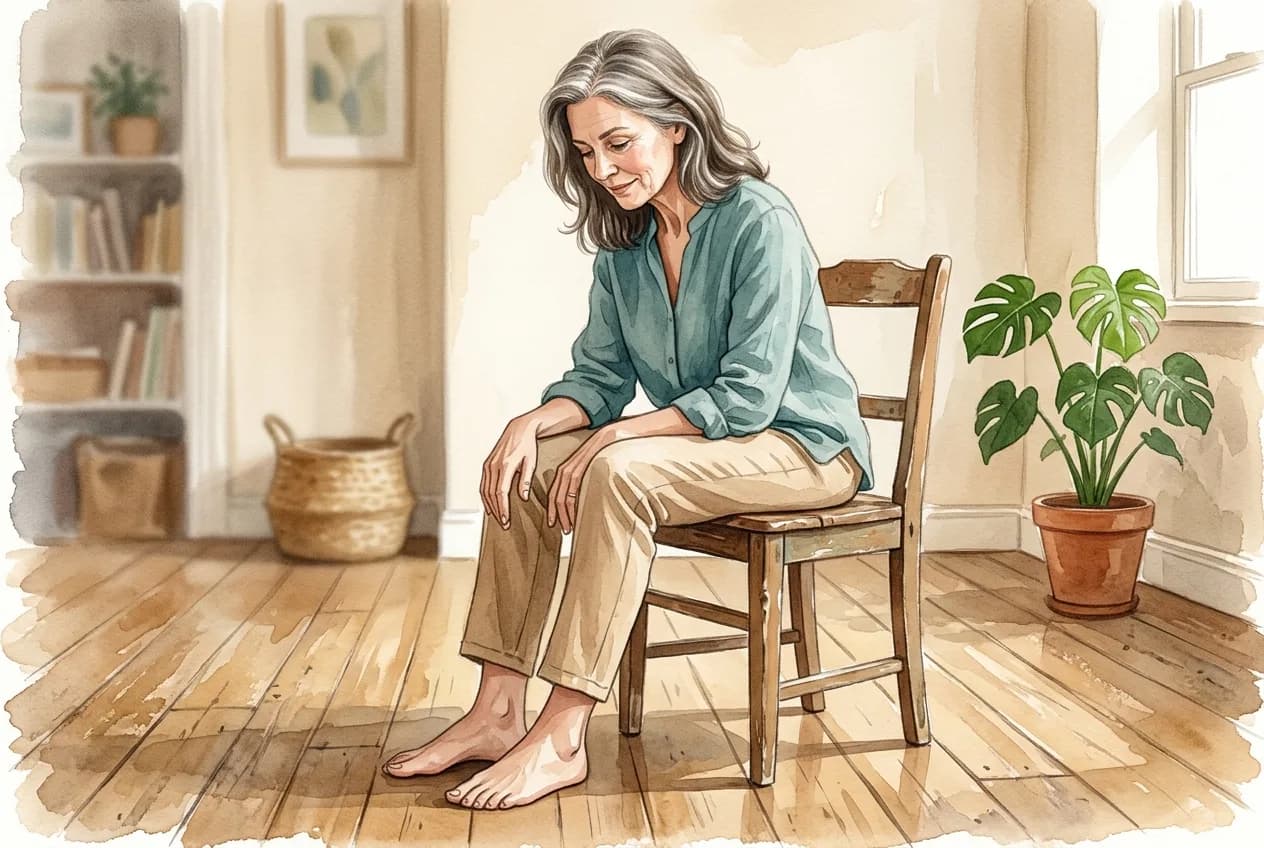
Feet on the floor. Sit toward the front of a chair with bare feet resting flat. Take a moment to let the chair carry your weight.
- 2
Inner edge, outer edge. Notice where the weight rests in each foot. Does it lean toward the inner edge near the arch, or the outer edge near the little toe?
- 3
A slow sideways roll. Let the weight of both feet roll gently toward the outer edges, then back toward the middle. Keep it small and unhurried, and rest after a few rounds.
- 4
A moment of stillness. Let the feet rest flat and notice whether anything is gripping in the toes, arches, or calves. Soft is welcome here.
- 5
A few sensing steps. If it suits you, stand near a wall and take a few slow steps, feeling how each foot rolls as it meets the floor. You are only feeling the path, not steering it. Then sit again and rest.
- 6
A closing comparison. Rest both feet on the floor and notice how they meet the ground now. What, if anything, feels different from when you started?
Let Feldy guide you, eyes closed
You just read these steps. In the Feldy program, a calm voice guides you through each gentle move, so your attention can stay in your body instead of on the screen.
Try Feldy Free for 7 daysNo credit card needed.
If your foot tends to roll inward and the arch flattens as you step, these overpronation foot exercises offer a slow, curious way to sense that inward roll and steady it. Overpronation is simply that excessive inward roll, where weight spills toward the inner edge of the foot and the arch drops more than it needs to. Rather than bracing against it, the gentle approach here invites your feet and lower legs to feel what they are doing, so you can guide the movement with more control. The Feldenkrais Method® and related somatic practices fit this work beautifully, because they build steadiness through slow, attentive exploration rather than force.
Foot strain belongs to a much wider picture of joint and muscle trouble. By one global tally, musculoskeletal conditions affect about 1.71 billion people worldwide (WHO, 2022). The feet carry the whole story of how we stand and walk, so giving them a little gentle attention is a kind place to begin.
What overpronation is and how gentle awareness helps
When you walk, your foot is meant to roll slightly inward as it meets the ground, which helps it absorb the shock of each step. Overpronation is when that inward roll becomes excessive, the arch flattens too far, and the weight tips toward the inner edge. Over time, the ankle and lower leg can end up working harder to keep you steady.
Gentle awareness does not try to wrench the foot into a different shape. Instead, it helps you sense exactly where your weight falls and how the foot rolls, so your nervous system can organize the movement more evenly. When you can feel the inner edge and the outer edge of your foot, and notice the path the roll takes, you gain a quiet kind of control. That control often leaves the foot feeling steadier and the step feeling more even, without any forcing.
Overpronation foot exercises that build steadier sensing
The lesson above keeps things small and slow on purpose. You sense where the weight rests in each foot, let it roll gently toward the outer edges, pause to notice any gripping, and then feel the roll as you take a few unhurried steps. None of it is about clenching the arch up or holding a posture. A steadier foot is a freer, more sensing foot, not a gripped one.
Stay curious rather than effortful. Notice how one foot organizes itself compared to the other, where the weight settles across the sole, and whether your toes can stay long and soft. That kind of attention is what helps the foot find a more even way to meet the ground. If you would like to be guided while you practise, our 7 day free trial gives you a lesson a day to work with.
Being realistic about what these overpronation foot exercises can do
It would be lovely to promise that gentle movement will permanently reshape your arch, but that would not be true. These overpronation foot exercises improve how well you sense and steady the inward roll; they are not a guaranteed mechanical correction. For many people, better awareness and control of the foot is meaningful in itself, and it can sit comfortably alongside supportive footwear or orthotics a clinician has suggested.
Your lower legs are part of this picture too, since the calves and shins help guide how the foot lands. If yours feel tight, our explainer on why your calves are always tight may help, and our proprioception exercises for the ankle build the same kind of sensing higher up the leg. The Feldy program for body awareness carries this slow, attentive approach much further.
When to get a professional opinion first
Easy movement is kind to most feet, yet a few situations call for a clinician before you start. If you have foot, ankle, or knee pain that is sharp or persistent, any numbness, or diabetes, please see a doctor, podiatrist, or physical therapist before you begin. The same is true if anything about your feet worries you. A professional can rule out causes that need proper care and advise whether orthotics or other support suit you, so that gentle movement can sit safely alongside them. If walking itself has begun to feel different, our Feldypedia guide to gait changes and walking difficulty explains what may be at play and how gentle attention can help.
Common Questions about overpronation foot exercises (FAQ)
What is overpronation?
Overpronation is when the foot rolls inward and the arch flattens more than usual as you step. A small amount of inward roll is normal and helps your foot absorb impact, but when it is excessive the ankle, arch, and lower leg can be left working harder. Gentle awareness helps you sense this roll so you can steady it rather than ignore it.
Can these overpronation foot exercises fix overpronation?
They can improve how well you sense and steady the inward roll, which often helps your foot feel more even and your steps more controlled. They are not a guaranteed mechanical correction; they do not promise to reshape your arch. What they offer is better awareness and control, which for many people is meaningful on its own.
How often should I do them?
Small and frequent beats long and occasional. A few easy minutes on most days builds steadier sensing far better than one ambitious session once in a while. Some people like a brief round soon after waking and another before bed. Let comfort guide you rather than a target, and ease off the moment anything feels strained.
How is this different from motion-control shoes or orthotics?
Motion-control shoes and orthotics support the foot from the outside, often by limiting the inward roll mechanically. These movements work from the inside, training your own sensing and control so the foot organizes itself more evenly. The two can sit alongside each other; gentle awareness does not replace footwear or orthotics your clinician has recommended.
When should I see a professional?
See a doctor, podiatrist, or physical therapist if you have foot, ankle, or knee pain that is sharp or persistent, any numbness, or diabetes, and before starting if anything worries you. A professional can rule out causes that need proper care and advise whether orthotics or other support suit you, so gentle movement can sit safely alongside them.
Is overpronation always a problem?
Not always. Some inward roll is part of healthy walking and helps cushion each step. Overpronation only tends to matter when it is excessive or paired with discomfort in the foot, ankle, knee, or hip. If you have no pain and move comfortably, gentle awareness can simply keep your feet feeling alert and even.
Learn to listen to your body
See the programRelated resources
Short Foot Exercises: A Gentle Way to Sense Your Arch
A slow, seated lesson in the small doming movement behind short foot exercises, done with attention rather than effort, and comfortably below any strain.
Foot Exercises for Arches: A Gentle Lesson in Sensing
A short lying down lesson that treats the arch as a living, moving part of your foot, sensed through the whole leg, not a shape to hoist up and hold.
Your balance got better, but did your sense of where your body is get better too
Ready to start moving better?
Gentle, guided lessons for your body. Try your first one free, no credit card required.