

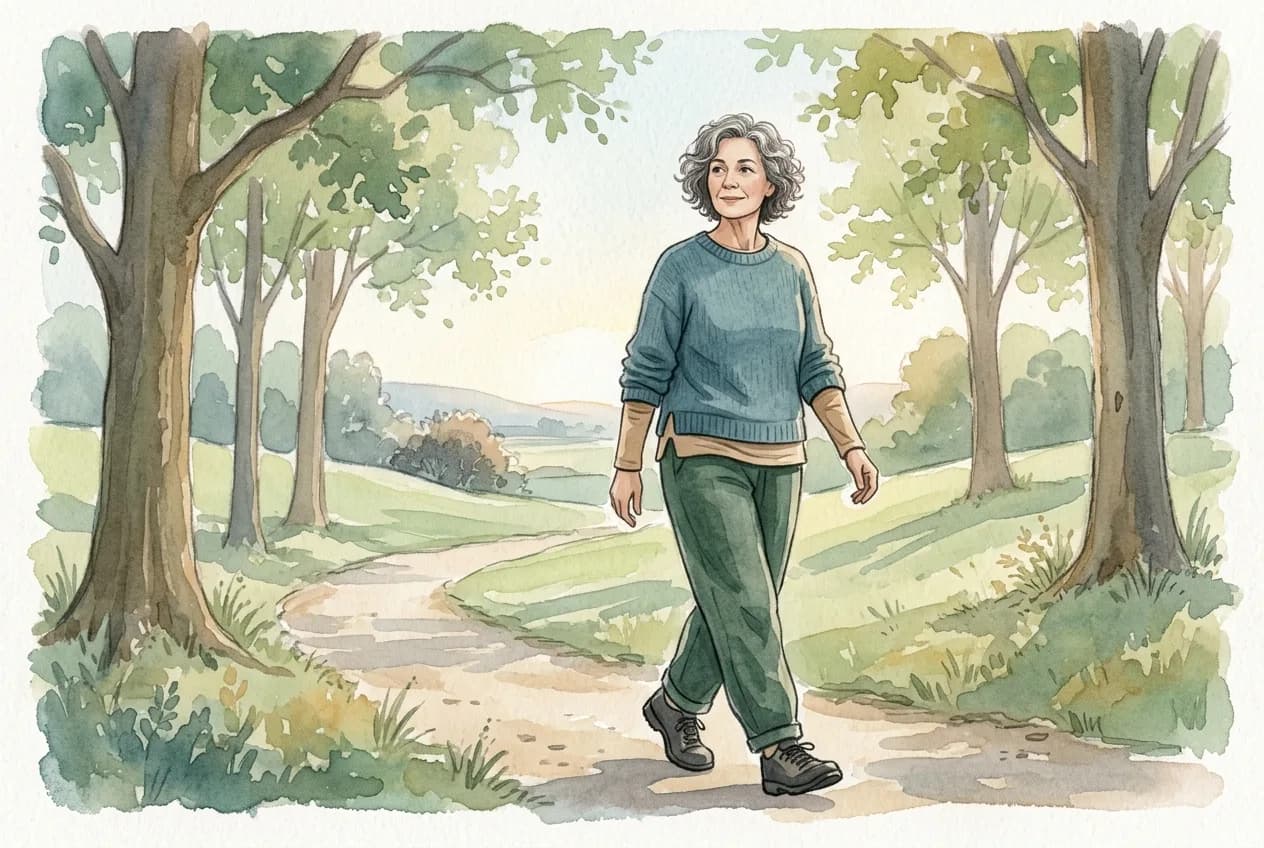
Aerobic Exercises for Fibromyalgia: Gentle, Paced Cardio
Aerobic exercises for fibromyalgia work best when they stay gentle, low-impact, and rhythmic. Learn how to start tiny and pace easy cardio, with a short lesson.
Before you begin. Gentle self-care, not a diagnosis or treatment. Aerobic movement can flare fibromyalgia if paced too hard, so start very small and stop if symptoms worsen. This is supportive self-care, not a cure. Check with your doctor or physical therapist before starting, especially with another condition, an injury, or recent surgery.
The lesson
About 5-10 minutes. Move slowly, do less than you can, and stay well below any pain. Rest whenever you need to.
Prefer to listen than read?
Feldy voices gentle lessons like this for fibromyalgia, so you can close your eyes and follow along.
- 1
Arriving in your rhythm. Sit comfortably or lie down, whichever is kinder today. Notice the rise and fall of your breathing, the rhythm your body already keeps.
- 2
Slow ankle pedals. Let one foot tip gently toward you and away, like a lazy pedal, then let the other foot join at its own pace. Keep it so light it barely counts as movement.
- 3
A pause between. Let the feet rest and take a few easy breaths. How does your body feel about what it just did?
- 4
Small arm sways. Let your arms sway a little, as if strolling while seated, soft and slow. If even this asks too much today, imagine the sway instead, then rest.
- 5
Drifting to a stop. Let the rhythm grow smaller and slower until you are still, the way a walk eases to a halt. Rest for several breaths.
- 6
Letting the day decide. Sense your whole body quietly. What, if anything, feels different from when you began, and what is it telling you about how much was enough?
Let Feldy guide you, eyes closed
You just read these steps. In the Feldy program, a calm voice guides you through each gentle move, so your attention can stay in your body instead of on the screen.
Try Feldy Free for 7 daysNo credit card needed.
When people look for aerobic exercises for fibromyalgia, they often picture brisk cardio that leaves them breathless, and then worry, rightly, that it will set off a flare. The kinder reality is that aerobic movement for a sensitive system is not about intensity at all. It is gentle, low-impact, and rhythmic: easy walking, slow cycling, warm-water movement, and soft repeating motions you can do seated. What makes it work is staying easy enough to breathe and chat, starting tiny, and pacing by how you feel the next day. The Feldenkrais Method® brings that same slow, attentive quality to movement, so even rhythmic activity stays well within comfort.
Fibromyalgia is far more common in clinical settings than many realize. Among people referred to specialist pain clinics, over 40 percent meet the criteria for fibromyalgia (StatPearls, 2023). A great many of them have been told to do cardio and have flared trying. Easy, paced rhythmic movement is the gentler way in.
Why gentle, low-impact cardio suits a sensitive system
Aerobic simply means rhythmic movement that gently lifts your circulation and breathing. It does not have to be hard. For a fibromyalgia body, the high-impact, breathless version tends to backfire, because a sensitive system can answer too much effort with a delayed wave of pain and fatigue a day or two later. That lagging response, called post-exertional malaise, is the reason how you feel mid-movement tells you so little about the right amount.
So the active ingredient here is not intensity but rhythm and ease. Slow walking, a soft seated march, an unhurried arm swing, or easy movement in warm water all give the body steady, comfortable input without jarring it. Kept gentle, this kind of movement supports circulation, mood, and steadier energy for many people, while staying far away from the edge that provokes a crash.
How to pace aerobic exercises for fibromyalgia
Pacing is the whole skill. Keep the intensity easy enough that you could hold a conversation, and keep the duration tiny to begin with, even one or two minutes. Short and frequent beats long and occasional, so spreading a little easy movement across the day is kinder than one bigger push. Then watch the next day. Feeling roughly as you did before, or a little more awake, means the dose suited you, and you might offer a single extra minute another time. A sorer or more drained day after means you went too far, so quietly scale back.
You can learn more about how a sensitive system responds to unforced movement in our Feldypedia guide to fibromyalgia and widespread sensitivity, which puts gentle activity in context.
Easy ways to add a little gentle cardio
The short lesson above is built like a tiny warm-up and cool-down: it eases into a soft rhythm and lets it fade back to stillness, the way an easy walk starts and stops. Outside the lesson, the same idea applies. A few minutes of slow strolling, gentle cycling on a stationary bike with light resistance, or moving softly in warm water all count, as long as you keep them easy and short. Warming up slowly and slowing down gradually at the end is gentler on a sensitive body than starting or stopping abruptly.
If you would like more quiet, paced options to alternate with easy cardio, our low impact exercises for fibromyalgia and gentle stretching exercises for fibromyalgia carry the same slow, undemanding feel. The gentle, self-paced path in Feldy ties these together into a guided routine.
A note on care
Everything here is meant as kind, supportive self-care, never a medical treatment and never a promise to cure fibromyalgia. Because aerobic movement can set off a flare when it is paced too hard, begin far below what feels possible and let the following day guide you. When symptoms are new or worsening, when you live with another diagnosis, an injury, or recent surgery, or when you simply do not know where to begin, speak with a doctor or physical therapist first. Keep everything easy and well clear of pain, and let your own body choose the pace.
Common Questions about aerobic exercises for fibromyalgia (FAQ)
What are the best aerobic exercises for fibromyalgia?
Gentle, low-impact, rhythmic options tend to be most tolerable: easy walking, slow stationary cycling, warm-water movement, and soft rhythmic movement you can do seated. The best choice is whatever keeps you breathing easily and does not trigger a flare the next day, started in very small amounts.
Is aerobic exercise safe with fibromyalgia?
For many people, gentle aerobic movement is safe and supportive, but it can flare symptoms if paced too hard or too long. Keep the intensity easy enough to talk, begin far smaller than feels possible, add a little at a time, and get the go-ahead from a clinician who knows your history first.
How long should aerobic exercise be with fibromyalgia?
Start with just a few minutes, even one or two, rather than a set target. Short and frequent usually beats long and occasional. You can split movement into small pockets across the day and add a minute only once the previous amount leaves you feeling fine the next day.
How intense should the cardio be?
Easy. A good guide is keeping the pace gentle enough that you could hold a conversation. Hard, breathless, or to-fatigue efforts tend to provoke post-exertional flares in a sensitive system, so the aim is steady and comfortable, never pushing your edge.
Will aerobic exercise help my fibromyalgia fatigue?
It can, over time, when it stays gentle and paced, because easy rhythmic movement supports circulation, mood, and steadier energy for many people. But overdoing it backfires through post-exertional malaise. Stay well below your limit and stop with energy in reserve.
When should I see a professional?
Check with your doctor or a physical therapist before starting, especially if symptoms are new or changing, or if you have another condition, an injury, or recent surgery. Seek guidance promptly for anything new or worsening. A clinician can help tailor the pace and intensity to you.
Small, safe movement for a sensitive body
See the programRelated resources
Walking Problems With Fibromyalgia: A Gentle Guide
Why walking can feel hard with fibromyalgia, and gentle, paced ways to support easier walking. See a professional for gait or balance concerns. Supportive self-care.
Difference Between Fibromyalgia and Chronic Fatigue
The difference between fibromyalgia and chronic fatigue, where they overlap, and a gentle, paced movement note for whichever picture fits you. Not a diagnosis.
If fibromyalgia is autoimmune, removing the antibodies should have helped more than this
Ready to start moving better?
Gentle, guided lessons for your body. Try your first one free, no credit card required.