
Glute Exercises for Women: A Gentle Feldenkrais® Approach
Awareness led glute exercises for women in menopause: sense how your hips take part in standing, walking, and rising from a chair, without gym reps.
Before you begin. Gentle movement can support how you feel day to day during menopause, but it is not a treatment for medical symptoms. Please work with your clinician on questions about hormones, bones, or anything that concerns you, and move only in ranges that feel easy and comfortable.
The lesson
About 5 to 10 minutes. Move slowly, do less than you can, and stay well below any pain. Rest whenever you need to.
Prefer to listen than read?
Feldy voices gentle lessons like this for menopause, so you can close your eyes and follow along.
- 1
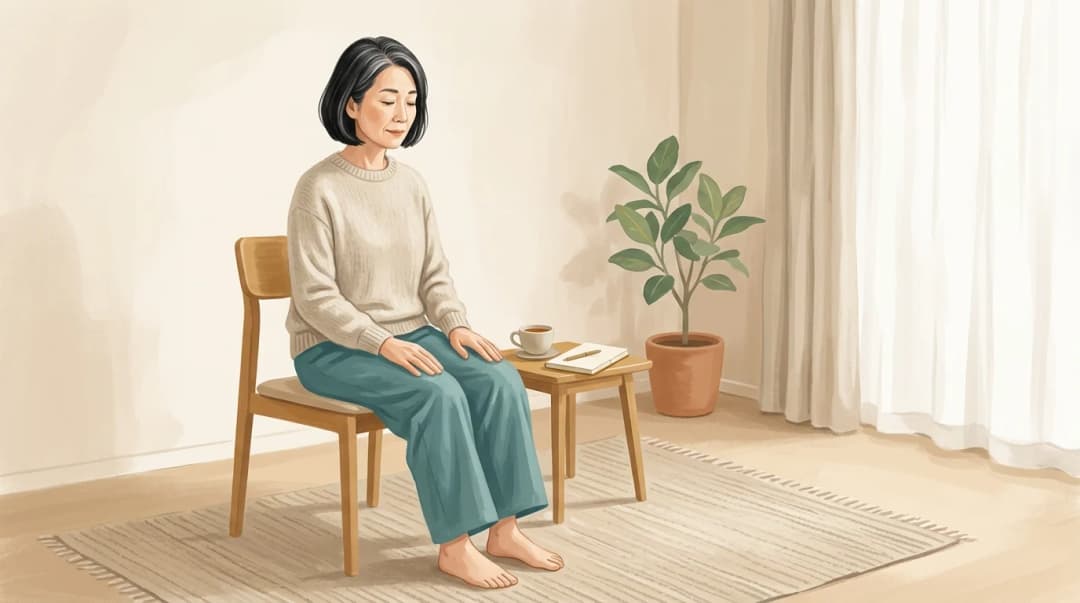
On the sitting bones. Sit toward the front edge of a sturdy chair, feet flat on the floor. Notice where your weight rests on the two sitting bones.
- 2
Behind the hips. Without moving, notice the back of your hips against the chair. Does one side press more than the other?
- 3
A small lean forward. Slowly lean your whole trunk a little forward, then back, several times. When does the weight begin to travel toward your feet?
- 4
A seated rest. Sit back and rest for a few breaths. Let the hips be heavy on the chair.
- 5
Weight toward the feet. Lean forward until your feet take some weight, then slowly return. What happens at the back of your hips? Only as far as is easy.
- 6
Resting again. Rest again. Compare the two sides of your pelvis on the chair now.
- 7
The hips now. Sit quietly. How do the sitting bones and the back of your hips meet the chair now? What has changed?
Let Feldy guide you, eyes closed
You just read these steps. In the Feldy program, a calm voice guides you through each gentle move, so your attention can stay in your body instead of on the screen.
Try Feldy Free for 7 daysNo credit card needed.
If you search for glute exercises for women, you will mostly find squats, bridges, and resistance bands. Those have their place. What I want to offer here is something different and, for many women in menopause, a kinder starting point: learning to sense your glutes and hips at work in the movements you already do every day, like standing up from a chair, climbing a step, and walking. This is a Feldenkrais® approach, so the emphasis is on awareness and comfort rather than effort and repetitions.
This is not a gym glute workout, and it is not trying to be one. What I notice with clients is that many women have quietly stopped letting the hips do their share. The thighs grip, the lower back works overtime, and the large muscles at the back of the pelvis are barely invited to the party. When those muscles start participating again, rising from a chair often feels lighter, and walking can feel more supported, without a single counted rep.
Why glute exercises for women can start with sensing
The glutes are among the largest muscles in the body, and they are designed to carry you through daily life. Yet habit, long hours of sitting, and the changes that come with menopause can leave them underused rather than weak in any simple sense. Before adding load, it can be lovely to simply rediscover them.
The lesson on this page uses a chair, your hands, and your attention. You will rise partway, sit back down, and notice what the back of your pelvis is doing. There is no stretch to hold and no burn to chase. If anything feels effortful or uncomfortable, make the movement smaller and slower. Only go where it feels easy and pleasant. In the Feldenkrais Method®, that gentleness is not a compromise; it is precisely what lets your nervous system pay attention and learn.
This matters more than it might seem. Musculoskeletal conditions affect roughly 1.71 billion people worldwide (World Health Organization, 2022), and gentle, sustainable movement is one of the most accessible things we can practice for ourselves. Awareness led glute exercises for women are one small, low pressure way in.
How these glute exercises for women differ from gym work
A strength program asks: how much can these muscles produce? An awareness lesson asks: how do these muscles take part in what I do, and could they take part more easily? Both questions are worthwhile, and they support each other. Many women find that after a few weeks of sensing lessons, gym work, hiking, or gardening feels smoother, because the hips now join in willingly instead of being dragged along.
If menopause is part of your picture right now, this softer doorway can be especially welcome on days when energy is low or joints feel tender. I have written more about menopause and physical changes in the Feldypedia if you would like the wider view. You can read more about how I approach this life stage on the Feldy page for menopause, where movement is framed around comfort and curiosity rather than pushing through.
A note on practice: little and often tends to work better than long and rare. Five minutes before you get dressed, or one mindful sit to stand each time you leave your desk, adds up. Let the chair lesson above be a reference you return to, and see what your walking tells you afterward.
Common Questions about glute exercises for women (FAQ)
Are these gentle glute exercises safe for women in menopause?
For most people, yes, because the movements are small, slow, and done well within comfort. If you have osteoporosis, a recent injury, hip replacement, or significant pain, please check with your clinician first and keep every movement in a range that feels easy.
How often should I do this lesson?
A few minutes most days tends to serve better than one long session a week. Many people simply attach it to daily life: every time you rise from a chair is a chance to practice.
How long until I notice a difference?
Some people notice a change in how standing up feels within the first session; for others it takes a few weeks of short, regular practice. Since nothing is forced, there is no rush and nothing to lose by going slowly.
How is this different from squats or a gym glute workout?
A gym workout loads the muscles to build strength and shape. This lesson builds awareness, so the glutes join in during everyday actions. They complement each other, and many women find gym work feels easier after awareness practice.
Will this help with the muscle changes that come with menopause?
Awareness lessons may help you use what you have more fully and comfortably, and they pair well with the strength and bone supporting activity your clinician recommends. They are a companion to medical care, not a replacement for it.
When should I see a professional?
If you have new or worsening hip, pelvic, or back pain, pain that wakes you at night, or any symptom that worries you, please see your doctor or physical therapist before continuing with any exercise program.
Softer movement through menopause
See the programRelated resources
Menopause Hip Pain: Gentle Movement for Achy Hips
A calm guide to menopause hip pain, with gentle, regular movement that keeps the hip joint and glutes mobile to ease midlife stiffness, plus when to see a doctor.
Do Menopause Aches and Pains Go Away?
The short answer is usually yes, though not on a tidy schedule, and not for every kind of ache. Here is what tends to settle, what tends to stay, and what changes the timeline.
The menopause symptoms few women mention, and what eight weeks of pelvic floor work did
Ready to start moving better?
Gentle, guided lessons for your body. Try your first one free, no credit card required.