
How Long Does Menopause Last? A Clear, Gentle Guide
How long does menopause last: perimenopause runs about two to eight years, and symptoms can linger into the years after. Here is what to expect, plus a gentle daily practice for the aches and restless nights.
In short
Menopause itself is a single day, twelve months after your last period, but the change around it lasts far longer. Perimenopause, the transition into it, runs about two to eight years for most women, and aches, stiffness, and broken sleep can linger for years after. Gentle daily movement cannot shorten it, but it eases how the years feel.

Prefer to ease in gently?
See a few gentle exercises for menopause to try.
Before you begin. General information, not medical advice. Menopause affects each woman differently, so speak with your doctor or a menopause specialist about symptoms, hormone therapy, and any new or worsening pain, unexpected bleeding after menopause, or low mood. Gentle movement is a supportive companion to that care, not a replacement for it.
If you are wondering how long does menopause last, the answer is that the change lasts much longer than the single day the word describes. Menopause itself is one point in time, marked twelve months after your final period. What most women are really asking about is the transition around it: the years of shifting hormones, aches, warmth, and broken sleep. That stretch is real, it is normal, and it is longer than many expect. The good news is that while you cannot hurry it, you can make it far more comfortable to live through. The Feldenkrais Method® offers one gentle way to do that, not by fixing anything, but by helping a busy, changing body find ease.
Perimenopause, the transition to menopause, can last between two and eight years before periods stop permanently, and around four years on average (Office on Women's Health, 2021). After that final period, some symptoms fade within a year or two, while others, especially joint aches, stiffness, and disturbed sleep, can linger for several more years. So when you map out the whole experience, many women feel the effects across the better part of a decade.
How long does menopause last, stage by stage
It helps to separate three things that often get folded together. Perimenopause is the years of change leading up to your last period, when hormones fluctuate and symptoms usually first appear. Menopause is the milestone itself, confirmed once you have gone twelve months without a period. Postmenopause is everything after that, when hormone levels settle at a lower, steadier level and some symptoms gradually ease.
Seen this way, the question of how long it lasts has three answers. The transition into it commonly runs two to eight years. The milestone is a single day, named only in hindsight. And the tail of symptoms afterward varies widely, easing for some women within a couple of years and staying present for others for longer. None of this is a countdown you can speed up, but knowing the shape of it can take away some of the worry.
Why the aches and restless nights show up
Falling oestrogen touches far more than the reproductive system. It influences joints, muscles, connective tissue, and how deeply you sleep, which is why so many women notice stiffer mornings, new aches, and lighter, more broken nights during these years. On top of that, the stress of a changing body and busy life keeps the muscles subtly braced, and a braced body rests poorly. For the wider picture of what shifts and why, see our Feldypedia guide to menopause and physical changes.
This is where gentle movement earns its place. It will not alter your hormones or shorten the transition, but it can quiet the extra guarding your body holds, so the aches feel softer and sleep comes a little easier. That is a meaningful difference to make across years, not weeks.
A gentle practice to try
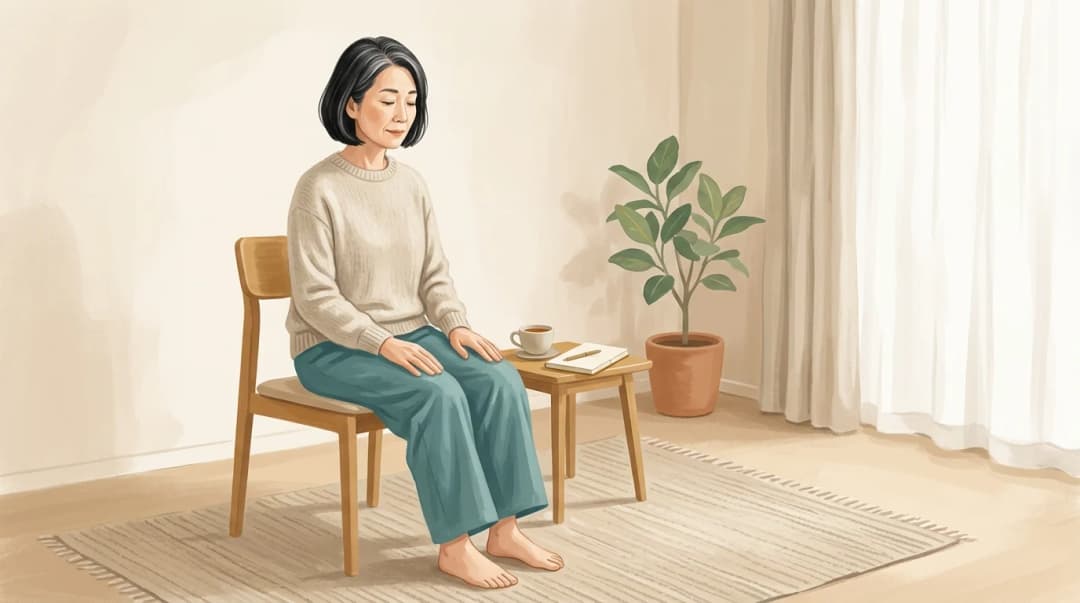
Because the transition unfolds over years, a small daily habit serves you better than an occasional big effort. The practice settles you down, invites tiny rocks of the pelvis and easy sways of the knees, and lets the breath grow longer, so a body carrying the tension of change can let some of it go. Nothing in it reaches for a stretch or a target. It simply gives your nervous system room to soften.
This unhurried, attentive style of moving is exactly how Feldy shapes each session. For more support across these years, our guides to perimenopause aches and pains and perimenopause fatigue build on the same idea, while the Feldypedia article on the Feldenkrais Method fills in the background. That gentle thread also carries through the Feldy program for menopause.
A note on care
Everything here is meant as gentle support for daily life, never a treatment or cure. Menopause deserves proper medical attention, so take symptoms that disrupt your life, any bleeding once menopause has passed, new or worsening pain, or low mood to your doctor or a menopause specialist. Gentle movement simply keeps you company through it. It cannot change the calendar, yet it can help you feel more at home in your body as the change runs its course.
Softer movement through menopause
Now, the gentle way to work with it. The Feldy program eases the stiffness and tension of these years through slow Feldenkrais® lessons made for a changing body. Gentle, guided, and self-paced.
Start my free 7-day trialNo credit card needed.
Common Questions about how long menopause lasts (FAQ)
How long does perimenopause last before periods stop?
For most women, perimenopause lasts about two to eight years, and around four years on average, before periods stop for good. It tends to be longer for women who begin the transition younger, and the pace varies with genetics, lifestyle, and other health factors. Because it is gradual, many women are well into it before they realise it has begun.
How long do menopause symptoms last after your last period?
Some symptoms ease within a year or two of the final period, while others, such as joint aches, stiffness, and disrupted sleep, can continue for several years afterward for many women. Hot flushes in particular can persist longer than people expect. The pattern is highly individual, so it helps to focus on what eases each symptom rather than on a fixed timeline.
Does gentle movement make menopause end sooner?
No. Menopause follows its own hormonal clock, and no exercise, food, or supplement shortens the transition itself. What gentle movement can do is change how the years feel while they pass, softening the aches, easing tension, and supporting calmer sleep. It is about comfort and steadiness through the change, not speeding it up.
How often should I do a practice like this during menopause?
A few calm minutes once or twice a day works well, and it is gentle enough to repeat whenever you feel stiff, tense, or wound up before sleep. Little and often suits a changing body better than one long, effortful session. Let how you feel, rather than a strict schedule, set the pace.
How is this different from stretching or a workout?
A workout or a hard stretch reaches for effort and end range. This does the opposite. It uses small, slow, comfortable movement and slower breathing to invite a braced, tired body to let go. You are not chasing a burn or a limit. You are giving your nervous system a clear signal that it is safe to soften, which is often exactly what a menopausal body is missing.
When should I see a professional?
See your doctor or a menopause specialist for symptoms that disrupt your life, for any bleeding after menopause has passed, for new or worsening pain, or for persistent low mood. They can talk through options including hormone therapy. Gentle movement sits alongside that care as a supportive daily habit, not as a substitute for it.
Softer movement through menopause
See the programRelated resources
Perimenopause Aches and Pains: Gentle Daily Relief
A calm guide to perimenopause aches and pains, with gentle, regular whole-body movement to ease stiff joints and sore muscles, plus clear signs of when to ask a doctor.
Perimenopause Fatigue: Gentle Movement and Energy Pacing
A calm guide to perimenopause fatigue, using gentle, well-paced movement to support steadier energy on tired days, plus notes on sleep, hormones, and when to see a doctor.
The menopause symptoms few women mention, and what eight weeks of pelvic floor work did
Ready to start moving better?
Gentle, guided lessons for your body. Try your first one free, no credit card required.