

Perimenopause Fatigue: Gentle Movement and Energy Pacing
A calm guide to perimenopause fatigue, using gentle, well-paced movement to support steadier energy on tired days, plus notes on sleep, hormones, and when to see a doctor.
In short
Perimenopause fatigue is a real, hormone-driven tiredness, not laziness. Gentle, well-paced movement often supports steadier energy more than total rest, by easing tension and reassuring the nervous system. It works alongside good sleep and medical care, not instead of them.

Prefer to ease in gently?
See a few gentle exercises for menopause to try.
Before you begin. This is gentle self-care, not medical advice. Fatigue in perimenopause has many causes (hormones, sleep, thyroid, iron, mood), so please see your doctor to rule those out. Gentle movement and pacing can support energy but are not a cure.
If your get-up-and-go has quietly drained away as your periods grow less predictable, you are not imagining it and you are not lazy. Perimenopause fatigue is a real, hormone-driven tiredness, the kind that a good night in bed does not always undo. This guide is about meeting that tiredness with gentle, well-paced movement, the slow and attentive kind the Feldenkrais Method® is built around, so that you can support steadier energy without spending what little you have. What it is not is medical advice, and the many other causes of fatigue belong with your doctor.
Why perimenopause fatigue shows up
During perimenopause, estrogen and progesterone rise and fall unpredictably rather than simply switching off. Those swings disturb sleep, often through night sweats and broken waking, and they touch mood and energy too, so a deep tiredness can settle in that rest alone does not lift. It helps to know this is a widespread experience and not a personal failing. Bodily aches and fatigue often travel together in midlife, and musculoskeletal conditions affect about 1.71 billion people worldwide (WHO, 2022), so the heavy, achy tiredness many women describe is far from a lonely problem.
How gentle, paced movement can lift your energy
When you are exhausted, the instinct is often to do nothing at all and wait for energy to return. Yet long spells of complete stillness can leave the body feeling more sluggish and stiff, not more rested. For most people, a little easy movement does something rest cannot: it releases the tension that tiredness tends to bind into the shoulders, jaw, and back, and it quietly reassures the nervous system that all is well, which helps the whole system settle. Slow, small movement with plenty of pausing asks very little and tends to give a little back.
The trap to avoid is boom and bust. On a rare good day it is tempting to do far too much, only to crash and pay for it over the days that follow. Gentle pacing breaks that cycle. Keep each session short, keep the range tiny, rest often, and stop while you still have energy left rather than emptying yourself out. Movement that always leaves a little in reserve becomes a quiet source of energy instead of one more thing that drains you.
A gentle whole-body approach for tired days
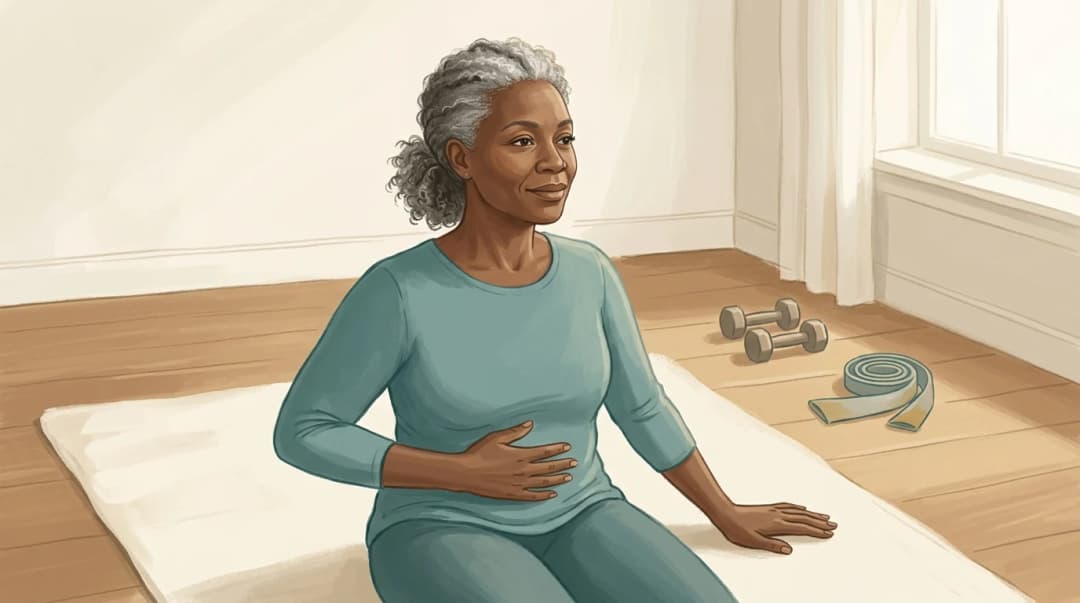
Because perimenopause fatigue is a whole-body weariness, the kindest response is gentle, whole-body movement done lying down or seated, never a workout. Wake the body broadly and softly: follow the breath, let the wrists and ankles float, turn the head a small amount, and rock slowly to finish. Make every movement smaller than you could, stay comfortably below any strain, and treat rest between movements as part of the practice rather than an interruption. This is awareness-led movement, less about effort and more about finding easier, lighter ways to move, which suits a tired and sensitive midlife body well.
Sleep, hormones, and medical care
Gentle movement is genuinely helpful, but it is one piece of a larger picture, and it works best alongside the rest. Sleep matters enormously, so protecting wind-down time, easing night sweats, and keeping a steady rhythm to your days all support energy more than movement can alone. Hormone therapy and other medical options are choices for your clinician to weigh with you. And because fatigue in perimenopause has many causes, including thyroid problems, low iron, sleep disorders, and low mood, it is well worth asking your doctor to rule those out. Gentle, paced movement can support steadier energy, but it is supportive self-care, not a cure.
To explore the bigger picture of these changes, see our Feldypedia guide to menopause and physical changes. If achiness is part of your tiredness, our guide to perimenopause aches and pains is a gentle companion, and a morning routine for women over 50 offers an easy place to start the day. The same patient spirit threads through the Feldy program for menopause and midlife.
Softer movement through menopause
Now, the gentle way to work with it. The Feldy program eases the stiffness and tension of these years through slow Feldenkrais® lessons made for a changing body. Gentle, guided, and self-paced.
Start my free 7-day trialNo credit card needed.
Common Questions about perimenopause fatigue (FAQ)
Why does perimenopause cause fatigue?
Perimenopause fatigue is a real, hormone-driven tiredness, not a lack of willpower. As estrogen and progesterone swing up and down, sleep is often broken by night sweats and waking, and mood and energy can dip too. The result is a deep tiredness that rest alone does not always fix. It is common and understandable, and your own pattern still deserves individual attention.
Does gentle movement help fatigue or make it worse?
For many people, small and slow movement supports steadier energy rather than draining it, because it eases muscular tension and quietly reassures the nervous system. The key is staying gentle and stopping with energy to spare. Forceful exercise when you are already exhausted can backfire, so let comfort, not effort, set the limit, and rest the moment it feels like too much.
How should I pace movement on a tired day?
Think little and often rather than one big push. A few unhurried minutes, lying or seated, with frequent rests, suits a tired body far better than a hard session you pay for later. The aim is to finish with a little energy left over, never wrung out. Pacing like this helps you avoid the boom and bust cycle that perimenopause fatigue tends to invite.
How long until gentle movement helps my energy?
Some people feel a small lift within a single calm session, simply because tension has eased and the breath has settled. A steadier sense of energy tends to build slowly over weeks of gentle, well-paced practice instead of showing up all at once. No two bodies follow the same schedule, and remember that gentle movement supports energy alongside good sleep and medical care, not instead of them.
When should I see a professional about perimenopause fatigue?
Please see your doctor if fatigue is severe, persistent, or new, or if it comes with breathlessness, a racing heart, heavy or irregular bleeding, low mood, or unexplained weight change. Fatigue in perimenopause has many causes, including thyroid problems, low iron, sleep disorders, and depression, which all deserve to be checked. Gentle movement supports energy but is not a cure and is not a substitute for that care.
Softer movement through menopause
See the programRelated resources
How to Combat Fatigue During Perimenopause, Gently
A plan for combating fatigue during perimenopause: gentle movement in small doses, kinder pacing, steadier sleep habits, and knowing when to ask your doctor to look deeper.
Lack of Energy in Perimenopause: Why It Happens and What Helps
A warm guide to lack of energy in perimenopause: why it happens, what it really feels like, and how gentle attentive movement can give some back.
Why the movement practice you keep through menopause is usually the one you enjoy
Ready to start moving better?
Gentle, guided lessons for your body. Try your first one free, no credit card required.