
Best Position to Sleep: Left Side or Right Side?
Most people do fine on either side. Here is when the left side, a sore shoulder, or a tender hip should tip your choice, plus how to get comfortable once you pick.
In short
For most people, the best position to sleep, whether left or right side, is simply whichever feels most comfortable. The left side is often easier on heartburn or reflux, and a sore shoulder or hip usually prefers its own side, off that pressure. Switching sides overnight is normal.

Prefer to ease in gently?
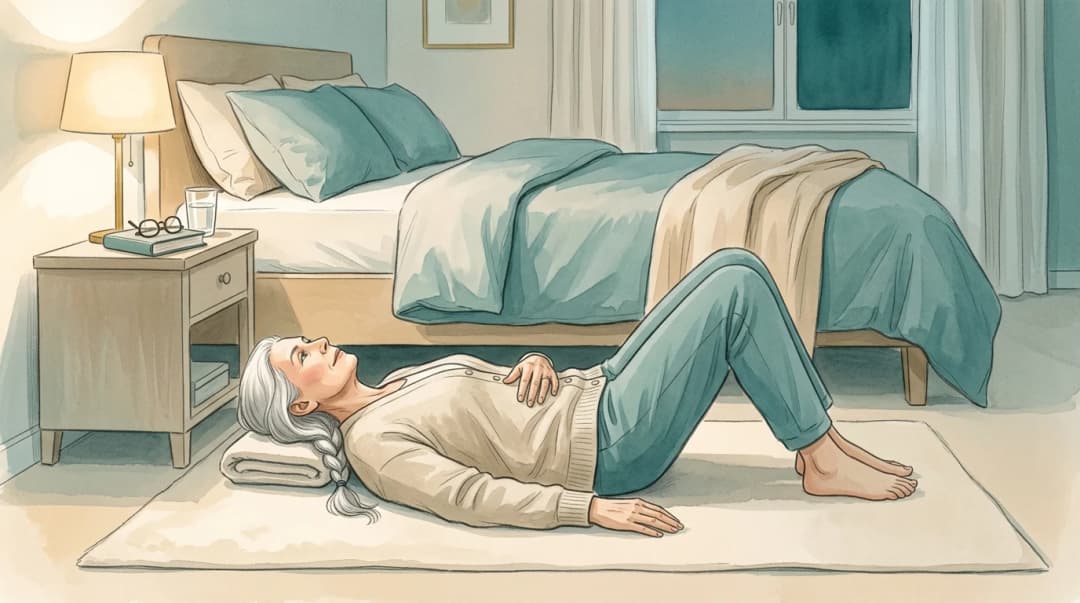
See a few gentle exercises for stress and sleep to try.
The best position to sleep, left side or right side, comes down mostly to comfort: for most people, either side works fine, and neither one is secretly the healthier choice. A few situations tip the balance. If you live with heartburn or acid reflux, the left side is often suggested. If one shoulder or hip is sore, lying off that side usually feels kinder than lying on it. And if you wake up facing a different way than you fell asleep, that is entirely normal: a resting body shifts position many times through the night without you noticing.
Side sleeping is already the default for most of us. The Sleep Foundation says more than 60% of adults sleep on their side, which makes it the most common way people settle in at night (Sleep Foundation, 2025). Choosing left or right from there is less about a rule and more about a few small, practical differences.
Left or right: how to choose your sleep position
For most healthy sleepers, there is no meaningful difference between the left and the right side. Your spine, hips and shoulders do not care which side carries your weight, as long as the position feels settled rather than strained. What matters far more is whether your neck, back and joints feel supported. If you have been hunting for one true side, you can let that search go. Comfort is the better test.
When the left side helps with heartburn and reflux
Acid reflux is the clearest case where one side has an edge. Lying on the left is often suggested for heartburn or acid reflux, since gravity and the stomach's shape may make it harder for acid to travel back up toward the throat. Lying on the right can let stomach contents sit closer to that opening, which is part of why some people notice more burning there. If reflux keeps disturbing your nights, giving the left side a try for a week or two is a simple experiment worth running first.
When a sore shoulder or hip should pick your side
A joint that is already tender rarely welcomes more weight on top of it. If one shoulder aches, lying on the other side, or on your back with the arm supported, usually feels easier than pressing down on the sore one. The same goes for a hip: side lying sends a good deal of body weight onto whichever hip is underneath, so an irritated hip often prefers to face up rather than take the load. If a shoulder that keeps complaining at night sounds familiar, our guide to shoulder pain from sleeping on your side goes into the setup that eases it, and hip pain sleeping on your side covers the same ground for an aching hip.
Why switching sides through the night is normal
Nobody holds one position all night long. Most sleepers roll and resettle many times, trading the left side for the right, the back, or the front, often without waking up enough to remember it. That movement is not a sign that something is off. It simply shows how a resting body spreads pressure off whichever joint has carried weight for a while. If you tend to tense up each time you move, rather than drifting easily from side to side, our Feldypedia entry on sleep disruption and physical tension looks at why a wound up body resists settling into any position.
Getting comfortable once you have picked a side
A side that feels right still needs a little support. A pillow with the right height keeps your neck roughly level with the rest of your spine, rather than tipped up toward one ear or pressed nearly flat into the mattress. A pillow between the knees may ease strain on the lower back and hips by stopping the top leg from dragging the pelvis out of line. A soft bend at the hips and knees, rather than straight or curled up tightly, usually holds up better over a long stretch. It also helps to keep the top shoulder stacked over the bottom one instead of letting it twist forward across your chest, since that twist can leave the neck and upper back working all night instead of resting.
Once arranged, give your body a moment to notice the position rather than collapsing into it in a hurry. A slow breath or two, with a small shift here and there until nothing feels held, lets the arrangement settle rather than being forced into place. This kind of unhurried noticing comes from the Feldenkrais Method®, the approach behind every lesson in Feldy's program for stress and sleep. Once settled, a few slow, easy movements can help the rest of the body let go too, and our somatic exercises for sleep lesson offers a short practice to try right where you are lying.
Clinical care and other approaches alongside this
None of this replaces a conversation with a doctor when something more is going on. If nighttime heartburn keeps coming back most nights for weeks no matter which side you try, it is worth having it checked. See a doctor sooner if heartburn comes with trouble swallowing, weight loss you cannot explain, or vomiting. Chest pressure or pain that comes with sweating, breathlessness, or an ache that travels into your jaw or arm is an emergency. It can come from the heart rather than reflux, so call for help right away. The same goes for snoring with pauses in breathing, whether you notice it yourself or a partner points it out, since that pattern can signal sleep apnea. Clinical care sits alongside the comfort adjustments described here, not instead of them. Other supports, a wedge pillow, a body pillow, or practices like yoga or gentle stretching, can sit alongside this work too, since what helps one person settle will not be what helps the next.
A calmer body, easier nights
Understanding it is calming, moving with it more so. The Feldy program is meditation in movement, slow Feldenkrais® lessons that help a busy body settle so sleep can arrive on its own. Gentle, guided, and self-paced.
Start my free 7-day trialNo credit card needed.
Common Questions about the best position to sleep, left or right (FAQ)
Is it better to sleep on your left side or your right side?
For most healthy sleepers, neither side is better. The left and right side are roughly equal choices, and your spine and joints do not favor one over the other. What matters more is whether the position feels supported, since a side you brace against will never feel restful.
What is the best side to sleep on for acid reflux?
The left side is the one most often suggested for heartburn or acid reflux. Lying on the left seems to make it harder for stomach contents to travel back up toward the throat. If reflux disturbs your nights, trying the left side for a stretch is a simple change to test first.
Which side should I sleep on if my shoulder hurts?
Lie on the side that is not sore, or try your back with the arm supported, rather than pressing straight down on the aching shoulder. Hours of weight on a tender joint tend to leave it feeling worse by morning. A short rest from that pressure often helps.
Is it bad to switch sides during the night?
No. Rolling between sides, or onto your back, several times a night is completely ordinary. It is how a resting body spreads out pressure on whatever joint has been carrying weight for a while. Waking up on a different side than you fell asleep on is nothing to worry about.
What should I avoid when setting up a side to sleep on?
Avoid a pillow that is too high or too flat for your neck, since either one tips your head out of line with your spine. Avoid curling up tightly too, which can leave the hips and lower back stiff by morning. A soft, open bend at the hips and knees tends to hold up better over several hours.
How long does it take to get used to sleeping on a new side?
Some people settle into a different side within a few nights, especially once the pillow and knee support are right. For others it takes a couple of weeks of practice before the new side feels familiar. There is no set timeline, only steady small adjustments.
When should I see a doctor about my sleep position?
See a doctor if heartburn or reflux keeps returning most nights for weeks regardless of which side you try, or if you or a partner notice snoring with pauses in breathing, since that pattern can point to sleep apnea. A doctor can also help with shoulder or hip pain that does not ease with simple setup changes.
A calmer body, easier nights
See the programRelated resources
Shoulder Pain From Sleeping on Your Side: A Gentle Guide
Shoulder pain from sleeping on side often comes from hours of pressure on a shoulder rolled forward under your weight. Here is how to set up the position kindly, plus a gentle lesson to ease the ache.
Hip Pain Sleeping on Side: Why It Happens and What Helps
Hip pain sleeping on side usually means hours of weight on the bony point of the hip. Here is how to arrange the night kindly and let the joint settle.
After 60, some of what movement does for your memory may happen while you sleep
Ready to start moving better?
Gentle, guided lessons for your body. Try your first one free, no credit card required.