

How to Fall Back Asleep After Waking in the Night
How to fall back asleep after a 3am waking: stay still, skip the clock, lengthen the exhale, and let a held body soften so drowsiness can return on its own.
In short
When you wake in the night, do not fight it or check the clock. Let the body stay heavy and still, lengthen the exhale, release any held tension, and let drowsiness return on its own. Trying hard to fall back asleep only keeps you awake.

Prefer to ease in gently?
See a few gentle exercises for stress and sleep to try.
Before you begin. This is general self-care, not medical advice. Frequent night waking, early waking, or unrefreshing sleep can have medical causes worth checking with a doctor. These are gentle ways to settle, not a treatment for a sleep disorder.
If you have ever surfaced at 3am and wondered how to fall back asleep, the gentlest answer is also the most reliable: stop trying. Waking in the night is normal, and the trouble usually starts with what we do next. We check the clock, do the grim math of how little sleep is left, and the body reads that worry as a reason to stay alert. The way back to sleep is to leave the clock alone, stay heavy and still, lengthen the exhale, and let any held tension quietly release so drowsiness can return on its own. This unhurried, body-first way of settling comes from the Feldenkrais Method®, which works with the nervous system gently rather than trying to override it.
Night waking is also extremely common, and a tense body is often part of the picture. A survey by the American Psychological Association found that most US adults notice physical signs of stress in the body (APA), and that held, keyed-up state is one of the things that flips a brief, ordinary waking into a wide-awake hour. You can read more about that link in our Feldypedia note on sleep disruption and physical tension.
Why checking the clock makes it harder to fall back asleep
The single most common mistake is to look at the time. The moment you know the hour, the mind begins counting backward and forward, and that counting is a kind of low-grade alarm. The body cannot tell the difference between a genuine threat and a worried thought, so it raises your readiness to meet the day just when you want it to lower. Turn the clock to the wall, leave the phone face down, and let yourself not know. Nothing useful comes from the number, and a great deal of wakefulness can come from it.
How to fall back asleep without chasing it
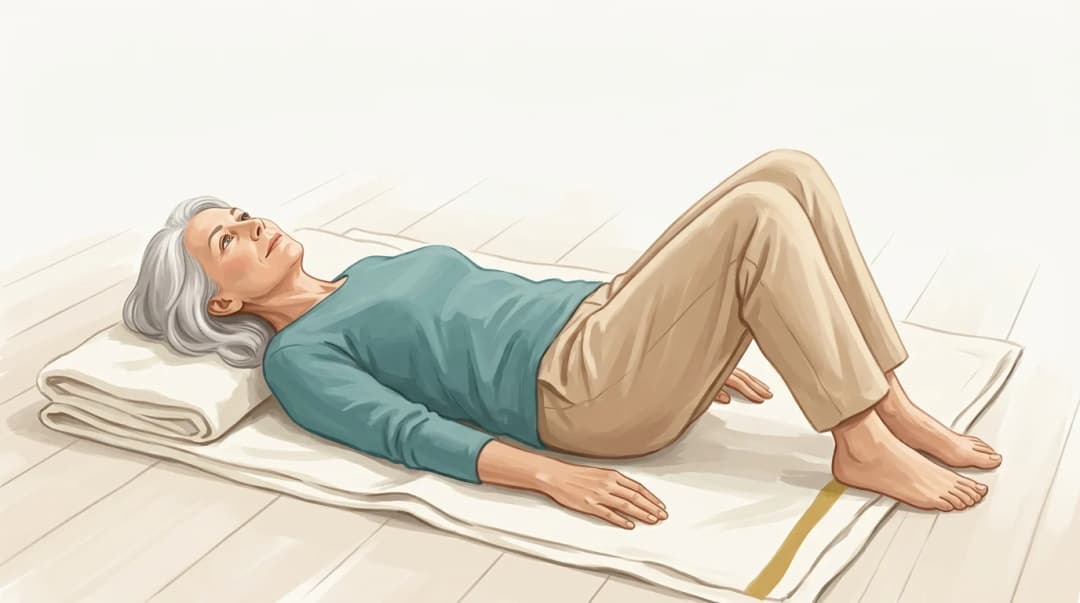
Stay horizontal and stay calm. Resist the pull to roll over and over hunting for the perfect spot, since that searching is itself a kind of effort. Instead, let the body grow heavy where it already is. Let each out-breath stretch a little past the in-breath, without forcing the air. Let the jaw come unclenched, the tongue rest low, the shoulders widen on the bed. A gentle release like this tells the older, protective part of the brain that there is nothing to guard against, and it is in that unguarded state that sleep returns. The point is not to do sleep, which cannot be done on purpose, but to remove the small holdings that keep it away.
What to do if you are truly wide awake
Sometimes the body simply will not settle, and lying there fighting it only deepens the frustration. The common guidance, often called the twenty-minute rule, is helpful here. If a good twenty minutes pass and you feel alert rather than drowsy, get up. Keep the lights low, stay off screens, and do something calm and dull in another room until your eyelids feel heavy again. This keeps your bed linked with sleep rather than with restless waiting. When drowsiness returns, go back to bed and begin again with the long, slow exhale and the heavy, still body.
A short word of care: this is general self-care, not a treatment for a sleep disorder. If you wake night after night, wake far too early, or feel unrefreshed however long you spend in bed, please check with a doctor, since persistent waking can have causes worth assessing. If you want a guided way to teach the body this kind of letting go, the same unhurried, curious quality shapes each Feldy lesson in our stress and sleep program. For a slightly different angle on settling at the start of the night, see our companion guide on how to get comfortable in bed, or try a few bedtime stretches in bed before you turn out the light.
A calmer body, easier nights
Understanding it is calming, moving with it more so. The Feldy program is meditation in movement, slow Feldenkrais® lessons that help a busy body settle so sleep can arrive on its own. Gentle, guided, and self-paced.
Start my free 7-day trialNo credit card needed.
Common Questions about how to fall back asleep (FAQ)
Why do I wake up in the middle of the night?
Brief night wakings are normal and most people have several without remembering them. They become a problem mainly when the body is keyed up, so you surface fully and then cannot settle. Stress, a tense body, a full bladder, noise, or an over-warm room can all tip a light moment of waking into a wide-awake one.
How do I fall back asleep after waking?
The surest way to fall back asleep is to not fight it. Stay still, leave the clock alone, and let the body stay heavy. Lengthen your exhale, soften the jaw and any held tension, and let drowsiness return on its own rather than chasing it. Effort keeps the alert system switched on.
Should I get up if I cannot fall back asleep?
If you have been lying awake for roughly twenty minutes and feel alert rather than drowsy, it usually helps to get up. Lying there frustrated teaches the body to associate bed with wakefulness. Keep the lights dim, do something calm and boring, and return when you feel sleepy.
How is this different from a sleeping pill?
A sleeping pill works on your brain chemistry to make you sedated. What you are doing here is easing the bodily tension and arousal that keep you awake at night, by hand and by breath. It is a self-care practice you can use any night, not a medication, and not a treatment for a sleep disorder.
When should I see a professional about waking in the night?
If you wake most nights and cannot get back to sleep, wake far too early, snore heavily, or feel unrefreshed however long you spend in bed, please see a doctor. Persistent night waking can have medical causes worth checking, and gentle practices like these can sit alongside professional care.
A calmer body, easier nights
See the programRelated resources
How to Fall Asleep Fast: Gentle Body-Based Ways to Settle
How to fall asleep fast by letting the body let go rather than forcing sleep: a longer exhale, releasing tension from feet to face, and feeling heavy and held.
Bedtime Stretches in Bed: A Short Wind-Down
A few slow bedtime stretches in bed to help a busy body settle for sleep. Small, gentle, and beginner-friendly, so you can do the whole set lying down.
Lying down is not the same as resting, and researchers have now measured the difference
Ready to start moving better?
Gentle, guided lessons for your body. Try your first one free, no credit card required.