

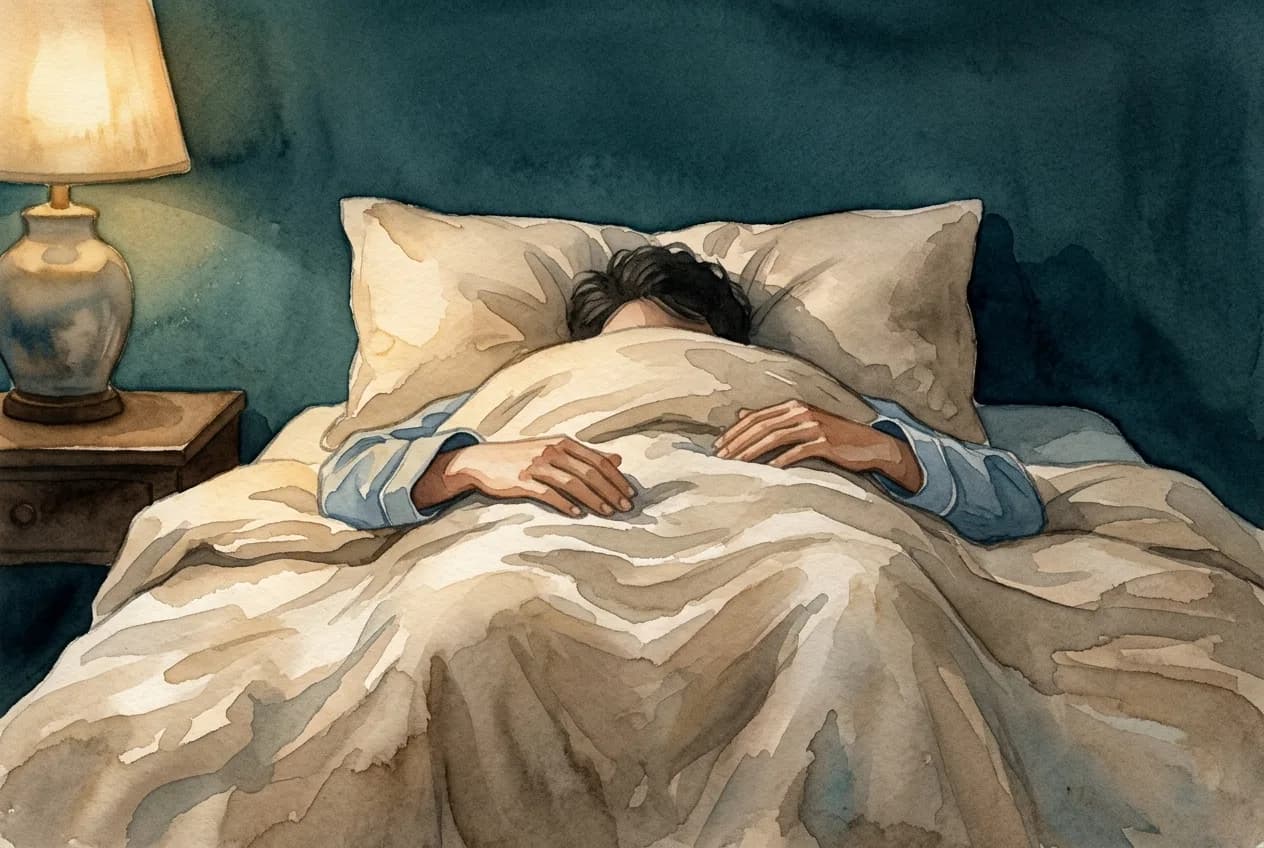
Bedtime Stretches in Bed: A Short Wind-Down
A few slow bedtime stretches in bed to help a busy body settle for sleep. Small, gentle, and beginner-friendly, so you can do the whole set lying down.
The lesson
About 5-10 minutes. Move slowly, do less than you can, and stay well below any pain. Rest whenever you need to.
Prefer to listen than read?
Feldy voices gentle lessons like this for stress and sleep, so you can close your eyes and follow along.
- 1
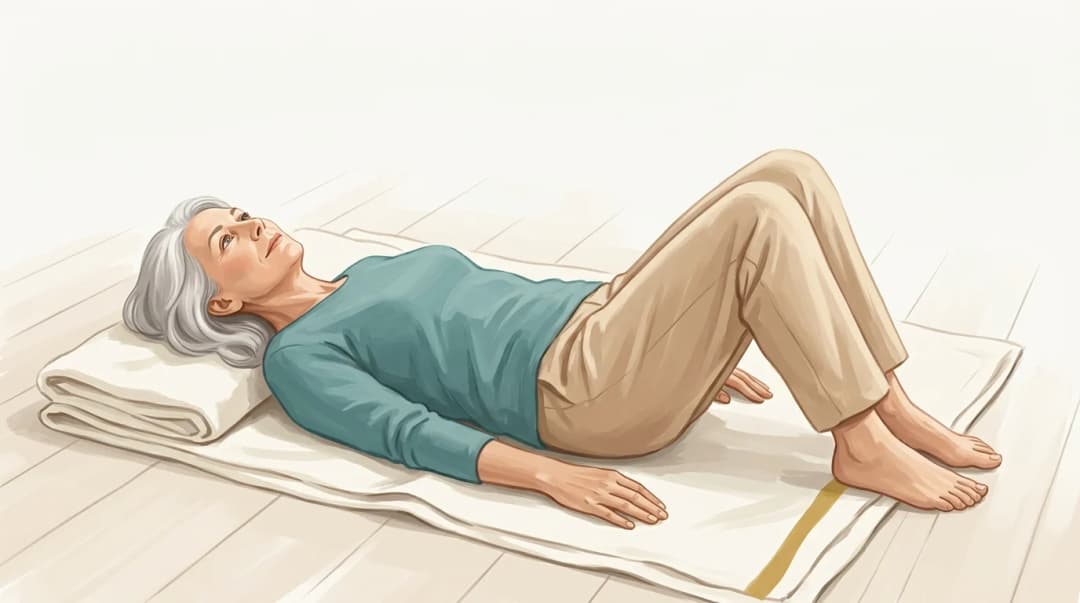
On your back, day ending. Lie on your back with your knees bent and feet resting on the mattress, arms wherever they like. Where does your body meet the bed, from heels to head?
- 2
Knees rocking quietly. Let both knees drift a small distance toward one side, back to the middle, then the other way, with no need to reach the mattress. Then be still.
- 3
A knee visiting the chest. Slide one foot up so the knee floats toward your chest only as far as is easy, then let it return. One side, a rest, then the other, or simply imagine it.
- 4
The pillow holding the head. Let your head turn a little to one side on the pillow, then the other, a slow no. Can the bed carry the head's weight instead of your muscles?
- 5
One long breath of length. Stretch your arms gently overhead and your legs long for one easy breath, then let everything soften back down.
- 6
Heavier, quieter. Rest on your side or back and let the breath grow slow. What, if anything, feels heavier or quieter in you than when you first lay down?
Let Feldy guide you, eyes closed
You just read these steps. In the Feldy program, a calm voice guides you through each gentle move, so your attention can stay in your body instead of on the screen.
Try Feldy Free for 7 daysNo credit card needed.
If your mind is ready for sleep but your body still feels wound up, a few bedtime stretches in bed can help the two catch up to each other. The aim is not to work the muscles but to send the nervous system slow, clear signals that the day is over and it is safe to let go. Everything here happens lying down, so you can drift straight into sleep without getting up again. This kind of slow, attentive movement grows out of the Feldenkrais Method®, which uses small motions and easy attention to help the body ease into a calmer state.
Restless nights are common. According to the Centers for Disease Control and Prevention, about one adult in three falls short on sleep (CDC, 2016), and a tense, keyed-up body is frequently part of the reason. A brief, calming routine you can run without ever leaving the pillow gives that held tension somewhere to release.
Why bedtime stretches in bed help you settle
During the day the body keeps a certain readiness, a low hum of muscular activity that helps you sit, stand, and react. At night that readiness can linger past its welcome and keep you feeling alert just as you want to drift off. Slow, small movement gives the body a chance to register that nothing more is being asked of it. As the muscles let go a little, the breath tends to slow, and the slower breath in turn tells the older parts of the brain that the coast is clear.
The trick is to keep the movements gentle. Big, effortful stretches can be stimulating and pull you back toward wakefulness. Tiny, unhurried ones do the opposite. You can read more about the underlying approach in our Feldypedia guide to the Feldenkrais Method.
How to use this short wind-down set
Dim the lights, get under the covers, and let the bed take your weight before you begin. There is no count to hit and no range to reach. Make each movement a little smaller and slower than feels necessary, let the breath stay easy, and rest between movements for as long as you like. If you find yourself drifting partway through, that is a fine place to stop.
Many people find that the same few movements, repeated softly night after night, become a quiet cue that sleep is near. The set above is built for exactly that kind of repetition. If you want a slightly longer lesson aimed at the same goal, our somatic exercises for sleep offer another gentle option. That same unhurried, curious quality shapes each Feldy lesson, where guided movement coaxes the body toward an easier kind of rest. For the bigger picture of how gentle movement supports calmer nights, see our stress and sleep program. A free 7 day trial lets you settle into a few of those lessons first.
A short word of care: this routine is gentle self-care, not medical treatment. If you live with ongoing pain, a diagnosed sleep disorder, or you are recovering from injury or surgery, check with your clinician before adding new movement. Stop any movement that hurts, and keep everything in the comfortable range.
Common Questions about bedtime stretches in bed (FAQ)
Are bedtime stretches in bed actually helpful for sleep?
Gentle movement before sleep can ease physical tension and shift the body out of a busy daytime state, which many people find helps them settle. It is a supportive habit rather than a cure for insomnia, and it works best as part of a calm wind-down routine.
Should stretches before bed be intense?
No. Vigorous stretching can be alerting, which is the opposite of what you want at night. Keep everything slow, small, and well below any strain so the body reads it as a signal to relax.
How long before bed should I do these?
Right in bed, as the last thing before you settle, works well for most people. The whole set takes only a few minutes. You can also do it if you wake in the night and want to ease back toward sleep.
What if a stretch feels uncomfortable?
Make it smaller or skip it. Nothing here should pull or pinch. Discomfort tends to wake the body up, so stay in the easy, comfortable range every time.
Can these stretches replace good sleep habits?
They sit alongside the basics, not instead of them. A consistent schedule, a dark cool room, and less screen light still matter most. Gentle stretches are one calming piece of that picture.
I have ongoing pain or a sleep disorder. Is this safe?
Gentle movement is usually fine, but please check with a doctor about ongoing pain or a diagnosed sleep disorder. This routine is gentle self-care, not a treatment for either.
A calmer body, easier nights
See the programRelated resources
How to Fall Asleep Fast: Gentle Body-Based Ways to Settle
How to fall asleep fast by letting the body let go rather than forcing sleep: a longer exhale, releasing tension from feet to face, and feeling heavy and held.
Progressive Muscle Relaxation for Sleep: Tense, Then Let Go
A guided progressive muscle relaxation lesson for bed: mildly tense each muscle group, let go fully, and notice the contrast that helps a braced body settle.
Lying down is not the same as resting, and researchers have now measured the difference
Ready to start moving better?
Gentle, guided lessons for your body. Try your first one free, no credit card required.