
How to Prevent Lower Back Pain When Sleeping
How to prevent lower back pain when sleeping: the positions that support your spine, the pillows that help, and the gentle movement that stops your back bracing all night.
In short
To prevent lower back pain when sleeping, support the natural curve of your spine and lower the tension you take to bed. Sleep on your side with a pillow between your knees, or on your back with a pillow under your knees, keep a supportive mattress, and move gently before sleep and on waking so your back is not braced and stiff all night.

Prefer to ease in gently?
See a few gentle exercises for stress and sleep to try.
Before you begin. This is general comfort guidance, not medical advice. Occasional stiffness after sleep is common, but see a doctor if your lower back pain is severe, keeps waking you, follows a fall or injury, or comes with numbness, weakness, pain running down a leg, fever, or any change in bladder or bowel control. Those can need prompt care. Keep every movement slow and well within comfort.
If you wake with an aching, stiff lower back, learning how to prevent lower back pain when sleeping comes down to two things: supporting the natural curve of your spine through the night, and taking less tension to bed in the first place. A back that is held level and comfortable can rest, while one that sags, twists, or lies braced for hours tends to protest by morning. The gentle, attentive way of moving taught in the Feldenkrais Method® works on that second piece, helping you arrive in bed less clenched and rise the next day with more ease.
Back trouble is nearly universal. Low back pain affects around 619 million people worldwide and is the leading cause of disability (WHO, 2023), so a back that grumbles overnight puts you in very large company. The encouraging part is how much small, kind adjustments can change.
Why your lower back can hurt more at night
Lying still for hours is not automatically restful for a back. If your mattress lets the hips sink, the lower spine sags into a strained position and holds it until dawn. Sleeping face down presses the small of the back into an arch and turns the neck to one side. And a body that goes to bed tense often keeps that guarding all night, so hours of stillness bake in the very stiffness you were hoping sleep would ease. Our Feldypedia guide to chronic lower back pain looks at how that holding pattern builds.
None of this means your back is fragile. It means the way you are arranged and how tense you are when you lie down both matter, and both are things you can gently change.
How to prevent lower back pain when sleeping: positions that support you
Start with alignment that asks nothing of your back to maintain. Lying on your side, a cushion tucked between the knees stops the upper leg from pulling the pelvis around, and the lower spine can rest more level. On your back, a pillow under the knees softens the pull on the lower back and lets it rest closer to neutral. If you love sleeping face down, tucking a slim pillow under your hips takes some of the arch out of the position. Fill the gaps with support so no part of you has to hold itself, and let simple comfort, not a rule, be the test. Our guide to a sore upper back after sleeping carries these ideas up the spine.
Gentle movement before bed and on waking
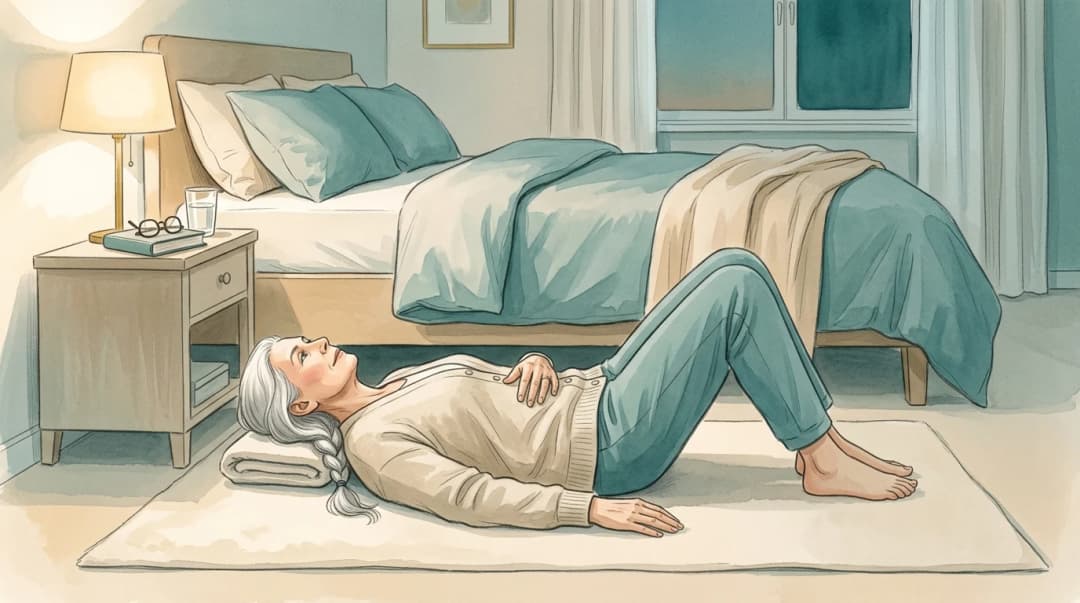
How you move at the edges of sleep shapes how your back feels in the middle of it. A few minutes of slow, easy movement before bed lets a braced back soften before the long stillness: lying on your back with knees bent, you might rock your pelvis in tiny, unhurried ranges, or let both knees sway a little way toward one side and back. Nothing is stretched or forced. The aim is only to arrive in bed a shade less tight. On waking, the same slow rocking wakes the back up before you ask it to carry you upright. Our Feldypedia note on waking with stiffness and pain explains why those first minutes count. If your lower back stays guarded at night, try our somatic exercises for sleep, a brief lesson done lying down that can help it soften before you drift off.
How you get in and out of bed matters
The sharpest morning twinges often come not from the night but from the moment you lever yourself upright. Twisting straight up from flat asks a stiff back to do something awkward before it is ready. Instead, move in one piece: bend your knees, roll gently onto your side facing the edge of the bed, let your lower legs travel toward the floor as your arms press you up to sitting, then rest a moment before standing. Getting in follows the reverse. It feels slow at first and quickly becomes second nature, and it spares your lower back the jolt that can color the whole day. Our guide to hip pain when sleeping on your side covers a related piece of nighttime comfort.
When lower back pain needs more than better sleep
Treat all of this as gentle self-care, not a cure. Better positions, good support, and unhurried movement genuinely help many aching backs feel easier overnight. They do not replace medical care. See a doctor if your back pain is severe or worsening, regularly wakes you, follows a fall or injury, or arrives with numbness, weakness, pain traveling down a leg, fever, or any change in bladder or bowel control. A back that hurts more at rest than with movement also deserves a professional look. The Feldy program can walk beside that care, offering a gentler relationship with movement so your back spends less of the night, and the day, on guard.
A calmer body, easier nights
Understanding it is calming, moving with it more so. The Feldy program is meditation in movement, slow Feldenkrais® lessons that help a busy body settle so sleep can arrive on its own. Gentle, guided, and self-paced.
Start my free 7-day trialNo credit card needed.
Common Questions about how to prevent lower back pain when sleeping (FAQ)
What is the best sleeping position to prevent lower back pain?
The best position is the one that keeps your spine gently supported rather than twisted or sagging. For most people that is on the side with a pillow between the knees, or on the back with a pillow under the knees. Sleeping face down tends to press the lower back into an arch and turns the neck, so it is the hardest on many backs. There is no single right answer, so use comfort as your guide.
Does my mattress or pillow affect lower back pain at night?
Yes, both play a part. A mattress that sags lets the hips drop and the lower back sink, while one that is very hard can leave a gap under the curve of your back. Aim for support that keeps you roughly level, and use pillows to fill the spaces, between or under the knees, so nothing has to hold itself all night. Small adjustments here often make a clear difference.
How do I get out of bed without hurting my lower back?
Move as one piece rather than twisting up from flat. Bend your knees, roll gently onto your side facing the edge, let your lower legs move toward the floor as you press up through your arms to sitting, then pause before you stand. Doing it slowly, especially first thing when the back is stiffest, saves you the sharp twist that often sets off morning pain.
Can gentle movement before bed prevent back pain overnight?
It can help. If you carry a braced, tightened back into bed, it often stays guarded through the night and greets you stiff. A few minutes of slow, easy movement, small rocks of the pelvis or gentle knee sways, lets the back settle before you lie still for hours. It is about arriving in bed a little less clenched, not about a workout.
How long until better sleep habits ease my lower back?
Many people feel a difference within a few nights of changing position and adding pillow support, simply because the back is no longer held awkwardly for hours. A steadier, less reactive back usually builds over a few weeks as gentler movement and better nights add up. If nothing shifts, or pain worsens, check in with a professional.
When should I see a doctor about lower back pain and sleep?
See a doctor if back pain regularly wakes you, is severe or worsening, follows an injury, or comes with numbness, weakness, pain shooting down a leg, fever, or any change in bladder or bowel control. Pain that is worse at rest or through the night, rather than eased by it, is also worth a professional review. Comfort measures sit alongside that care, not in place of it.
A calmer body, easier nights
See the programRelated resources
Sore Upper Back After Sleeping: Why and What Helps
Why you wake with a sore upper back after sleeping, what tends to cause it, and a gentle morning lesson plus simple setup tweaks to ease the stiffness.
Hip Pain Sleeping on Side: Why It Happens and What Helps
Hip pain sleeping on side usually means hours of weight on the bony point of the hip. Here is how to arrange the night kindly and let the joint settle.
After 60, some of what movement does for your memory may happen while you sleep
Ready to start moving better?
Gentle, guided lessons for your body. Try your first one free, no credit card required.