
How to Sleep With Uneven Hips: Comfortable Positions That Help
How to sleep with uneven hips: side and back setups that keep the pelvis out of a twist, why alternating sides matters, and a gentle morning check in.
In short
How to sleep with uneven hips: keep the pelvis out of a twist. On your side, place a pillow thick enough between knees and ankles that the top knee stays level with the hip; on your back, support under the knees. Alternate sides and let comfort decide.

Prefer to ease in gently?
See a few gentle exercises for stress and sleep to try.
Before you begin. General comfort guidance, not medical advice. A marked or newly appeared asymmetry, hip pain that wakes you repeatedly, or pain that travels down a leg deserves a doctor's or physiotherapist's assessment. A true leg length difference is a clinical finding established by measurement, not something to judge in the mirror.
Maybe you spotted it in a photograph, one hip riding higher than its partner. Maybe your trousers hang longer on one leg, or the same hip greets you with an ache every single morning. Whatever brought you here, the question of how to sleep with uneven hips deserves a candid opening: for most people, uneven hips describe an asymmetry in the way the pelvis is carried and used, something felt and sometimes visible, not a structural problem in the skeleton. A real difference in leg length does exist in a minority of people, and it is a clinical finding that only a professional measurement can establish. Everybody is asymmetrical to some degree, and asymmetry on its own is not a condition that needs chasing away. Comfort through the night is the goal actually worth pursuing.
One more candid note before the practical part. No pillow arrangement levels a pelvis, and nothing below pretends to. What a thoughtful setup offers is humbler and still valuable: it spares you from spending seven hours with the pelvis held in a twist, and it lets the muscles around your hips do less overnight work. That alone can change how a morning feels.
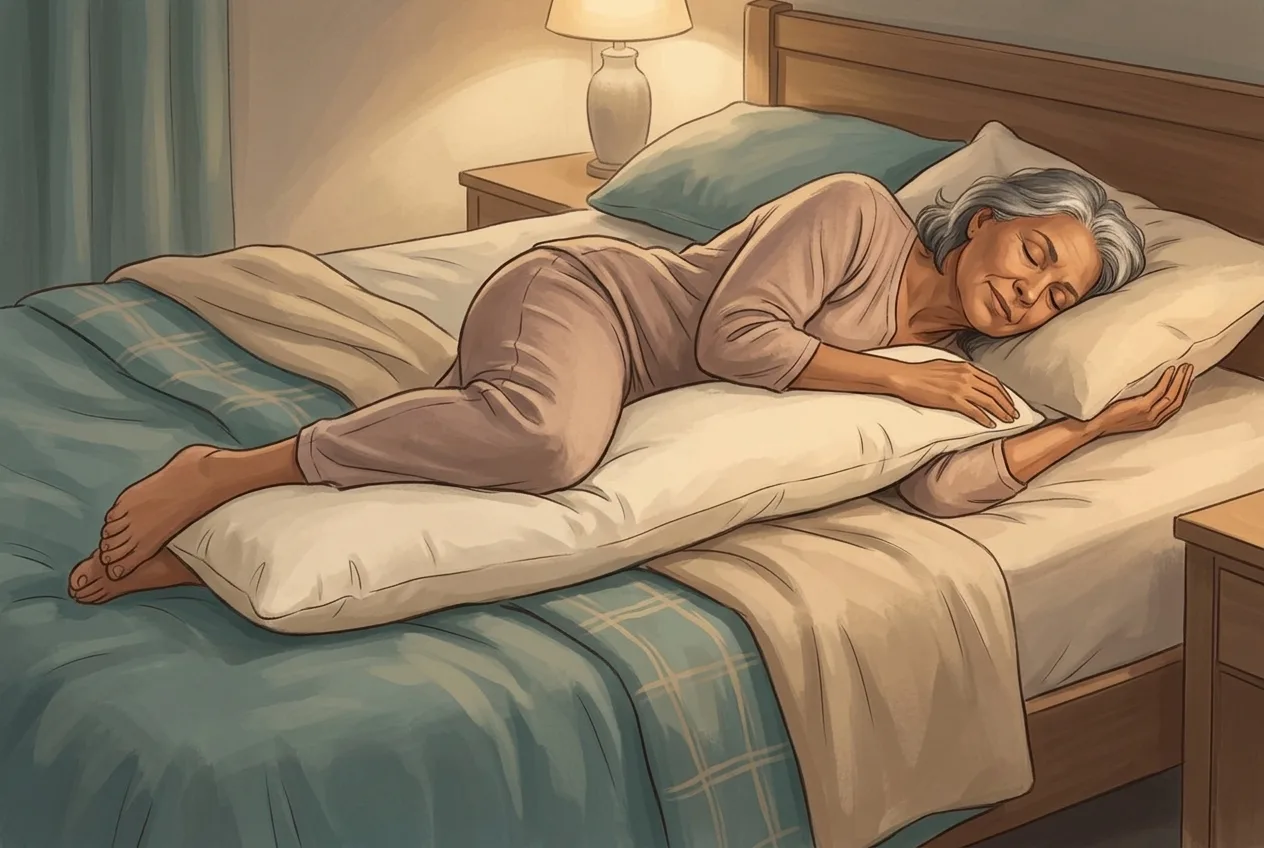
How to sleep with uneven hips on your side
Side lying is where most nights happen; it is the majority habit, with more than 60% of adults choosing it, according to the Sleep Foundation. So this is the position most worth arranging well. The trouble with an unsupported side is what gravity does to the top leg. Left alone, that leg slides forward and downward toward the mattress, and because the thigh is attached to the pelvis, it takes the pelvis along with it, rolling it into a rotation that then gets held hour after hour.
A pillow between the legs interrupts that slide, but only if it is generous enough. Two details decide whether it works. First, thickness: the pillow should hold your top knee at roughly the height of your hip. A thin pillow that lets the knee sink halfway down has merely softened the twist, not spared you from it. Second, length: run the support from the knees all the way to the ankles, or add a second pillow near the feet, so the lower part of the leg is not left dangling behind. When the whole top leg rides level, the pelvis has no reason to follow it anywhere.
How to sleep with uneven hips on your back
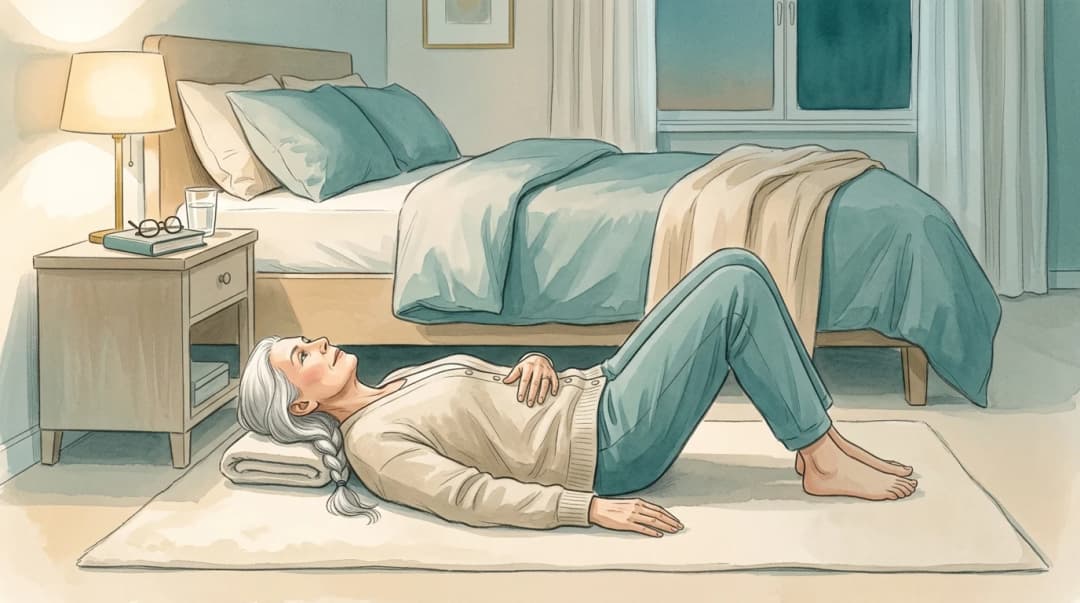
Lying on your back spreads your weight across a wide area, which is exactly what a grumbling hip appreciates. The refinement here goes under the knees. With the legs flat, many people quietly grip through the lower back all night; a pillow or a rolled blanket beneath both knees lets the thighs rest and invites the back to give up that effort.
If you are someone who feels distinctly tipped, one side of the pelvis pressing heavier or sitting higher against the mattress, there is a small experiment to try: a thin folded towel under the lighter feeling side, just enough that both sides register a similar amount of contact. Treat it purely as a comfort experiment, never as an attempt to reshape anything. If the bed reads more even and you drift off more easily, keep it; if it is merely strange, take it out. Your own sense of contact is the only referee.
Stomach sleeping, favorite sides, and the mattress underneath
Stomach sleeping earns its complicated reputation through the neck, and by extension the rest of the spine. To breathe while face down you must turn your head, and nearly everyone turns it the same direction every night, which asks the spine to spiral one way for hours at a stretch, year after year. If you love the position too much to leave it, at least trade the direction of the head turn regularly, and consider a flat pillow beneath the hip on the side you face.
More useful than hunting for the one "right" side is refusing to have a permanent one. A pelvis loaded the same way every night keeps rehearsing the same asymmetry, while alternating which side you begin on gives each hip nights on duty and nights off. And look at the surface itself. A mattress that has developed a hollow tips the pelvis toward the dip no matter how carefully the pillows are placed. Sag is a quietly common contributor that tends to get blamed on the body; rotate the mattress, add a firm topper, or replace it if it is truly finished.
A morning check in beats a nightly verdict
Rather than grading each night on its own, collect a week of small observations. On waking, before you move much, notice which side you ended up on and how each hip announces itself: heavy, quiet, tender, silent. Across seven mornings a pattern emerges that a single night can never show. Perhaps the ache follows whichever side carried you, or perhaps the nights that began on your less familiar side ended gentler. This unhurried, curious noticing is the core habit of the Feldenkrais Method®, which treats attention itself as the doorway to easier movement. Our Feldypedia entry on sleep disruption and physical tension explores why a body that holds all day tends to rest poorly at night. For the daytime half of the picture, see our guides on uneven hips and on a rotated pelvis. And when you want this kind of noticing turned into guided practice, the Feldy program for stress and sleep builds it into short evening lessons. If you are comparing apps for that kind of evening unwinding, our look at the best app for stress and tension relief sets gentle movement lessons beside meditation and stretching apps. For something to try tonight, before the pillows even come out, our lesson of somatic exercises for sleep helps the hips and back arrive at the mattress already quieter.
When a professional look makes sense
Some situations call for assessment rather than experimentation. A marked asymmetry, one that appeared recently, or one that is visibly increasing deserves a doctor's or physiotherapist's evaluation, as does hip or back pain that wakes you repeatedly, or any pain, numbness, or tingling that travels down a leg. A true leg length difference is established by clinical measurement, never by studying your reflection. Care of that kind and the gentle arrangements on this page belong side by side, since each does work the other cannot.
A calmer body, easier nights
Understanding it is calming, moving with it more so. The Feldy program is meditation in movement, slow Feldenkrais® lessons that help a busy body settle so sleep can arrive on its own. Gentle, guided, and self-paced.
Start my free 7-day trialNo credit card needed.
Common Questions about how to sleep with uneven hips (FAQ)
Is it safe to sleep with uneven hips?
Yes, for nearly everyone. An uneven look or feel around the pelvis is common and usually reflects a pattern of holding rather than a change in the bones, and sleeping does it no harm. The exceptions worth respecting: asymmetry that appeared recently or is becoming more pronounced, pain that repeatedly wakes you, or pain that runs down a leg. Those belong in front of a doctor or physiotherapist.
Which side should I sleep on if one hip sits higher?
There is no single winning side, and the search for one usually disappoints. Many people rest easier on the side that does not ache, with generous pillow support between the legs. What serves you more over time is variety: trading sides across the night and the week so that no one region carries every hour of pressure.
How often should I alternate sides during the night?
You do not have to manage this consciously; a healthy sleeper changes position many times a night without noticing. Your influence is at the start: begin on a different side than the night before, and keep a pillow between your knees so that both sides feel equally inviting. If you wake, treat it as a free chance to turn over.
How long until a new sleep setup makes a difference?
Give any arrangement about a week before judging it. The first nights with a pillow between the knees can feel odd simply because it is unfamiliar, not because it is unhelpful. Many people who stay with it notice within a couple of weeks that mornings begin with less of an ache on the loaded side. If nothing shifts after a few weeks, that is useful information to bring to a professional.
How is this different from stretching the tight side before bed?
Stretching takes a muscle toward the end of its range and asks it to lengthen; that is its mechanism. Arranging your sleep is quieter: nothing lengthens and nothing is pushed, you simply stop asking the pelvis to spend hours held in rotation. The two work in different ways and neither replaces the other. If long holds leave you comfortable, keep them; if they stir things up, the setup alone still earns its keep.
When should I see a professional about uneven hips?
Book an assessment when the asymmetry is marked, new, or clearly increasing, when hip or back pain wakes you night after night, or when pain, numbness, or tingling travels down a leg. A true difference in leg length is a measurement a clinician makes, never a verdict from the mirror, and ruling it in or out changes what advice applies to you.
A calmer body, easier nights
See the programRelated resources
How to Fix Uneven Hips With Gentle Movement
How to fix uneven hips: why one hip can sit higher, the everyday habits that pull the pelvis off balance, and a gentle practice to even things out.
Rotated Pelvis: Signs, Causes, and Gentle Movement
A rotated pelvis means one side sits slightly forward or higher than the other. Here is what it feels like, why it happens, and gentle movement that helps.
After 60, some of what movement does for your memory may happen while you sleep
Ready to start moving better?
Gentle, guided lessons for your body. Try your first one free, no credit card required.